
H - 1B visa program

Search documents
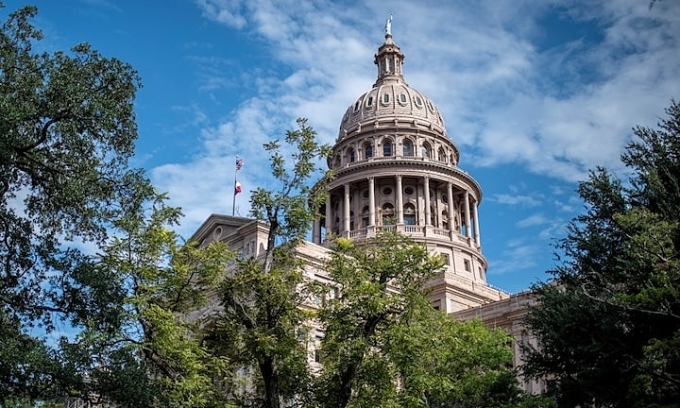
Texas halts new H-1B visa petitions at state agencies and universities
Vnexpress International – Latest News, Business, Travel And Analysis From Vietnam· 2026-01-29 04:19
Core Viewpoint - The state of Texas has paused the hiring of H-1B visa holders in state agencies and public universities until May 31, 2027, amid concerns over the program's impact on local job opportunities and staffing shortages [4][8]. Group 1: Impact on Employment and Talent Acquisition - Critics argue that the H-1B visa program allows overseas workers to take jobs from Americans, while supporters claim it is essential for attracting global talent and filling specialized roles [2][3]. - The pause could exacerbate existing staffing shortages in critical sectors such as education and healthcare, potentially raising costs and straining public services [3]. - The University of Texas Southwestern Medical Center leads in H-1B visa holders in Texas with 228, highlighting the reliance on these visas for staffing [5]. Group 2: State Actions and Legislative Intent - Governor Abbott's order aims to establish statutory guardrails for the H-1B visa program and allow for potential reforms at the federal level [4][8]. - Abbott has requested detailed information from state agencies and universities regarding H-1B visa usage, including job titles and efforts to prioritize local candidates [8]. - Other states, such as Florida, are also considering similar actions to limit H-1B hiring, indicating a broader trend among Republican governors [9][10]. Group 3: H-1B Visa Statistics and Trends - Since 2012, over 60% of approved H-1B visas have been for computer-related jobs, reflecting the program's focus on technical skills [6]. - In Texas, Cognizant Technology Solutions Corporation holds the highest number of H-1B visas at 3,172, underscoring the demand for skilled labor in the tech sector [7]. - The annual cap for new H-1B visas is set at 65,000, with an additional 20,000 for individuals holding a master's degree or higher, although some employers are exempt from these limits [12].


Amazon Permits Remote Work For Employees Stuck In India As Visa Processing Slows: Report - Amazon.com (NASDAQ:AMZN)
Benzinga· 2026-01-01 09:16
Core Insights - Amazon.com Inc. is allowing employees stranded in India due to visa delays to work remotely until March 2, 2024, with specific restrictions on their activities [1][2][4] Group 1: Remote Work Policy - Employees in India as of December 13, 2023, awaiting rescheduled visa appointments can work remotely until March 2, 2024 [2] - The internal memo specifies that coding, strategic decision-making, and customer interactions are prohibited during this remote work period [2][4] Group 2: Visa Processing Delays - Visa processing delays are caused by a new requirement for consular officers to review applicants' social media posts, leading to significant scheduling setbacks [3] - This issue affects multiple American companies, including Alphabet Inc., Apple Inc., and Microsoft Corp., which have issued travel advisories [3][5] Group 3: Broader Industry Impact - The situation with Amazon employees reflects a wider issue affecting many tech companies, with Google and Apple advising their visa-holding employees against international travel due to delays at U.S. embassies [5] - Jamie Dimon, CEO of JPMorgan Chase, noted the unexpected $100,000 H-1B visa fee, while Elon Musk defended skilled immigration, highlighting the benefits of international talent to the U.S. [6]


Trump's $100,000 H-1B visa adds more pressure to consulting's growing recruitment woes
Yahoo Finance· 2025-09-25 16:52
Core Insights - The introduction of a $100,000 H-1B application fee by President Trump poses significant challenges for consulting firms in talent acquisition, similar to those faced by tech companies [1][7] - Nearly 50% of H-1B applications are linked to professional, scientific, and technical services, highlighting the reliance of consulting firms on foreign skilled workers [2] - The H-1B program has been a crucial source of mid-level consultants with specialized skills, which are hard to find in the domestic market [4] Industry Impact - Consulting firms like Deloitte, EY, and Accenture are among the largest employers of H-1B visa holders, with Deloitte hiring 7,535 workers in the last three years, representing about 1% of its US workforce [5] - Accenture and EY have also significantly relied on H-1B visa holders, with 5,862 and 5,298 hires respectively, accounting for nearly 10% of their US headcounts [5] - The new application fee is expected to increase competition for talent and may lead to accelerated offshoring strategies among consulting firms [7] Strategic Responses - Consulting leaders express concern that the increased costs associated with H-1B visas will add friction to an already competitive talent market [4][6] - Major firms are anticipated to absorb some of the higher visa costs while adjusting their staffing models to maintain continuity [6] - Smaller consulting firms will need to enhance their ability to attract domestic talent, particularly for mid-level positions, to cope with the changes [6]

Explainer-H-1B visa - what is it and who are its beneficiaries?
Yahoo Finance· 2025-09-22 19:34
Core Viewpoint - The U.S. government has increased fees for H-1B visa applicants to $100,000 as part of a broader immigration crackdown, affecting new applicants only [1] Group 1: H-1B Visa Program Overview - The H-1B visa program allows U.S. employers to temporarily hire highly skilled foreign professionals in specialized fields, primarily in STEM [2] - The program caps new visas at 65,000 annually, with an additional 20,000 for those with a master's degree or higher from U.S. institutions [3] Group 2: Popularity and Impact - The H-1B visa is crucial for U.S. companies, enabling them to hire skilled workers to fill talent gaps and maintain competitiveness [4] - Critics argue that the program suppresses wages and sidelines American workers, with a minimum salary requirement of $60,000 for beneficiaries to be exempt from certain wage rules [5] Group 3: Geographic Distribution - California leads the nation in H-1B visa applications, receiving approximately 62,864 applications in the current year, largely due to its tech industry presence [6]
The Trump Market: Where Policy Meets Punchline
Stock Market News· 2025-09-21 06:00
Group 1: H-1B Visa Fee Impact - President Trump imposed a one-time $100,000 fee on new H-1B visa petitions, causing immediate concern in the tech industry [2][3] - Shares of IT services companies like Infosys, Wipro, and Cognizant Technology Solutions saw notable declines, with Infosys ADRs dropping 3.41% to $16.97 and Cognizant down 4.75% to $66.94 [3] - Analysts expressed that the fee would significantly impact both Indian and US-listed IT companies, with predictions of skyrocketing employee costs [3][4] Group 2: Market Reactions to Tariffs - On August 1, 2025, Trump announced a 35% tariff on certain Canadian goods, leading to a 0.88% drop in the Toronto Stock Exchange and declines in major US indices [5][6] - The S&P 500 fell 1.6%, marking its largest decline since May, while the Dow Jones and Nasdaq also experienced significant drops [5][6] - Analysts noted that the combination of tariffs and weaker-than-expected employment data contributed to market volatility [6] Group 3: Broader Market Resilience - Despite policy-induced jitters, major US tech companies like Alphabet, Amazon, Apple, Microsoft, and NVIDIA showed resilience, with Alphabet trading at $235.15 and Amazon up 4.8% [10] - As of September 20, 2025, major indices reflected a mixed but generally upward trend, with the S&P 500 at 6,664.36 (+0.5%) and the Dow Jones at 46,315.27 (+0.4%) [11] - The ongoing uncertainty in economic policy continues to create a volatile environment for investors [11]

Trump to impose $100,000 fee per year for H-1B visas, in blow to tech
Yahoo Finance· 2025-09-19 18:21
Core Viewpoint - The Trump administration's proposal to charge companies $100,000 annually for H-1B worker visas could significantly impact the technology sector, which heavily relies on skilled workers from India and China [1][2]. Group 1: Immigration Policy Changes - The Trump administration has initiated a broad immigration crackdown, including efforts to limit legal immigration, with the H-1B visa program being a focal point of these changes [2]. - The new fee structure for H-1B visas is set to take effect soon, prompting major tech companies to advise their visa-holding employees to remain in the U.S. or return quickly [4][5]. Group 2: Industry Reactions - Major companies like Microsoft, JPMorgan, and Amazon have communicated to their H-1B visa employees to avoid international travel until further guidance is provided [5]. - The internal communications from these companies indicate a proactive approach to mitigate the potential disruptions caused by the new visa fee structure [4]. Group 3: Perspectives on H-1B Program - Critics of the H-1B program argue that it enables companies to suppress wages and displace American workers, while supporters claim it is essential for attracting highly skilled talent necessary for competitiveness [6]. - The executive order signed by Trump highlights concerns that some employers have exploited the H-1B program to the detriment of U.S. workers [7].