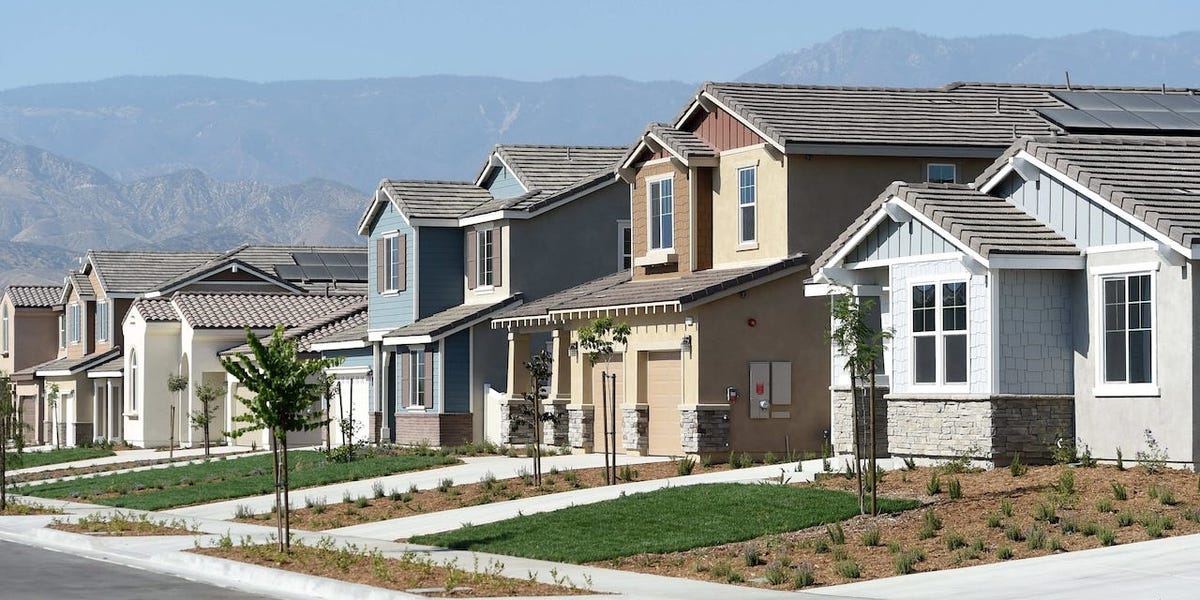
Institutional investment in housing

Search documents
US ‘will not become a nation of renters’: Trump
Yahoo Finance· 2026-01-21 14:56
Core Viewpoint - Rental housing providers are considered essential partners in addressing the housing affordability challenges in the U.S. [1][6] Group 1: Institutional Investors and Housing Market - As of 2022, mega-landlords owned approximately 3% of the single-family rental (SFR) housing stock, with significant regional variations, such as 25% in Atlanta, 21% in Jacksonville, and 18% in Charlotte [2] - Trump's executive order aims to prevent large institutional investors from purchasing single-family homes, which he argues should be available for families [4][3] - Concerns have been raised regarding whether institutional investors can still build single-family homes for rent, with interpretations of the executive order being crucial [7] Group 2: Economic Factors Affecting Homeownership - Trump highlighted the inability to claim depreciation on personal homes as a disadvantage compared to corporations, which can deduct property value loss from taxes [8] - Debt was identified as a significant barrier to homeownership, with Trump proposing a cap on credit card interest rates at 10% to assist Americans in saving for homes [9] - The banking industry has criticized the proposal to cap credit card interest rates, indicating potential challenges in passing such legislation [10] Group 3: Government Actions and Market Impact - Trump announced plans for government-backed institutions to purchase up to $200 billion in mortgage bonds to lower interest rates [11] - The appointment of a new Federal Reserve chair is anticipated, which may influence monetary policy and housing finance [11]
Banning Wall Street From Owning Houses Won't Lower Prices, Experts Say
Business Insider· 2026-01-09 18:10
Core Viewpoint - President Trump's goal of banning "large institutional investors" from purchasing single-family homes is seen as ineffective in addressing the fundamental issue of high home prices, which is primarily due to a shortage of homes [1][16][18]. Group 1: Impact of Institutional Investors - Major investors, including hedge funds and private equity firms, own hundreds of thousands of single-family homes, raising concerns about their competition with individual homebuyers, particularly first-time buyers [2][5]. - Institutional investors control about 2% of the single-family rental housing stock, but they have a significant presence in certain markets, owning 25% of single-family rental homes in Atlanta and 21% in Jacksonville [9][11]. - Studies indicate that institutional investment may lead to increased rents and home prices, especially in areas with high rates of institutional ownership [12][19]. Group 2: Market Dynamics and Responses - Following the 2008 financial crisis and during the pandemic, large investors purchased thousands of homes, predicting future increases in home values and rents due to population growth [4][5]. - Since 2022, large investors have reduced their purchasing activities as interest rates have risen and home prices have remained high, with some shifting to bulk purchases from homebuilders [9][10]. - Economists argue that the real issue driving rising prices is the undersupply of homes, rather than the actions of institutional investors [18][20]. Group 3: Proposed Solutions and Challenges - Experts suggest that simply banning large investors from buying homes will not significantly improve affordability, as it does not address underlying market conditions [16][17]. - Alternative solutions, such as raising property taxes on homes owned by institutional investors, could discourage their purchasing behavior while generating tax revenue for affordable housing initiatives [23][24]. - The enforcement of any ban on large investors could be complicated, as they might create smaller entities to circumvent restrictions [23][24].