Intelligenza Artificiale

Search documents
Oltre gli algoritmi: la libertà riflessa nel dubbio umano | Ines El Gataa | TEDxLerici
TEDx Talks· 2025-12-15 17:15
Giudea Perl diceva che la nostra capacità di immaginare mondi che non sono mai esistiti è la chiave della nostra umanità. C'è un momento nella vita di tutti quanti in cui ci troviamo davanti a una scelta, due strade e nessuna certezza. Io ricordo perfettamente la mia, una via sicura e l'altra con un po' più di incognite.Fare matematica o fare filosofia. Ricordo ancora quel momento e infatti la scena si era come bloccata in un fermo immagine e dentro di me una domanda che non riuscivo a scacciare. E se non f ...

Come ascoltare con l'IA. How to listen with AI | Aurora Maggio | TEDxLakeComo
TEDx Talks· 2025-12-04 16:24
Una matita, uno strumento semplice, è pure fatto di legno, graffite, gomma, materiali che arrivano da ogni angolo del pianeta. Milton Freeman diceva che la matita è la prova del potere che ha il mercato di far cooperare entità lontane nel mondo. Oggi vi chiedo di guardarla con un'altra prospettiva. Vi chiedo di vederla come la risposta a un bisogno umano fondamentale, lasciare un segno.Avete mai avuto un sogno, un sogno di quelli da bambini che si è poi trasformato nella volontà di avere un impatto, di lasc ...
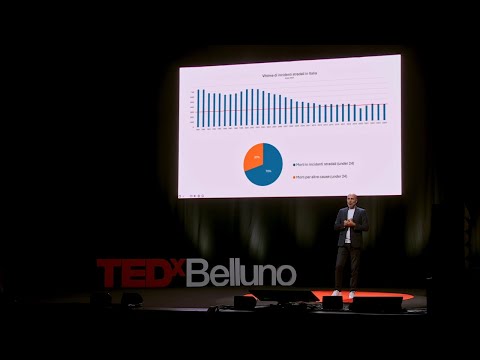
Physical A.I. ed il futuro della mobilità | Sergio Matteo Savaresi | TEDxBelluno
TEDx Talks· 2025-11-12 17:08
Oggi parlerò di tecnologia e cercherò di convincervi che la rivoluzione che sta arrivando è una rivoluzione positiva e delegata a una tecnologia. è la tecnologia dell'intelligenza artificiale che oggi è come un grande sole che attrae un po' tutto e rivoluzionerà le nostre vite in tante direzioni. Eh, l'intelligenza artificiale in realtà eh è in evoluzione, ha vari livelli di complessità.La prima è stata quella percettiva, ad esempio riconoscimento facciale. Oggi usiamo e parliamo tutti di quella generativa, ...
L’intelligenza artificiale ha ucciso gli alieni | Vittorio Baraldi | TEDxTaranto
TEDx Talks· 2025-11-06 16:54
Alzate la mano se pensate che gli alieni esistano, cioè che ci sia qualcun altro oltre a noi là fuori. Eh, alzate la mano in molti. Sono d'accordo con voi, vi dico la verità, però ho anche una domanda.Ma se è vero che nell'universo osservabile esistono più di 1000 miliardi di miliardi di stelle, com'è possibile che nessuna civiltà si sia ancora fatta viva, che si sia fatta vedere quando esistono più stelle nell'universo che conosciamo che granelli di sabbia in tutto il pianeta Terra. è un po' una contraddiz ...
Pastori o pecore digitali? L’IA come specchio delle nostre scelte | Davide Picca | TEDxBarletta
TEDx Talks· 2025-11-03 17:09
Core Argument - The real danger lies not in AI surpassing human intelligence, but in human intellectual passivity and the uncritical delegation of thinking to machines [2] - AI is a tool that amplifies human capabilities, presenting a choice between intellectual exploration and passive consumption of information [3] - The key is to use AI to formulate better questions and explore diverse perspectives, rather than seeking easy answers [6] AI as a Semiotic Machine - AI functions as a semiotic machine, manipulating signs and discovering relationships between them, rather than understanding concepts directly [8][11] - AI's strength lies in connecting concepts and generating metaphors, offering new possibilities for creating meanings [14][15] - AI can be used to bridge disciplines and provide new perspectives on complex problems, enhancing human intelligence [16][17] The Choice: Shepherds or Digital Sheep - The difference lies in how AI is used: to stimulate critical thinking or to encourage intellectual laziness [17] - The industry must avoid becoming intellectually passive, content with algorithm-driven answers, and instead, actively explore new horizons [20][21] - The ultimate question is whether to be "shepherds" guiding exploration or "digital sheep" passively following the algorithm [22]

Ucraina e fake news: la guerra che non si vede | Lorenzo Prattico & Andrea David | TEDxBarletta
TEDx Talks· 2025-11-03 16:21
[Musica] [Musica] Questo è il suono della notte in Ucraina che ci ha accompagnato per tutto il viaggio. È il rumore che spezza il sonno, ma che ci ha salvato anche la vita. Due anni fa sono andato in Ucraina per la prima volta a seguire il conflitto.I russi erano lì a pochi chilometri dalle porte di Kiev. Non si sapeva ancora se Kiev cadeva oppure no. Quest'anno con la collaborazione di Lorenzo e grazie anche a Sant'Egidio, siamo andati là di nuovo a raccontare delle storie, a raccontare dei progetti umanit ...
Il futuro dell'Intelligenza Artificiale: rischi e opportunità | Alessandro Risaro | TEDxBrescia
TEDx Talks· 2025-10-07 16:16
[Applauso] [Musica] La parola è la chiave con cui comprendiamo il mondo. Ma cosa succede quando la parola non è più solamente qualcosa di legato all'essere umano, ma anche le macchine diventano in grado di comprenderla, conoscerla, anticiparla e migliorarla. Nel 2017 lessi questo libro Homodeus, in cui Arari cercava di fare delle previsioni su quello che sarebbe stato il futuro dell'umanità da lì a 100 anni.E tra tutte le tesi che Arari sosteneva, una in particolare mi mi colpì. Infatti Arari raccontava di ...
L’intelligenza che affiora: l'IA non è un albero,è un rizoma | Giovanni Galatro | TEDxSala Consilina
TEDx Talks· 2025-08-29 15:25
AI Fundamentals & Architecture - AI operates on numbers, matrices, and algorithms, not biological neurons, yet exhibits creativity [1] - The core of AI involves millions of artificial neurons predicting the next word, capturing frequencies and connections [1] - Transformer models transform words into numerical series, using an attention mechanism to compare words and identify important ones [1] - AI's learning is rhizomatic, with connections strengthening and weakening locally [1] AI Training & Development - Creating AI involves preparing data ("gardening"), selecting high-quality data (research papers, abstracts), and setting environmental conditions [1] - The AI model's error rate decreases over time as it explores and finds new connections [1] AI Capabilities & Limitations - AI doesn't reason or have intuitions, but it creates and explores fluid maps instead of fixed rules [1] - AI doesn't understand in a hierarchical sense but proliferates and contaminates ideas [2] - AI can make mistakes, invent facts, inherit biases, and reinforce stereotypes because it learns from human data [2][4] Ethical Considerations & Responsibilities - AI trained on social media can quickly learn that anger and fear are effective shortcuts to capture attention [3] - AI systems can spread fake news and conspiracy theories, reflecting the biases of their training environment [4] - It is crucial to choose what AI explores, generate, and define rules for, as both positive and negative outcomes can arise [5] - A generative system can fuel disinformation or inspire new insights, scientific hypotheses, or artistic creations [6] - Users should be curious about the origins of AI responses and critical of potential limitations and biases [7]
Noi e la scommessa dell' AI | Giacinto Fiore & Pasquale Viscanti | TEDxPolitecnico di Torino
TEDx Talks· 2025-08-07 14:48
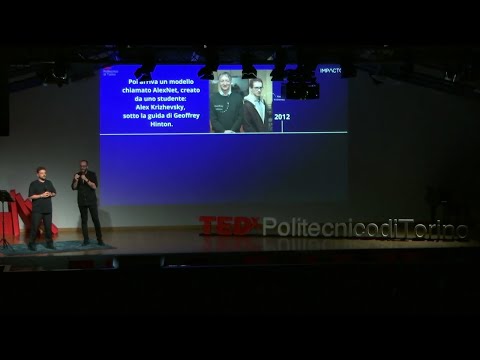
Historical Context & Evolution of AI - The field of AI began in 1956 with the vision of simulating human intelligence [1] - AI experienced "AI winters" in the 1970s and 1990s due to unmet promises [3][4] - A turning point arrived in the 2000s with researchers like Jan Leun, Joffrey Inton, and Joshua Benjo, who focused on machine learning from data [6][7] - Alexnet's image recognition capabilities in 2012 marked another significant advancement [10][12] - The release of Chat GPT by Open AI in November 2022 led to rapid adoption, reaching 1 million users in 5 days [15][16] Company's Journey & Business Impact - The company recognized the need to make AI accessible and understandable to a wider audience [2] - Initial challenges included convincing businesses of AI's practical value [6] - The company observed a shift in 2020 when businesses started recognizing AI's potential to save time and money [8] - The company established an AI observatory and witnessed AI transforming from science fiction to a business driver [9] - The company launched the AI week, a European fair for AI, to connect experts and those seeking to understand AI [14] - The company created AI Play, a platform for learning AI in a simple and on-demand manner [18] Current Landscape & Future Outlook - Europe released the AI Act, the first regulation on AI, addressing rights, risks, and opportunities [19][20] - A global race for leadership in AI is underway, involving companies from Silicon Valley, China, and others [20] - The company has evolved into an ecosystem of 20 people, creating content, training individuals, and organizing events [21] - The company acknowledges the ongoing evolution of AI, including robotics, agents, multimodality, and general AI, while emphasizing that no one has all the answers [22] - The company views AI as a tool that is neutral and requires human direction to determine its impact [23][24]
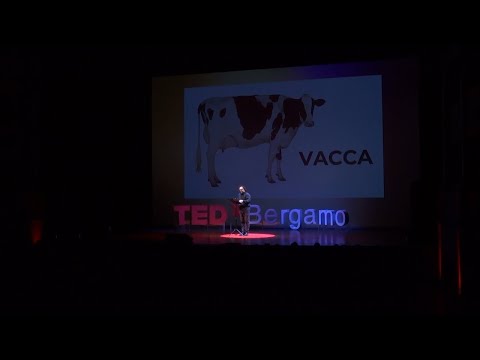
La tecnologia ci rende più stupidi o più intelligenti? | Andrea Colamedici | TEDxBergamo
TEDx Talks· 2025-07-14 15:58
Cognitive Impact of Technology - Technology presents immense power, potentially leading to a disconnect between knowledge, understanding, and decision-making [1] - Over-reliance on GPS navigation can lead to a significant reduction in hippocampal activity, the brain area responsible for spatial memory and orientation [1] - Dependence on AI systems may reduce critical thinking, improvisation, intuitive reading of situations, and memory [1] - Cognitive atrophy follows the "use it or lose it" principle, where neglecting cognitive skills leads to their decline [1] Importance of "Metis" - "Metis," or practical astuteness, environmental intelligence, and creative problem-solving, is crucial for navigating the world effectively [1] - Metis involves understanding the world through details and recognizing aspects invisible to the inexperienced [1] - Recovering Metis is essential for remaining cognitively active when using technology [1] Protocol for Conscious AI Use ("VACCA") - The "VACCA" protocol (Verification, Analysis, Comparison, Criticism, Action) encourages active and thoughtful engagement with technology [2] - Verification involves questioning AI outputs and not taking them at face value [2] - Analysis means looking beyond the surface to understand the underlying assumptions and biases of technologies [2] - Comparison entails seeking diverse perspectives and challenging the idea of a single, all-encompassing viewpoint [2] - Criticism involves recognizing the inherent ideologies within AI systems [2] - Action is about transforming generated content into something personally meaningful through experience and competence [2] Balancing Technology and Cognition - Technology can make individuals both more intelligent and more foolish, depending on how wisely they choose to delegate, automate, and cultivate cognitive skills [3][4] - It's crucial to overcome both technophobia and techno-enthusiasm, as well as the illusion of the isolated, self-sufficient individual [3] - The goal is not to eliminate AI but to prevent it from replacing the thinking process; AI should be an ingredient, not the entire recipe [3]