
Maternal Health

Search documents
‘A real tragedy’: Woman dies after being denied health care because she was pregnant
MSNBC· 2026-02-15 18:49
It is a fact that it's becoming increasingly more dangerous to be a woman in America. More than 76 % of adults in the United States, 194 million people, live with at least one chronic illness and women experience chronic conditions at higher rates than men do. Heart disease, cancer, and stroke are the top leading causes of death for women nationwide. Now, medical advances have made it possible to manage and treat many of these conditions, preventing them from becoming fatal, but they still remain chronic. N ...


Meet the Underrated Facilitators of the First Breath | Umra Omar | TEDxBerlin Salon
TEDx Talks· 2026-02-02 15:43
Do you guys know someone. You might know someone who like is uh really into fear and you know they're really um up for a challenge. It could be a friend, a foe, or even a child that you know where you know the moment you say something is not possible, they're like already jumping halfway down the cliff just to prove that they can fly and they got this.I have two of those at home. [snorts] So, it's and I realized that that's where that conviction comes from innately. And then my friend when I told her I was ...

CVS Health Foundation Grants the American Diabetes Association $2.6 Million to Expand Maternal Diabetes Program Across Two Additional NYC Communities
Prnewswire· 2026-01-14 14:00
Core Insights - CVS Health Foundation has granted $2.6 million to the American Diabetes Association (ADA) to expand its maternal health initiative in New York City, building on 18 months of successful outcomes in improving gestational diabetes screening and care coordination [1][2] Group 1: Program Expansion - The initiative will expand to two additional communities in New York City, aiming to support more families during the prenatal and postpartum journey [6] - The program will enhance electronic medical records (EMR) dashboards to streamline referrals among healthcare providers, ensuring seamless care transitions [6] - Increased access to advanced diabetes technology, including continuous glucose monitoring (CGM), will be provided, along with medically tailored meals to address food insecurity [6] Group 2: Health Statistics and Impact - At Wyckoff Heights Medical Center, over 20% of patients have diabetes, with 56% having an A1C above 9%, indicating poor blood sugar control [3] - Gestational diabetes mellitus (GDM) affects up to 9% of pregnancies nationwide, with rates in New York City rising from 6% in 2016 to 8.3% in 2021 [8] - In Bushwick, Brooklyn, 19% of adults have diabetes, and avoidable hospitalizations are 70% higher than the city average [8] Group 3: Patient Support and Education - The program provides multilingual education for patients and community health workers to support healthy pregnancies and postpartum care [7] - Patients like C.H., who was diagnosed with gestational diabetes, have benefited from nutritional workshops and support from community health workers, leading to improved confidence in managing their health [9][10] Group 4: Organizational Background - The CVS Health Foundation focuses on addressing health challenges through collaboration with nonprofit organizations, with a commitment to enhancing health outcomes in various areas, including maternal health and chronic conditions like diabetes [10] - The American Diabetes Association (ADA) is a leading health organization dedicated to fighting diabetes and supporting individuals affected by the condition, celebrating 85 years of advocacy and program development [11]

New legislation aims to protect Black mothers in labor
NBC News· 2025-11-29 03:21
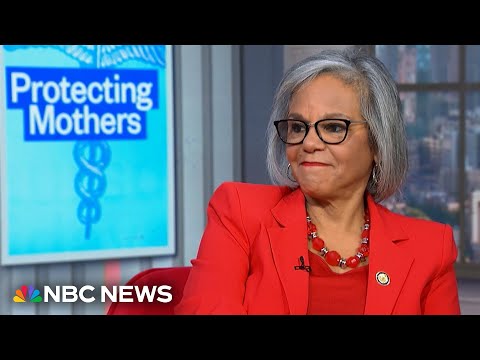
Our health care system is broken. Black women across the country are suffering and dying. >> An intimate moment of pain captured for the world to see is now sparking legislative change.>> Mercedes courage propelled me to introduce new legislation to protect all moms. >> Earlier this month, a black woman, Mercedes Wells, labored for 6 hours at Franciscan Health Crown Point Hospital in Indiana before she was discharged without ever seeing a doctor. Minutes later, she gave birth in her car.The video prompted b ...

Illinois congresswoman proposes new maternal health bill in response to viral video
NBC News· 2025-11-26 23:41
You've likely seen that now viral video of a black mother in pain at an Indiana hospital. It resonated with viewers and health care professionals who saw it. And as we reported yesterday, it sparked new legislation, the Wells Act, that aims to protect pregnant people who were in labor. The legislation is in response to images that show Mercedes Wells crying and in pain at Franciscan Health Crown Point. Wells says she was in labor for 6 hours and seen by a nurse, but she was ultimately discharged without eve ...
‘It’s structural racism, sexism’: Maternal health care advocates speak out against Medicaid cuts
MSNBC· 2025-10-26 18:38
Healthcare Policy & Funding - The potential expiration of Affordable Care Act tax credits and previous Medicaid cuts by President Trump could lead to skyrocketing insurance premiums for millions of Americans, disproportionately affecting women [2] - Medicaid has been a crucial pillar of women's health coverage for the past 15 years, with nearly 24 million women aged 19 and older enrolled last year [3] - Medicaid funds over 40% of all births in the US, making it the largest single-payer for pregnancy-related services [3] - In 2021, Medicaid accounted for 64% of deliveries among Black mothers [12] - Defunding Medicaid is expected to reverse progress in maternal health, worsening the maternal mortality crisis as mothers lose access to care [6] Maternal Mortality Crisis - The US has one of the highest maternal mortality rates among high-income countries, with over 2,300 mothers dying during childbirth each year in Louisiana and Mississippi alone [5] - Medicaid expansions have been linked to a 17% drop in hospitalizations during the first 60 days postpartum [6] - Black women have higher maternal death rates than any other racial or ethnic group in the United States, with most deaths being preventable but influenced by racial bias in healthcare [8] - Structural racism and sexism contribute to higher maternal mortality rates, particularly for Black women, leading to outcomes worse than some countries in the Middle East [22] Systemic Issues & Solutions - Systemic issues such as historical reasons, lack of being listened to, maternal deserts, and bias contribute to the maternal mortality crisis [18] - Some states are allegedly refusing to count maternal deaths, despite awareness that the situation is worsening [16] - Eugenics and white supremacy are identified as real factors contributing to the disparities in maternal health outcomes [25] - Addressing food insecurity and ensuring access to nutrition for pregnant women and mothers are crucial needs [20]

Saving Children - Gadchiroli to Global | Dr. Anand Bang | TEDxIIHMR U
TEDx Talks· 2025-09-18 16:17
Public Health Challenges & Solutions in Rural India - Infant mortality rate was 121 per 1,000 live births, indicating over 10% of children died before age one [1] - Child mortality rate was 153 per 1,000 [2] - Neonatal mortality rate was 100 per 1,000 [2] - Traditional healers and local deities were primary healthcare sources due to the absence of modern medicine [1] - A home-based mother newborn child care program was developed, focusing on health education, home deliveries, newborn care, breastfeeding support, and management of common childhood illnesses [1] Community Health Worker Program & Impact - Local women, including traditional birth attendants and community health workers (like Asha), were trained to provide essential newborn care [1] - Passing percentage of these community health workers in newborn care was 75%, exceeding the passing rate of medical graduates [2] - Infant mortality reduced from 121 to 20 per 1,000 live births [2] - Child mortality decreased from 153 to 23 per 1,000 [2] - Neonatal mortality dropped from 100 to 17 per 1,000 [2] Program Recognition & Scalability - The home-based neonatal care program became India's national policy, training 800,000 Asha workers [2] - The program has expanded globally, impacting 80 countries [2] - The initiative was recognized as one of Time magazine's 18 global heroes of health [2]

X @The Economist
The Economist· 2025-09-18 12:25
Healthcare Industry Concerns - The report highlights potential setbacks in ensuring the safety of mothers and newborns [1]