Muslim

Search documents
X @Nick Szabo
Nick Szabo· 2026-03-09 18:19
RT Nicholas J. Fuentes (@NickJFuentes)Now the Zionists have started amplifying anti-immigration, anti-Muslim rhetoric to distract Right Wingers from the Iran War.Probably the best way to prevent Muslim immigrants from coming here or attacking us is to stop killing them and destroying their countries for Israel. ...
X @Nick Szabo
Nick Szabo· 2026-03-09 04:40
RT رهف – Rahaf🤍💙 (@informatioxd)فتاة في امريكا و هي ترتدي حجاب و تقوم بتحيت هل تر و انتشر المقطع على انها فتاة مسلمةتبين لاحقا انها يهودية وهي مجرد ممثلة قاموا بالدفع لها لتفعل ذلك https://t.co/rsRXZRmRZd ...
X @Nick Szabo
Nick Szabo· 2026-03-07 17:10
RT Samantha Smith (@SamanthaTaghoy)Stop calling them “Asian” grooming gangs.They aren’t Japanese, Thai, or Filipino.They are Pakistani.And they are Muslim.It is gangs of Pakistani-Muslim men who groomed, abused, raped, sodomised, tortured, kidnapped, and murdered little girls.Get it right. ...
X @Nick Szabo
Nick Szabo· 2026-02-15 21:15
RT Alice Smith (@TheAliceSmith)Funny how Marxists want to live in capitalist societies and Muslims want to live in Christian countries. ...
X @Nick Szabo
Nick Szabo· 2026-02-08 08:16
RT Samantha Smith (@SamanthaTaghoy)This is Shahid Butt.He is a convicted terrorist who plotted to bomb the British consulate in Yemen and an Anglican Church.He is now running for office in Birmingham, in a seat that is 91% ethnic minority and 70% Muslim.He will likely win.A convicted Islamic terrorist stands a high chance of being elected to public office in Britain.A violent extremist who plotted the destruction of British lives is going to walk the corridors of power in Britain.A jihadi fighter who joined ...
X @Nick Szabo
Nick Szabo· 2025-11-22 02:16
RT Nick shirley (@nickshirleyy)🚨 I asked American-Muslim men in Dearborn who they would support if America went to war against an Islamic nation, their response:“We would support our brothers in Iraq… we would not defend America”A Christian American steps in and says, “anybody who supports another nation needs to live in that nation”Is the enemy already inside? ...
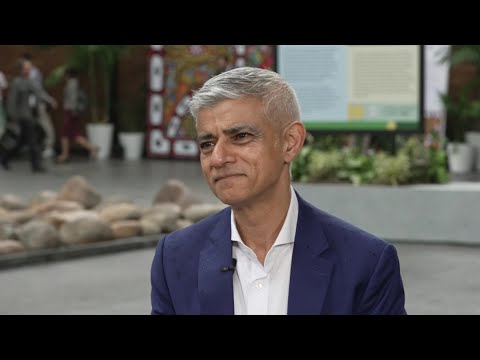
Leave Mamdani's Religion Out of NYC Mayor Race, London's Sadiq Khan Says
Bloomberg Television· 2025-11-03 19:59
City Leadership & Global Role - The role of mayor in global cities like London and New York carries significant global responsibility, requiring leaders to address both local constituents and the world stage [8][9] - Being a progressive, liberal, and multicultural city is the reason why some people hate London and New York [3] Identity & Representation - The speaker emphasizes that a candidate's policies and vision are more important than their religious identity, suggesting that criticisms based on ethnicity and faith reflect more on the critics [3][4] - The speaker addresses potential prejudice against Muslims, aiming to dispel misconceptions and highlight shared ambitions [10][11][12] - The speaker acknowledges that a small minority who claim to follow the Muslim religion offer some bad stuff that doesn't represent the more than 2 billion people in this planet who are Muslims [13] Economic & Social Concerns - The speaker recognizes the importance of working with the private sector and all Londoners to create wealth and jobs [16] - The speaker acknowledges the existence of underserved regions and unfairness within cities, emphasizing the need to address the cost of living crisis and provide social housing [7][15] Political Strategy & Authenticity - Authenticity is crucial for leaders in cities like New York and London [8] - The speaker did not campaign to be a muslim mayor [9]

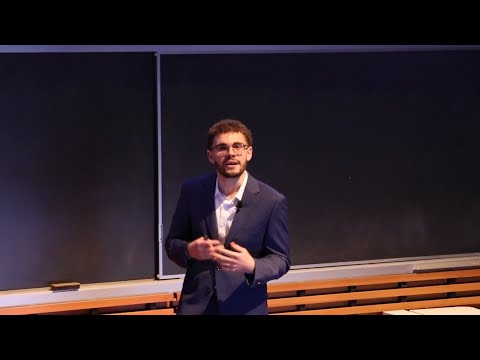
Why the History We Tell Shapes Our Brain | Omar Soliman | TEDxUBC
TEDx Talks· 2025-07-03 15:05
Main Argument - History is not an objective record but a narrative shaped by selective memory, influencing our perception and understanding of the world [15][39] - The brain actively curates reality, and historical narratives significantly shape our brain's wiring and perception [19][21] - The exclusion of critical voices and contributions from certain communities leads to feelings of alienation and demotivation [27][32] Key Insights - The story of Ibn al-Nafis's discovery of pulmonary circulation centuries before William Harvey highlights the erasure of certain historical contributions [9][11] - The brain's capacity is vast, holding approximately 250 万 gigabytes of memory, equivalent to 9,700 iPhone 16s, costing $1090 万 [17] - Exposure to information reinforces neural connections, shaping perception based on historical narratives [21][22] Call to Action - Individuals should seek out and share their own stories to challenge existing narratives and promote inclusivity [35][37] - Sharing diverse stories rewires brains, inspires innovation, and creates a positive cycle of progress [37][38] - It is a collective responsibility to ensure that every story has a place in history, acknowledging contributions from marginalized communities [40][33]