Negative Electricity Price

Search documents
新能源占比40+%的德国,为什么比我们更少负电价?
新财富· 2026-03-05 09:25
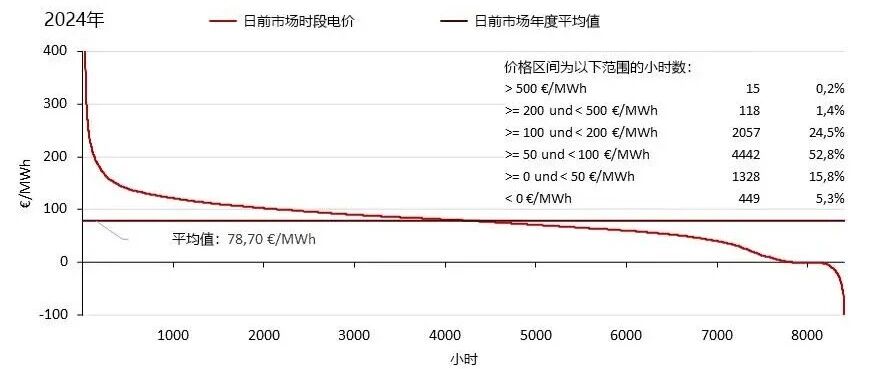
Core Viewpoint - The article discusses the phenomenon of negative electricity prices in the European power market, particularly highlighting that the issue is not merely an excess of renewable energy but rather the flexibility of the system to adjust to supply and demand [2][3][29]. Summary by Sections Negative Electricity Prices in Europe - In 2025, many European markets, including France, Germany, the Netherlands, and Spain, are expected to see negative electricity prices, with the proportion of negative price hours reaching 6%, up from approximately 3-5% in 2024 [5]. - Spain experienced the largest year-on-year increase in negative price hours, doubling its occurrences, while France saw a 45% increase, and Germany and the Netherlands both experienced around a 25% increase [5]. Germany's Renewable Energy Contribution - In 2025, Germany's renewable energy contribution to public net electricity generation remains at 55.9%, with wind power contributing approximately 132 TWh and solar power about 87.5 TWh [9]. - The total renewable energy generation in Germany is projected to be around 278 TWh, with 256 TWh fed into the public grid [9]. Comparison with China's Shandong Province - Shandong Province in China is projected to have over 1,300 hours of negative electricity prices in 2025, representing about 15% of the total hours, significantly higher than Germany's 6.5% [15]. - In 2025, Shandong's non-fossil energy generation is expected to account for 32.3% of total generation, with wind and solar contributing approximately 24% [18]. System Flexibility and Regulation - The article emphasizes that the key issue lies in the system's ability to adjust, with Germany showcasing better system flexibility through various measures [3][29]. - Germany's regulatory framework has been adjusted to tighten subsidy conditions for renewable energy projects, reducing the threshold for subsidy loss during negative price hours [20][22]. Infrastructure and Market Integration - Germany is enhancing its transmission infrastructure to address structural mismatches between energy supply and demand, particularly through high-voltage direct current lines [24]. - The country is also expanding its electricity market integration across Europe, allowing for better supply-demand balancing through cross-border electricity trade [24]. Demand Response and Storage Solutions - Germany has developed a mature demand response market, allowing for flexible power consumption adjustments [26]. - The country is investing in energy storage systems, with a cumulative installed capacity of nearly 25 GWh by 2025, which helps stabilize the grid and manage supply fluctuations [27]. Conclusion - Germany's approach to managing negative electricity prices involves tightening subsidy signals, enhancing interconnectivity, and improving system flexibility and storage capabilities, providing a model for other countries, including China, to consider [29][30].

欧洲可再生能源并网难问题加剧
Zhong Guo Neng Yuan Wang· 2026-02-05 09:02
Core Insights - The rapid growth of renewable energy capacity in Europe is leading to increasing issues with grid absorption and approval delays, resulting in a continuous rise in renewable energy curtailment [1][2] - By 2024, technical renewable energy curtailment in Europe is expected to exceed 10 terawatt-hours (TWh), with the curtailment in the UK, Spain, and Italy alone projected to approach 22 TWh by 2030 [1] - The report highlights the need for accelerated grid construction and optimized policies to unlock the potential of renewable energy development in Europe [1] Investment and Capacity Growth - Over the past decade, Europe's renewable energy market capacity has grown by 150%, and it is expected to triple from 2026 to 2050 [1] - To support the ongoing expansion of renewable energy, approximately €600 billion in new investments will be required by 2030, with total investments needed to reach €1.5 trillion by 2050 to meet climate goals and replace fossil fuel generation [1] Approval and Pricing Challenges - The slow progress of grid connection approvals is contributing to higher levels of renewable energy curtailment, with some projects facing approval delays of up to 10 years despite EU regulations mandating a two-year approval process [2] - The number of renewable energy projects awaiting grid connection approval in Europe exceeds 1,000 gigawatts (GW) [2] - Negative electricity prices are becoming a new risk for renewable energy development in Europe, with many markets expected to see an increase in hours of negative pricing in 2025 compared to 2024 [2] Power Purchase Agreements (PPAs) and Auction Challenges - In the short term, clean energy power purchase agreements (PPAs) remain the primary means for renewable energy projects to connect to the grid, but PPA prices are declining, with solar PPA prices in Germany and Spain falling below €40 per megawatt-hour [3] - Auction mechanisms for renewable energy support, particularly for offshore wind projects, are facing challenges, with recent auctions in Germany, the Netherlands, and Denmark failing to attract bidders [3] - Factors such as supply chain pressures, policy uncertainty, and poorly designed auction mechanisms are undermining investor confidence [3]
“五一”小长假,山东、浙江“负电价”创下记录
Sou Hu Cai Jing· 2025-05-06 03:33
Group 1 - The core issue of negative electricity prices is becoming more prevalent in China's electricity market, particularly in Shandong and Zhejiang provinces, due to an oversupply of electricity from renewable sources like wind and solar [2][6][7] - During the 2023 "May Day" holiday, Shandong experienced approximately 46 hours of negative electricity prices, with negative pricing occurring almost daily between 8 AM and 4 PM [3][4] - The frequency of negative electricity prices in Shandong has matched that of 2023, marking the first instance of negative prices occurring for five consecutive days [4][6] Group 2 - Negative electricity prices are primarily driven by supply exceeding demand, compounded by the inability to store electricity and the need for generators to maintain operations to avoid high startup costs [6][7] - Despite increased energy consumption during the holiday due to tourism, industrial users reduced operations, leading to a decrease in overall demand while renewable energy generation remained high [6][7] - The introduction of new policies aimed at enhancing the electricity market and increasing renewable energy capacity has contributed to the rise in negative electricity prices [7][8] Group 3 - The "136 Document" issued in February 2023 aims to promote market-oriented pricing for renewable energy, which is expected to increase market volatility and the frequency of negative electricity prices [8] - While negative prices may not directly translate to profit for consumers due to additional costs, they can lead to overall lower electricity costs [8] - The development of energy storage solutions, particularly long-duration storage, is seen as a potential strategy to mitigate market volatility and enhance predictability in electricity pricing [8]