
Negative Equity

Search documents
亚洲聚焦:中国房价下跌与负资产问题-Asia in Focus_ Home Price Declines and Negative Equity in China
2026-02-13 02:18
Summary of Key Points from the Conference Call Industry Overview - The report focuses on the **real estate market in China**, specifically analyzing **negative equity** and home price declines in six major cities: **Beijing, Shanghai, Guangzhou, Shenzhen, Tianjin, and Chengdu**. These cities represent about **13% of China's urban population** and approximately **30% of the country's urban housing wealth** [2][8]. Core Insights - **Negative Equity Definition**: Negative equity occurs when home values fall below outstanding mortgage balances, posing significant risks to the economy and financial system, especially when combined with job loss [2][3]. - **Historical Context**: In the US, **25% of mortgage borrowers** faced negative equity during the peak of the housing crisis in 2010, highlighting the potential severity of such situations [2][4]. - **Current Situation in China**: - Borrowers who purchased homes before **2021** generally retain considerable home equity despite a **30% peak-to-current price correction** due to high down payment ratios historically [2][20]. - Those who bought homes during **2021-2023** have seen significant erosion of their down payments due to recent price declines [2][20]. Future Projections - If home prices decline by less than **10% in 2026**, the negative equity issue is expected to remain manageable. However, a decline greater than **10%** could significantly increase the share of borrowers facing negative equity, indicating a **nonlinear threshold effect** [2][29][26]. City-Specific Analysis - **Tianjin**: Home prices peaked early and have dropped nearly **50%**, leading to negative equity for average borrowers from the **2017-2019 cohorts** [20]. - **Chengdu**: Despite price declines, all cohorts still maintain at least **15% equity** relative to their purchase price on average due to higher down payments and milder price drops [20]. - **Price-to-Income Ratios**: Tier-1 cities like Beijing and Shenzhen have high price-to-income ratios above **15**, while Tianjin and Chengdu are more affordable [11]. Key Findings 1. **Down Payment Impact**: Due to substantial down payment requirements (at least **30%** in all six cities during **2017-2023**), negative equity remains relatively rare as of **2025**, despite significant home price declines [20]. 2. **Home Equity Variability**: Home equity levels vary significantly by purchase year. Buyers before **2021** retained at least **20% equity**, while those who bought during **2021-2023** lost about **two-thirds** of their down payment value [20]. 3. **Cross-City Differences**: Significant differences exist across cities regarding home price trajectories and equity positions, with Tianjin facing more severe declines compared to Chengdu [20][12]. Additional Considerations - **Mortgage Behavior**: Many Chinese households pay down mortgages ahead of schedule, which reduces the risk of negative equity. This behavior may mitigate systemic risks to banking and financial stability, although local stresses could still arise [30]. - **Nonlinear Relationship**: The relationship between home prices and negative equity is nonlinear, with significant implications for borrower behavior and financial stability [29][26]. Conclusion - The analysis indicates that while the current situation regarding negative equity in China is manageable, future declines in property prices could lead to increased risks. The high down payment ratios historically have provided a buffer against widespread negative equity issues [29].

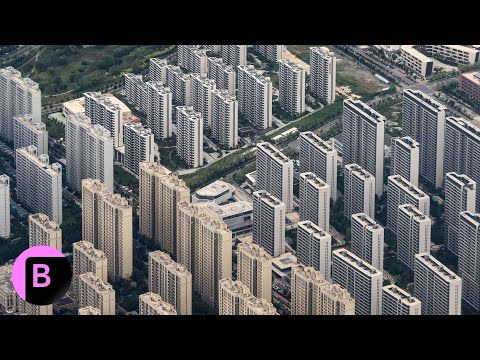
China Weighs Fresh Property Stimulus Package
Bloomberg Television· 2025-11-20 06:55
Property Market Overview - China's property woes are entering their fifth year, impacting deflation and consumption due to deteriorated household wealth [1] - Previous easing measures in tier one cities like Beijing, Shanghai, and Shenzhen have failed to rekindle interest in the property sector [2][3] - Bloomberg Intelligence estimates hundreds of billions of yuan in negative equity, a trend expected to accelerate into 2026 [5] Policy Response - Authorities are considering new measures, including mortgage subsidies for new homebuyers, income tax rebates for mortgage borrowers, and lowered home transaction costs [2] - More forceful policy support is being called for, with authorities examining different plans [3] - Timing and specifics of these proposals remain unknown, but discussions have been ongoing since the third quarter [4] Financial System Risks - Negative equity is expected to intensify, weighing on buyer confidence and contributing to further home sales decline [6] - Destabilization of the financial system is a paramount concern for authorities as they head into 2026 [7] - A rise in nonperforming loans and households sitting on negative equity due to significant household wealth tied to property (upwards of 60%) will significantly impact the financial system's balance sheets and loan portfolios [9] Upcoming Events - Top policymakers have held closed-door meetings to develop the next five-year plan, likely to be revealed at the National People's Congress (NPC) in March [7] - There is urgency for policies to be released before the NPC meets in early March [8]

X @Bloomberg
Bloomberg· 2025-10-08 06:18
Financial Performance - Australia's central bank achieved an accounting profit in the last financial year [1] - The bank remained in negative equity [1] - The bank did not pay a dividend to the government for the fourth consecutive year [1]