Next - generation engine

Search documents
Aviation experts say Boeing should be dreaming up its next clean-sheet jet — even if it's a decade away
Business Insider· 2025-10-13 09:07
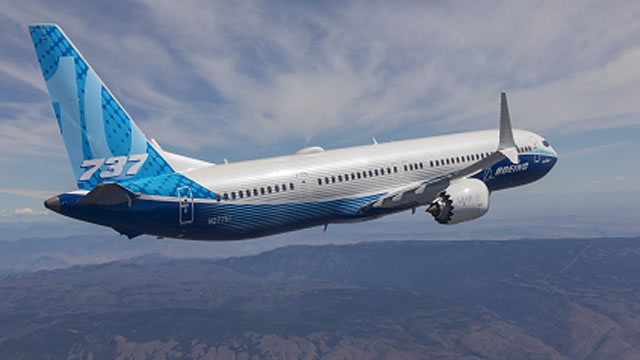
Core Viewpoint - Boeing has not developed a new commercial airplane since the 787 Dreamliner in 2004 and is now considering a clean-sheet design to replace the aging 737, which has undergone four generations of modifications since 1967 [1][3][5]. Group 1: Current Developments - Boeing's 737 narrowbody aircraft is crucial for short and mid-range flights, capable of carrying up to 220 passengers depending on the model [2]. - At a recent conference, Boeing leadership downplayed the imminent launch of a new aircraft design, indicating that while they are exploring new technologies, they are not close to launching a new airplane [3][4]. - Analysts suggest that Boeing's long-term competitiveness relies on developing a new narrowbody aircraft and securing a next-generation engine [3][5]. Group 2: Leadership and Strategy - Boeing's CEO Kelly Ortberg, who took over in August 2024, is seen as a catalyst for positive changes within the company, focusing on quality and operational improvements [6][11]. - Analysts have upgraded Boeing's rating to "buy," citing improvements in operational performance and a renewed focus on quality under Ortberg's leadership [11]. Group 3: Production and Certification Challenges - Boeing faces immediate challenges, including the certification of three unfinished aircraft models and the need to rebuild investor confidence through enhanced production and cash flow [4][19]. - The company has a backlog of over 6,000 jets to deliver, and it is currently focused on certifying its 777X and Max models [21]. Group 4: Future Aircraft Development - A new Boeing aircraft is unlikely to be operational for at least a decade, with industry experts suggesting that a new design announcement could occur within the next three years [5][6]. - The development of a new engine is critical for any new aircraft, with Rolls-Royce pitching a new powerplant to Boeing, which may signal a shift from its long-standing partnership with CFM International [16][17]. - The introduction of new engine technologies is essential to achieve the expected 15-20% fuel efficiency improvements for next-generation single-aisle aircraft [18]. Group 5: Competitive Landscape - Boeing's competitors, including Airbus and emerging startups like Natilus, are also eyeing the narrowbody market, which is projected to see significant demand in the coming decades [14][15].