
Oil crisis

Search documents
Asia-Pacific markets set to fall as investors brace for escalating tensions in Mideast
CNBC· 2026-03-23 00:05
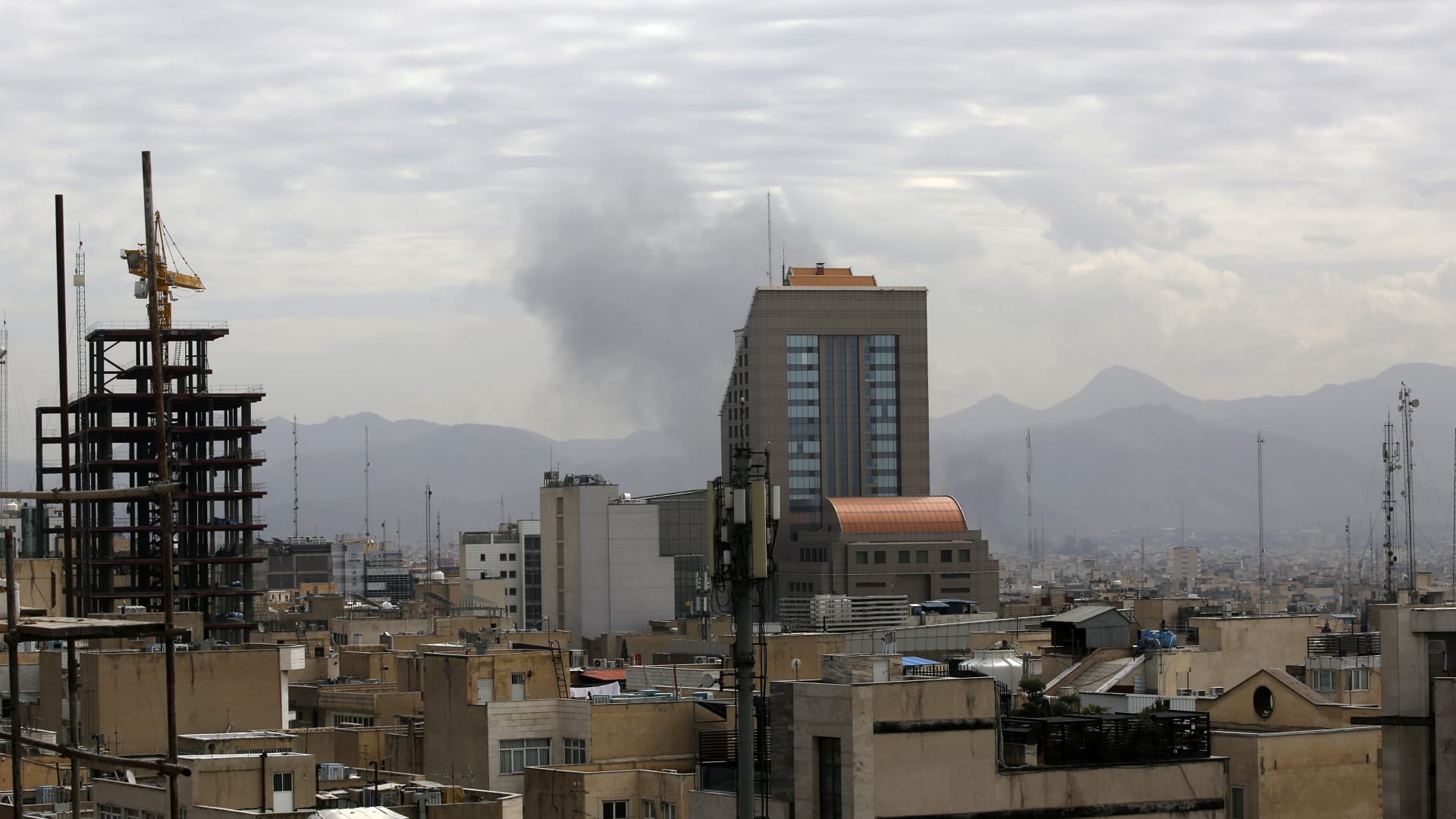
Iranian Shia women shout slogans during Eid al-Fitr prayers, marking the end of the Muslim holy month of Ramadan, at the Grand Mosalla mosque in Tehran on March 21, 2026.Asia-Pacific markets sold off sharply on Monday, with major indexes in Japan and South Korea falling more than 5%, as investors fled risk assets amid escalating conflict in the Middle East that has entered its fourth week. President Donald Trump said on Saturday that he would "obliterate" Iran's power plants if Tehran failed to fully reopen ...

Economist warns stocks are more vulnerable to an oil crisis than in 1979
Finbold· 2026-03-09 11:54
Core Insights - Rising oil prices and tensions in the Middle East could lead to broader economic damage through financial markets, with elevated stock valuations making the global economy more vulnerable than during the oil crisis of the late 1970s [1][2] Valuation Comparison - In 1979, the market had a price-to-earnings ratio of approximately eight, while current valuations are around twenty-nine, indicating a larger potential downside if market sentiment shifts [2] Oil Dependency and Production - The global economy is less dependent on oil today, with Middle Eastern production accounting for about 5% of global oil supply compared to 8-8.5% in 1978 [4] - The U.S. share of global oil production has increased from roughly 15.6% in 1978 to nearly 19%, reducing reliance on foreign supplies [5] Energy Efficiency - Energy efficiency has improved significantly, with oil usage per unit of GDP dropping from about 1.5% in the late 1970s to roughly 0.4% today [5] Inflation Outlook - Higher oil prices are less likely to cause broad inflation, as inflation is primarily a monetary phenomenon. Relative price shifts occur without central banks expanding the money supply [6] Mitigating Supply Disruptions - Allowing more sanctioned Russian oil to enter the market could help mitigate supply disruptions, as large volumes are currently stored in Russia's "shadow fleet" [7] - The U.S. government could utilize the Strategic Petroleum Reserve, which holds hundreds of millions of barrels for emergency supply disruptions [8] Economic Consequences of Conflict - Conflicts can have significant economic consequences, with historical research indicating that U.S. regime-change efforts often fail or lead to prolonged instability [9] - Prolonged conflict may carry high political costs in the U.S. and could reshape geopolitical alliances across the Muslim world, with war destroying value and causing economic and political ripple effects [10]

Mysterious trader shorts oil amid Strait of Hormuz crisis
Yahoo Finance· 2026-03-03 19:30
Group 1 - The global oil crisis has highlighted the presence of a significant trader, referred to as a "whale," who is making a substantial bet against oil prices during a time of geopolitical tension and market volatility [1][2] - The Strait of Hormuz is a critical passageway for oil, handling approximately 500 million barrels monthly, which constitutes about 20% of global oil supply, making any disruption potentially impactful on global economies [3] - Recent tensions, including Iranian actions and attacks on oil infrastructure, have led to operational shutdowns, such as Saudi Aramco's Ras Tanura refinery, which processes around 550,000 barrels per day [4] Group 2 - Oil prices have reacted sharply to the crisis, with WTI crude trading at approximately $77 per barrel and Brent crude reaching $83.94, with analysts suggesting prices could approach $100 if disruptions continue [5] - A whale trader has opened a 20x leveraged short position on oil, building a position valued at about $7.28 million with 100,000 xyz:CL contracts, indicating a strong belief that oil prices will decline [6]