Operating efficiency

Search documents
Karat(KRT) - 2025 Q4 - Earnings Call Transcript
2026-03-12 22:02
Financial Data and Key Metrics Changes - Net sales for Q4 2025 increased by 13.7% to $115.6 million from $101.6 million in Q4 2024, driven by $8.2 million in volume growth and a $6.3 million favorable impact from pricing and product mix [10][12] - Gross profit for Q4 2025 was $39.3 million, compared to $39.8 million in the prior year quarter, with a gross margin of 34.0%, down from 39.2% [12][13] - Net income for Q4 2025 rose by 22.8% to $7.2 million, with a net income margin of 6.2%, up from 5.8% in the prior year quarter [15][16] - Adjusted EBITDA for Q4 2025 increased to $12.5 million from $11.3 million, with an adjusted EBITDA margin of 10.8%, compared to 11.1% in the prior year quarter [16] Business Line Data and Key Metrics Changes - Sales to chain accounts and distributors, the largest sales channel, increased by 17.5% in Q4 2025 [10] - Online sales rose by 1.9% year-over-year, while retail channel sales declined by 4.8% [11] - The new paper bag business category is gaining momentum, contributing to revenue growth and market share expansion [8][9] Market Data and Key Metrics Changes - Eco-friendly product sales grew to 37.3% of total revenue in Q4 2025, up from 34.5% in Q4 2024 [9] - The import mix during Q4 2025 consisted of 46% from Taiwan, 14% from China, 13% from the United States, and 11% each from Vietnam and Malaysia [6] Company Strategy and Development Direction - The company is focused on diversifying sourcing and optimizing margins, with a resilient global supply chain maintaining a gross margin of 34% despite higher tariff costs [7][10] - The strategy includes expanding the paper bag product line and pursuing additional customer accounts to drive revenue growth [8][20] Management's Comments on Operating Environment and Future Outlook - Management noted ongoing trade volatility but emphasized the company's ability to deliver profitable growth [5] - For Q1 2026, the company expects net sales to increase by approximately 8%-10%, with gross margin anticipated to be within 34%-36% [19] - The company aims for low double-digit growth for the full year 2026, supported by new customer accounts and product offerings [19][30] Other Important Information - The company repurchased 137,374 shares at an average price of $21.74 per share, totaling $3.0 million, with $12.0 million remaining under the repurchase program [18] - The company ended 2025 with $91.0 million in working capital and maintained financial liquidity of $45.6 million [18] Q&A Session Summary Question: Outlook for 2026 and market assumptions - Management indicated that the outlook for 2026 includes market share gains, particularly in the new paper bag category, despite a competitive environment [23][24] Question: Impact of weather on Q1 revenue - Management confirmed that weather-related shutdowns in Texas and the East Coast affected Q1 sales, but trends are improving as conditions stabilize [26][27] Question: Full year revenue guidance and business opportunities - Management stated that the revenue guidance includes potential new accounts in the final confirmation stages, but conservatively accounts for testing phases that may delay revenue recognition [30] Question: Margin outlook and energy costs - Management confirmed that energy costs are factored into margin guidance, with expectations of a 10%-15% year-over-year increase in ocean freight shipping costs [40] Question: Demand for eco-friendly products - Management reported sustained demand for eco-friendly products, particularly molded fiber and paper bags, driven by regulatory changes and consumer preferences [50]

Kingstone Companies, Inc. Q4 2025 Earnings Call Summary
Yahoo Finance· 2026-03-06 17:32
Core Insights - The record performance in 2025 was primarily driven by the Select product, which now constitutes 57% of policies in force, leading to improved risk selection and claims frequency [1] - The net expense ratio saw a significant improvement from 41% in 2021 to 30% in 2025, indicating enhanced operating efficiency and a durable margin advantage [1] - A notable 14-point improvement in the Q4 underlying loss ratio was attributed to a decrease in frequency of non-weather water claims, which is the company's largest peril [1] - The decision to reduce the quota share cession from 16% to 5% for 2026 reflects the company's confidence in the quality of its underwriting portfolio and a strategy to retain more profit [1] - New business growth is bolstered by the GARD Renewable Rights Agreement and strong producer relationships, particularly in the challenging market conditions of Downstate New York [1] - Management highlighted that the 2025 results were structurally driven rather than influenced by weather, noting that even with normalized catastrophe loads, the combined ratio would have been in the low 80s [1]
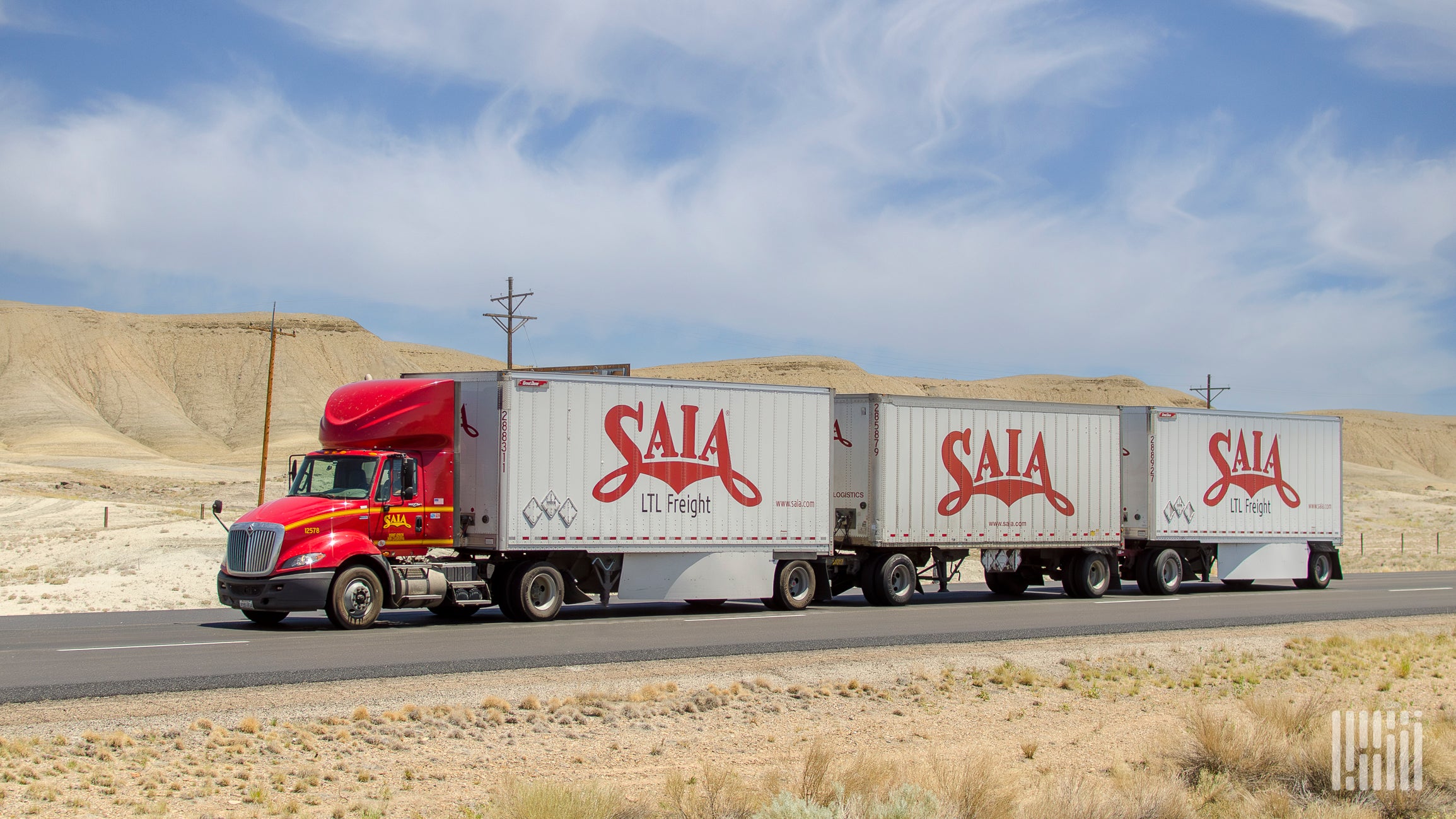
Saia, Inc. (NASDAQ: SAIA) Maintains "Buy" Rating from Goldman Sachs Amid Financial Challenges
Financial Modeling Prep· 2026-02-11 04:04
Core Viewpoint - Goldman Sachs maintains a "Buy" rating for Saia, Inc. and raises its price target from $370 to $403 despite the company's financial challenges [1][6] Financial Performance - Saia reported a diluted earnings per share (EPS) of $1.77 for Q4 2025, down from $2.84 in Q4 2024, and a full-year diluted EPS of $9.52, down from $13.51 in 2024 [2][6] - The adjusted diluted EPS, excluding a net gain on real estate, was $9.11 for the full year of 2025 [2] Revenue and Operating Metrics - Revenue for Q4 2025 was $790 million, reflecting a slight increase of 0.1% compared to the previous year [3] - Operating income decreased significantly by 36.9%, totaling $64 million, and the operating ratio increased to 91.9% from 87.1% in Q4 2024, indicating higher operating costs relative to revenue [3][6] Stock Performance - The stock price of SAIA is currently at $381.64, having decreased by 6.83% or $27.96 on the day, with a trading range between $375 and $396.44 [4] - Over the past year, the stock has fluctuated between a high of $507.39 and a low of $229.12, with a market capitalization of approximately $10.17 billion [4] Operational Challenges - Saia experienced a decrease in LTL shipments per workday by 0.5% and LTL tonnage per workday by 1.5%, reflecting challenges in maintaining shipment volumes [5]


Bassett Furniture Industries Q4 Earnings Call Highlights
Yahoo Finance· 2026-02-05 22:30
Core Insights - Bassett Furniture Industries reported a consolidated revenue increase of $4.4 million, or 5.1%, compared to the prior-year quarter, with a 6.4% increase when excluding Noa Home sales [1][7] - The company emphasized a flexible sourcing model as essential for resilience amid tariff stabilization [1] - Despite slow housing sales impacting the home furnishings category, the company achieved increased sales and profits in the fourth quarter [3][4] Financial Performance - In Q4, operating income rose to $2.3 million, representing 2.6% of sales, while diluted EPS was $0.18, down from $0.38 a year earlier due to a prior-year tax benefit [7][8] - Wholesale revenue increased by $4.4 million, or 8.3%, driven by a 14% increase in shipments to retail stores [9] - Retail net sales grew by $4.2 million, or 7.9%, although retail gross margin declined by 150 basis points due to delayed price adjustments [12] Cost Management and Efficiency - The company has maintained a "restructuring mindset" to drive cost reductions and operational efficiencies, with SG&A down 60 basis points [2][10] - Headcount was reduced by 11% last year, with an additional 4% reduction recently to create a leaner organization [18] - Bassett ended the year with $59.2 million in cash and no debt, generating $7.8 million in operating cash flow during the quarter [19] Product and Market Initiatives - Case-goods sales increased over 50%, and custom leather sales rose by 19%, indicating strong product momentum [5][13][14] - E-commerce sales grew by 14% in Q4 and 27% for the full year, with plans to enhance marketing efforts [15] - The company plans to open new stores in Cincinnati and Orlando and relocate its Long Island store [16] Future Outlook - Management forecasts capital expenditures of $8 million to $12 million for fiscal 2026, reflecting planned store activities [20] - Early demand trends in fiscal 2026 showed strong written sales, although winter weather caused disruptions [21] - The company aims to continue focusing on operating discipline while pursuing growth through retail expansion and new initiatives [22]

Rexford Industrial Realty(REXR) - 2025 Q4 - Earnings Call Transcript
2026-02-05 19:02
Financial Data and Key Metrics Changes - Fourth quarter Core FFO per share was $0.59, in line with expectations, driven by higher Same Property NOI growth, lower G&A expense, and accretive share buybacks, partially offset by higher Bad Debt [14] - For the full year, after adjusting for co-CEO transition severance charges and other non-recurring costs, Core FFO per share was $2.40, placing the company at the high end of initial expectations [14] - Total portfolio occupancy ended the quarter at 90.2%, down 160 basis points sequentially [15] Business Line Data and Key Metrics Changes - In 2025, the company signed approximately 2 million sq ft of repositioning and development leases, generating nearly $40 million of annualized incremental NOI [15] - The company recognized $89 million of real estate impairments related to development sites that are being sold, allowing for the redirection of $285 million of capital into higher-yielding uses [15] Market Data and Key Metrics Changes - Market rents declined 10 basis points in the quarter and 9% year-over-year, with total market rent down 1% in the fourth quarter [9][16] - Vacancy increased 30 basis points during the quarter, and net absorption was negative, reflecting broader market softness [10] Company Strategy and Development Direction - The company is focused on enhancing cash flow quality, driving per share FFO and NAV growth, and optimizing returns for shareholders [6] - A programmatic disposition plan is a key component of the capital allocation strategy, targeting between $400 million and $500 million of dispositions in 2026 [8] - The company aims to reduce G&A as a percentage of revenue below the peer average, with a target of 6% for 2026 [8] Management's Comments on Operating Environment and Future Outlook - Management remains confident in the long-term fundamentals of infill Southern California despite near-term pressures impacting 2026 growth expectations [6] - The company is prioritizing occupancy to drive cash flow and is maintaining rigorous capital discipline in light of current market dynamics [10] - Management believes Rexford is well-positioned to capture recovering demand to drive occupancy and NOI growth [12] Other Important Information - The company executed a strategic early renewal of its largest tenant, Tireco, allowing for significant de-risking of cash flow [10] - The company is committed to aligning executive compensation with shareholder priorities, having recalibrated compensation metrics [9] Q&A Session Summary Question: Can you provide more understanding on the Tireco lease re-signing? - The decision to prioritize occupancy and de-risk future cash flow led to an early renewal of the Tireco lease, which was above market [23][24] Question: How much further do you expect rents to decline? - Management noted signs of stabilization but indicated challenges remain, making it difficult to call an inflection point [28][30] Question: What is driving the occupancy decline? - The occupancy decline is attributed to longer downtime for leasing and repositioning, with specific properties expected to move out [36][39] Question: What industries are on the watch list for bad debt? - The watch list remains similar year-over-year, with a higher concentration in logistics due to specific business issues [43] Question: What are the expected sources and uses of cash for 2026? - The company expects to have $413 million available for deployment after accounting for development spend, which can include share repurchases [78]
Union Pacific(UNP) - 2025 Q4 - Earnings Call Transcript
2026-01-27 14:47
Financial Data and Key Metrics Changes - Union Pacific reported a full-year net income of $7.1 billion, an increase of 6%, and earnings per share of $11.98, up 8% compared to 2024 [9] - The adjusted operating ratio improved by 60 basis points to 59.3% versus 2024 [10] - Full-year cash from operations totaled $9.3 billion, roughly flat compared to 2024, while cash return to shareholders grew by 25% to $5.9 billion [16] Business Line Data and Key Metrics Changes - In the fourth quarter, operating revenue was $6.1 billion, a decrease of 1% year-over-year, with freight revenue of $5.8 billion also down 1% on a 4% lower volume [12] - Bulk segment revenue increased by 3% due to a 3% increase in volume, while industrial revenue was up 1% on a 1% increase in volume [18][19] - Premium revenue declined by 6% despite a 10% increase in volume, reflecting business mix and higher fuel surcharges [19] Market Data and Key Metrics Changes - The competitive and global market environment impacted quarterly pricing and mix, particularly in agricultural sectors [12] - Domestic intermodal volumes faced challenges due to lower West Coast imports and customer shifts, although 2025 was the best-ever year for domestic intermodal [20] - The outlook for 2026 indicates a softer environment, with industrial production forecasted to be flat and housing starts expected to decline by more than 2% [21][22] Company Strategy and Development Direction - The company aims to maintain a strong focus on safety, service, and operational excellence to drive growth and improve margins [30][32] - Capital spending for 2026 is targeted at approximately $3.3 billion, prioritizing core infrastructure and modernization of the locomotive fleet [28] - The merger with Norfolk Southern is expected to enhance competition and improve service delivery, with a focus on regulatory compliance and transparency [40][41] Management's Comments on Operating Environment and Future Outlook - Management expressed confidence in operational capabilities despite a challenging macroeconomic environment, with expectations for mid-single-digit earnings growth in 2026 [33] - The company anticipates inflation of slightly over 4% in 2026, impacting cost structures but remains committed to improving operating ratios [32] - Management highlighted the importance of maintaining a buffer of resources to handle increased traffic post-merger and ensure service reliability [61][62] Other Important Information - The company achieved best-ever results in safety performance, with significant improvements in personal injury and derailment rates [25] - The company plans to continue investing in targeted capacity projects to support growth initiatives and enhance operational efficiency [28] Q&A Session Summary Question: How will the company improve operating ratio in 2026 given inflation and lack of price support? - Management indicated that improvements will come from productivity gains and a more favorable business mix, despite challenges in pricing [46][48] Question: Can you elaborate on the $2 billion targeted net revenue gains from the merger? - Management expressed confidence in the traffic growth estimates and the ability to handle increased business efficiently, emphasizing the importance of capacity investments [53][56] Question: What is the outlook for mid-single-digit growth into 2027? - Management acknowledged the pressure on 2027 growth targets but remains optimistic about capitalizing on market opportunities [67][73] Question: How does the new switching regulation impact the business? - Management supports increased competition and optionality for customers, emphasizing the need for clarity in regulatory details [81][84]

Is Canadian Natural Stock Still an Income Play for 2026?
ZACKS· 2025-12-30 15:06
Core Viewpoint - Canadian Natural Resources Limited (CNQ) is recognized as a defensive income play in the Canadian energy sector, noted for its dividend reliability and strong balance sheet as investors look towards 2026, despite sector volatility and lower earnings expectations [1][2]. Dividend Durability - CNQ's dividend durability is a key differentiator, having increased its dividend for 25 consecutive years, with the 2025 dividend raised to an annualized C$2.35 per share, yielding approximately 5.1% [3][5]. - Compared to peers like Suncor Energy and Cenovus Energy, which offer dividends below 4%, CNQ's long history of dividend growth instills confidence among income-focused investors [5][7]. Operating Efficiency and Cash Returns - The company's ability to maintain cash returns is supported by operating efficiency, achieving record production of 1.62 million barrels of oil equivalent per day in Q3, an 18.9% year-over-year increase, leading to adjusted funds flow of around C$3.9 billion [6][7]. - CNQ's low operating costs, averaging about C$21 per barrel for oil sands mining and upgrading, enable it to fund dividends and buybacks without straining its balance sheet during commodity price fluctuations [8]. Shareholder Return Framework - CNQ has returned approximately C$6.2 billion to shareholders through dividends and share repurchases year-to-date, with a focus on debt reduction and buybacks to support long-term financial flexibility [9][10]. - The company enters 2026 with a net debt-to-EBITDA ratio of about 0.9X and liquidity exceeding C$4.3 billion, reinforcing its income reliability [10]. Valuation Context - CNQ trades at a forward price-to-earnings multiple of 14.55X, slightly above the industry average, reflecting its stability but limiting potential for multiple expansion [11]. - The stock is less expensive than Suncor Energy but more highly valued than Cenovus Energy, indicating market preference for CNQ's consistency [11]. Industry Positioning and Earnings Trends - CNQ operates within the Oil and Gas — Exploration and Production — Canadian industry, which ranks in the bottom 9% of the Zacks Industry Rank, affecting sentiment [14]. - Full-year 2025 earnings per share are projected at $2.51, a slight decline of 0.8% year-over-year, with further expected decline to $2.28 in 2026, a 9.2% drop, due to lower pricing assumptions and higher non-cash costs [15][16]. Final Assessment - Canadian Natural Resources is best suited for investors prioritizing dependable income and balance-sheet strength over rapid growth, with its dividend durability and disciplined capital allocation favorably comparing to peers, despite valuation and earnings trends limiting upside into 2026 [17].


These Analysts Boost Their Forecasts On Agilent After Upbeat Q4 Results
Benzinga· 2025-11-25 18:06
Core Insights - Agilent Technologies Inc reported strong fourth-quarter earnings, with earnings per share of $1.59, surpassing the analyst consensus estimate of $1.58, and quarterly sales of $1.861 billion, exceeding the estimate of $1.832 billion [1] - For FY2026, Agilent anticipates adjusted EPS between $5.86 and $6.00, above market estimates of $5.57, and expects sales in the range of $7.300 billion to $7.400 billion, compared to projections of $6.916 billion [2] - Agilent's President and CEO expressed confidence in the company's position in life sciences and diagnostics, highlighting a customer-focused approach and operational efficiencies that drive innovation and long-term value [3] Analyst Ratings and Price Targets - Following the earnings announcement, several analysts adjusted their price targets for Agilent, with B of A Securities raising it from $150 to $165 while maintaining a Neutral rating [6] - Baird maintained an Outperform rating and increased the price target from $142 to $165 [6] - JP Morgan raised its price target from $165 to $180 while maintaining an Overweight rating, and Wells Fargo increased its target from $150 to $175 with the same rating [6] - UBS also maintained a Buy rating and raised the price target from $170 to $180 [6]


3 Reasons to Hold WBD Stock Now Despite a 67.7% Year-to-Date Rally
ZACKS· 2025-10-14 16:11
Core Insights - Warner Bros. Discovery (WBD) has seen a 67.7% increase year-to-date, outperforming the Zacks Broadcast Radio and Television industry and the Zacks Consumer Discretionary sector, which rose by 30.4% and 4.7% respectively, driven by improved content monetization, debt reduction, and operational efficiency [2] - Despite the positive momentum, investor sentiment remains cautious due to ongoing restructuring and competitive pressures, leading to a preference for holding positions rather than increasing exposure [2] Year-to-Date Performance - WBD's growth strategy is anchored in its two core engines: Studios and Streaming, which are essential for long-term content monetization [5] - The Studios division has focused on quality and efficiency, rebuilding its production slate with established franchises and original IP, aiming for consistent returns across various revenue streams [6] Streaming and Studios Momentum - The streaming business is evolving towards sustainable profitability, with HBO Max shifting from subscriber-led growth to a profit-oriented model through advertising and geographic expansion [7] - The Zacks Consensus Estimate for WBD's third-quarter 2025 streaming revenues is projected at $2.74 billion, reflecting a 4.1% year-over-year increase, while Studios revenue is estimated at $3.16 billion, indicating a 17.8% year-over-year increase [8][9] Separation Strategy - The planned separation of WBD into Warner Bros. (Studios and Streaming) and Discovery Global (Linear Networks) aims to enhance operational focus but introduces near-term uncertainty [10] - In Q2, WBD retired $17.7 billion of bonds, reducing gross debt by $2.7 billion, although the associated bridge-loan facility incurs higher interest costs, impacting free cash flow until the separation is complete [11] Competitive Landscape - WBD operates in a highly competitive media landscape, facing challenges from Netflix, Disney, and Amazon, which have established strong market positions and diversified monetization strategies [13][14] - WBD trades at a forward 12-month price-to-sales multiple of 1.17X, significantly lower than the averages of its peers, reflecting investor caution regarding its ongoing separation and financing costs [14] Conclusion - WBD's improving execution in studios and streaming, along with progress in deleveraging, supports its long-term recovery potential, but competition and limited earnings visibility continue to affect sentiment [18] - The stock trades at a discount to peers, indicating value but lacking near-term catalysts for re-rating, suggesting a hold strategy until uncertainties are resolved [18]


Greenbrier Elects Stevan Bobb and Jeffrey Songer to Board of Directors
Prnewswire· 2025-06-23 10:00
Core Insights - Greenbrier has appointed Steve Bobb and Jeffrey Songer to its Board, both bringing extensive experience from the rail industry, which will enhance the company's strategic initiatives and operational efficiencies [1][7][12] Group 1: Steve Bobb's Background - Bobb has 36 years of experience at BNSF Railway, including roles in strategic commercial and operational leadership [1] - He served as Executive Vice President and Chief Marketing Officer from 2013 to 2024, overseeing sales, marketing, customer service, and economic development [2] - His previous roles include Group VP Coal and General Manager of Division Operations, focusing on safe and efficient freight train movement and customer satisfaction [3][4] - Bobb holds two B.S. degrees in animal and plant science and has pursued graduate studies in agricultural economics [5] Group 2: Jeffrey Songer's Background - Songer has 30 years of expertise in operations, engineering, and finance, with 18 years in leadership roles at Kansas City Southern [7] - He played a key role in the $31 billion merger that created Canadian Pacific Kansas City, serving as EVP of Strategic Merger and Planning [8] - His experience includes managing operations across the U.S. and Mexico, with a focus on international labor management and risk management [9] - Songer holds a bachelor's degree in architectural engineering and a master's degree in business administration [11] Group 3: Strategic Implications for Greenbrier - Bobb's extensive rail industry experience will support Greenbrier's customer experience model and strategic planning [6] - Songer's insights into U.S.-Mexico relations and supply chain integration will be crucial for enhancing profitability and streamlining business structures [12] - Greenbrier is a leading international supplier of equipment and services to global freight transportation markets, with a significant presence in railcar manufacturing and leasing [13]