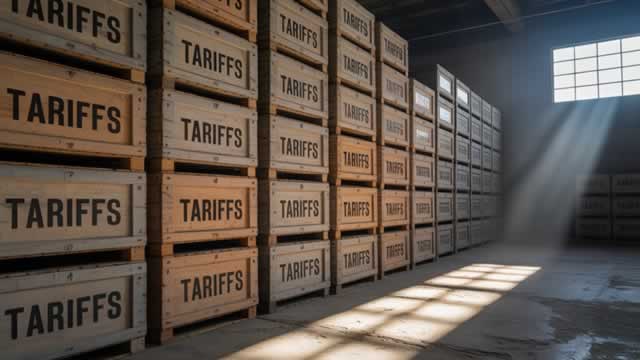
Protectionist agenda

Search documents
‘You just have to roll with it and the president of the U.S. can change his mind’: Canada’s last hockey stick factory hangs on in the age of tariffs
Fortune· 2025-10-07 13:40
Company Overview - Roustan Hockey is Canada's last major hockey stick factory, located 60 miles southwest of Toronto, employing 15 workers and producing approximately 400,000 wooden hockey sticks annually under various brands [2][6] - The factory has historical roots dating back to 1847 and has survived significant changes in the manufacturing landscape, including trade globalization [3][11] Trade Challenges - The factory faces challenges due to the trade war initiated by the U.S. government, which has led to tariffs on Canadian exports and uncertainty in cross-border trade [3][5] - Recent changes in customs exemptions have created additional uncertainty, affecting shipments of hockey sticks and other products like goalie pads, which faced a surprising 200% tariff [5][7] Economic Impact - The Canadian economy has contracted by 1.6% in the second quarter, marking the first decline since 2023, with exports dropping by 7.5% due to trade uncertainties [8] - Manufacturing jobs in Canada have decreased by 37,800 in the year leading up to August, highlighting a broader decline in the manufacturing sector [9] Market Dynamics - The wooden hockey stick market is shrinking, with Roustan Hockey holding only 5%-10% of the market share, as the preference shifts towards composite sticks made from advanced materials [14][16] - Global production of hockey sticks is around 5 million annually, with wooden sticks comprising only about 10% of that total [14] Manufacturing Process - The manufacturing process at Roustan's factory is described as low-tech and artisanal, involving manual labor for tasks such as shaping, sanding, and painting the sticks [17][18] - The factory's operations not only contribute to the manufacturing base but also resonate with the cultural significance of hockey in Canada [18]


Canada scraps billions in tariffs on US imports as it extends olive branch to Trump
New York Post· 2025-08-22 16:04
Core Viewpoint - Canada is reversing its tariffs on approximately $21.7 billion worth of American goods in an effort to ease trade tensions with the Trump administration, while maintaining tariffs on certain sectors like steel, aluminum, and automobiles [1][4][5]. Group 1: Policy Shift - Prime Minister Mark Carney will announce the removal of 25% tariffs on a wide range of US consumer goods that comply with the North American trade agreement [1][4]. - This marks a significant change in Canada's approach, moving away from aggressive retaliation against US tariffs that characterized Carney's election campaign [2][8]. Group 2: Economic Impact - The tariff rollback will exempt American products such as orange juice, wine, clothing, and motorcycles from the previously imposed import taxes [4][17]. - Canada's earlier retaliatory measures targeted about $21.6 billion in US shipments, but the recent policy change is expected to alleviate some economic pressures without triggering inflation, as consumer prices rose only 1.7% year-over-year in July [11][19]. Group 3: Strategic Considerations - The decision to roll back tariffs is seen as a strategy to ease tensions with the White House and prepare for the upcoming review of the US-Mexico-Canada Agreement [6]. - Carney's administration has shown skepticism towards the effectiveness of tit-for-tat trade measures, leading to exemptions for certain US items and potential relief for automakers maintaining Canadian manufacturing [13][16].