
Retail Investment

Search documents
X @ESMA - EU Securities Markets Regulator 🇪🇺
ESMA - EU Securities Markets Regulator 🇪🇺· 2026-03-12 09:15
Retail investors face too much complexity when starting to invest.🛣️ #ESMA sets out actions to support a smoother & more accessible #investor journey – from simplifying disclosures to cutting complexity in suitability & sustainability assessments.https://t.co/mkP7wdu5d3 https://t.co/UE4DQGRk21 ...
X @CoinDesk
CoinDesk· 2026-02-21 12:45
Markets: Wallets under 0.1 $BTC have increased holdings by 2.5% since October’s ATH, pushing retail share of supply to the highest since mid-2024.Meanwhile, large wallets holding 10 to 10,000 $BTC have cut exposure by 0.8%, per @santimentfeed. https://t.co/JSdIGyIFrA ...
Retail Investors ARE GONE!! Can Crypto EVER RECOVER!?
Coin Bureau· 2026-01-13 14:00
This crypto cycle should have been the biggest one ever. Large cap cryptos like BTC, ETH, and XRP hit new all-time highs, and narratives like tokenization took off. Regulation was better than ever, and investors now have easy access to crypto through spot ETFs.But despite everything seemingly going right for the industry, it looks like the buyers never showed up in size. So today, we're holding up a mirror to crypto, asking why the hypes felt so muted and tackling the question on everyone's mind. Where are ...


X @Bloomberg
Bloomberg· 2025-12-22 05:04
A wave of retail money is pouring into private markets. What newcomers don’t know could cost them. https://t.co/tWaVpA1PyM ...
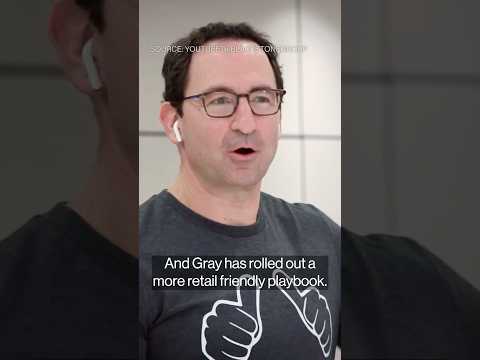
Jon Gray Is Reshaping Blackstone for the Retail Crowd
Bloomberg Television· 2025-11-15 14:01
The world's biggest private equity firm is trying to appeal to the retail masses. Blackstone is well known to pensions, endowments, and working with the world's richest institutions, but it could find its way into your 401k and more millionaire savings. That's largely because of John Gray, the guy who sometimes might pop up on your LinkedIn page spouting investment advice while running.Over the years, the Blackstone president has asked executives to think beyond chasing high octane bets and turn out steadie ...
X @wale.moca 🐳
wale.moca 🐳· 2025-11-04 14:22
Gotta remember that you're targeting retail here, most people active on Kaito have ZERO experience in angel or KOL investments ...
X @Anthony Pompliano 🌪
Anthony Pompliano 🌪· 2025-10-21 13:06
RT Anthony Pompliano 🌪 (@APompliano)Many public companies claim to listen to retail investors, but I always thought a public company should give retail investors a seat at the table to govern the business.That is why we are announcing @ericjackson will be joining our board of directors at ProCap Financial. The ticker for the SPAC we are merging with is $BRR.Eric has become one of the leaders of the retail investment movement. His work on $CVNA, $OPEN, and Rising Dynasty prove he intimately understands the p ...
X @Michaël van de Poppe
Michaël van de Poppe· 2025-10-19 20:11
If there's one thing that Gold has shown, retail isn't gone, they'll be buying whatever goes up.Given that Gold ran up from $12T to $30T in a few years, and #Crypto is only $4T, we all know what's next.The biggest run of our lifetime. ...
X @Decrypt
Decrypt· 2025-10-07 23:57
Crypto’s Retail Era Is Over: Institutions Now Set the Market’s Pace, Experts Say► https://t.co/fRpJMF7Kfx https://t.co/fRpJMF7Kfx ...