
Retire Early)

Search documents
These parents did the impossible: Retired in their 30s while raising young kids
Yahoo Finance· 2026-03-16 16:45
Core Insights - A new generation of parents is advocating for early financial independence to avoid the common pitfalls of financial strain and time constraints associated with raising children [1][2] - The FIRE (Financial Independence, Retire Early) movement is gaining traction among families, with many believing that financial independence is achievable even with children if investments are made early [3][14] Group 1: Financial Independence Strategies - Parents are encouraged to save and invest a significant portion of their income, with examples showing families saving 50% of their income to build substantial assets [5][7] - The concept of "coast FIRE" allows families to invest aggressively early on and then reduce work hours while relying on compounded growth for future financial stability [10][24] - Financial independence can provide families with the flexibility to prioritize time with children over traditional work commitments [24][29] Group 2: Real-Life Examples - Andy Hill and his wife transitioned to part-time work after reaching a net worth of $1 million, allowing them to spend more time with their children [5][11] - Jackie Cummings Koski, a single parent, achieved early retirement with a $1.2 million portfolio by saving 30% to 40% of her income, demonstrating that financial independence is possible even for single-income households [9][10] - Canadian couple Kristy Shen and Bryce Leung maintained low annual expenses of $65,000 to $70,000 while raising a child, allowing their net worth to grow to nearly $3 million [16][19] Group 3: Financial Education and Trends - Personal finance education is becoming more common in the U.S., with 30 states now requiring it, leading to younger individuals starting to invest earlier [7] - The median financial assets of U.S. couples with children were reported at $62,500 in 2022, indicating a gap in wealth accumulation necessary for financial independence [13] - Experts suggest that minimizing housing costs and being cautious with spending on children's activities can significantly impact a family's financial independence journey [25][28]
New Retirement Limits in 2026: Strategies To Max Out Even on a Middle-Class Income
Yahoo Finance· 2026-02-11 16:27
Core Insights - Nearly all credible personal finance experts recommend maximizing tax-privileged retirement accounts, but the median worker's income makes it challenging to do so [1] Contribution Limits - The IRS has set new contribution limits for various tax-advantaged accounts for 2026, including 401(k) plans at $24,500 plus $8,000 in catch-up contributions, an increase from $23,500 and $7,500 in 2025 [6] Saving Strategies - Middle-class workers need to adopt extreme budgeting strategies to save more than the recommended 30% of income on housing, with the FIRE (Financial Independence, Retire Early) approach being popular among frugal savers [4] - A three-pronged strategy is suggested for maximizing retirement funds: reducing lifestyle expenses, resisting lifestyle inflation, and redirecting savings into 401(k) plans [5] - Recommendations include investing bonuses and tax refunds into retirement accounts and front-loading contributions early in the year to benefit from compounding [8]
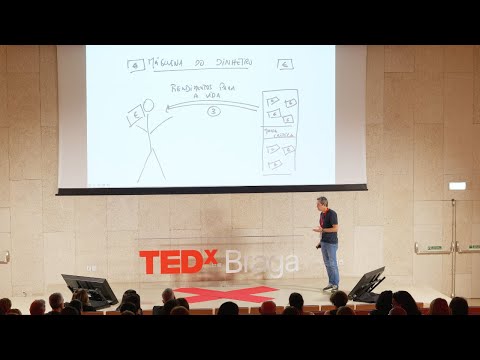
Liberdade financeira /FIRE | Eduardo Araújo | TEDxBraga
TEDx Talks· 2026-02-10 16:12
Boa tarde. O Jorge que me conhece sabe que isto está muito para lá da minha zona de conforto e é sempre muito desconfortável sair da zona de conforto. Eu não sou de talks, eu sou de falar com o Excel.E h mas há uns anos atrás eu li uma entrevista que de alguma forma mudou a minha vida, mudou a minha vida ou mudou um aspecto importante da minha vida. E e e aquele conceito, mesmo sendo bastante simples, foi tão poderoso, tão forte, que eu decidi que tinha de de o partilhar, que eu não podia guardar só para mi ...

I'm 27 With $385K Saved And Aiming For Early Retirement — Am I On Track?
Yahoo Finance· 2026-02-06 22:02
Core Insights - A 27-year-old individual has $385,000 invested, significantly surpassing the average retirement balance of under $50,000 for Americans under 35, indicating a strong financial position and proactive investment strategy [3][5] - The individual aims for early financial independence and is at a stage where they are evaluating the long-term viability of their financial plan [3][4] Financial Strategy - The basic FIRE (Financial Independence, Retire Early) framework suggests saving 25 times annual spending and withdrawing 4% per year, which for an annual living expense of $40,000 translates to a target of $1 million [5] - With $385,000 already saved, the individual is approximately 40% of the way to their target [5] - If contributions ceased and a long-term average return of 7% is achieved, the balance could grow to about $1.5 million by age 50, supporting an annual withdrawal of approximately $60,000 under the traditional 4% rule [6] Withdrawal Rate Considerations - The 4% rule is designed for 30-year retirements, which may not be suitable for early retirees who could face 50- or 60-year retirement spans, leading many to adopt more conservative withdrawal rates around 3% [6] - At a 3% withdrawal rate, $1.5 million would yield about $45,000 per year, which is workable but offers less financial margin [7] Importance of Financial Planning - Early retirement success relies more on long-term risk management than merely achieving a specific savings target [9] - Engaging with financial advisors and utilizing tools like SmartAsset can help clarify the effectiveness of savings rates, tax strategies, and timelines over decades [9] - Diversifying portfolios with income-producing assets, such as real estate investments starting at $100 through platforms like Arrived, can be beneficial [9]
Is FIRE Just For People Making Huge Salaries Or Can You Retire Early With A Normal Or Even Low Salary, Too? 'I Retired At 38. She Was 35'
Yahoo Finance· 2026-02-02 17:01
The dream of retiring early used to feel like it belonged to Silicon Valley software engineers, crypto whales or people with $300,000 salaries. But scroll through the r/leanfire subreddit and you'll see a different side of financial independence, retire early movement, one that's powered by electricians, roofers, librarians and people who never cracked six figures. A Growing Movement Of “Normal” People Hitting FIRE “I made around $80K at the highest. My wife made $48K. I retired at 38. She was 35,” one ...
I’m 35, have $2.5M saved and own property that brings in $3K/month — am I out of line to think about retiring now?
Yahoo Finance· 2026-01-02 11:15
Core Insights - The article discusses the financial situation of a 35-year-old entrepreneur, Rosie, who has saved $2.5 million, which is above the average belief of $1.26 million needed for a comfortable retirement in the U.S. [1] - It raises the question of whether retiring in one's 30s is feasible, especially in light of the FIRE (Financial Independence, Retire Early) movement [2] Group 1: Rosie's Financial Background - Rosie achieved early success by starting her own business in her early 20s and has been saving aggressively since completing her education [3] - She sold her business for $3 million, which contributed significantly to her savings [3] Group 2: Retirement Plans and Considerations - Rosie does not intend to retire to a life of leisure but plans to engage in volunteering and mentoring young women in business [4] - She owns a rental property that generates approximately $3,000 per month after expenses, adding to her income [5] Group 3: Retirement Savings Strategy - The article discusses the "4% rule" for withdrawing retirement savings, which suggests withdrawing 4% annually, adjusted for inflation, to sustain a 30-year retirement [5] - Given Rosie's age, a 30-year withdrawal plan may not suffice, as she needs to plan for savings that could last 50 years or more [6] - If Rosie follows the 4% withdrawal strategy starting now, she may deplete her savings by age 70, which could coincide with the peak of her retirement years [6]
This former minimum-wage worker retired at 39 with $3.5M. Now he’s living on $185K a year in Dubai. How did he do it?
Yahoo Finance· 2025-12-25 12:50
Core Insights - The article highlights the journey of Jamal Robinson, who achieved financial independence and retired early at the age of 39 with $3.5 million in savings and investments, exemplifying the FIRE (Financial Independence, Retire Early) movement [4][5]. Group 1: Financial Journey - Robinson began his career as a minimum-wage worker and worked his way up to an income of $1.1 million per year, supported by a computer engineering degree and an MBA [2][6]. - He saved aggressively, at one point saving nearly 90% of his income, which allowed him to retire six years earlier than his initial goal of 45 [5][4]. Group 2: Investment Strategy - Robinson's investment strategy was deliberate and long-term, focusing on relentless saving and aggressive investing to achieve financial freedom [8][11]. - He currently utilizes the 4% retirement income rule, generating an annual income of $185,000 from his investments [5]. Group 3: Financial Independence Movement - The FIRE movement advocates for a strict commitment to saving and investing to enable early retirement, although it has faced criticism regarding the sustainability of strategies like the 4% rule for longer retirement periods [3][4]. - Robinson's success story serves as a blueprint for others, emphasizing the importance of saving small amounts consistently to enhance retirement portfolios [7].
3 Things To Stop Doing Right Now if You Want To Retire Early
Yahoo Finance· 2025-10-23 16:26
Core Insights - The article emphasizes that achieving early retirement requires a disciplined approach to spending and investing, rather than chasing trends or relying on luck [2][17]. Spending and Lifestyle - Early retirement is directly linked to annual spending; for example, a lifestyle costing $80,000 annually requires a FIRE number of $2 million, compared to $1.25 million for a $50,000 lifestyle [2][15]. - Lifestyle inflation, or "keeping up with the Joneses," can significantly delay retirement plans [2][17]. Investment Strategies - Building wealth involves adopting good financial habits and avoiding unnecessary expenditures, which Russell identifies as the primary obstacle to early retirement [3][5]. - A balanced investment strategy is recommended, focusing on consistent contributions rather than seeking high-risk, high-reward opportunities [6][9]. Planning and Proactivity - Proactive planning is essential; individuals should not leave their retirement to chance but should actively monitor their savings and investment strategies [7][8]. - Understanding key financial metrics, such as the FIRE number and savings rate, is crucial for effective retirement planning [8][14]. Practical Steps for Retirement - Russell advises capturing employer matches in retirement accounts, automating contribution increases, and maximizing tax-advantaged accounts to enhance retirement savings [10][11][12]. - For those planning to retire early, having a taxable brokerage account is important for accessing funds before the age of 59½ [13]. Compounding and Financial Independence - Compounding is highlighted as a vital component of wealth building; for instance, investing $1,500 monthly at an 8% return could yield approximately $825,000 by age 45 [16]. - The FIRE number is calculated by multiplying annual expenses by 25, making budgeting and understanding spending critical for retirement planning [15][14].
Is $65K a year enough to find financial independence and retire early? How to make it work — without getting burned
Yahoo Finance· 2025-09-26 17:33
Core Insights - The FIRE (Financial Independence, Retire Early) movement has evolved from a grassroots initiative focused on frugality and resourcefulness to a community that often emphasizes high incomes, particularly in tech sectors [4][5][6] - Despite rising costs and inflation post-COVID, there is still a belief that financial independence is achievable for individuals earning lower salaries, provided they adopt resourceful spending habits [5][6] - Various interpretations of FIRE exist, including Lean FIRE, Chubby FIRE, and Fat FIRE, each requiring different levels of savings and lifestyle adjustments [14] Group 1: Evolution of the FIRE Movement - The FIRE movement gained traction in the 2010s, influenced by books promoting frugal living and financial independence [2][4] - The community has seen significant growth, with subreddit membership increasing by approximately 300,000 from 2020 to 2021 [3] - Critics argue that the focus has shifted towards high-income earners, potentially alienating those with lower salaries [4][5] Group 2: Achievability of FIRE - Achieving FIRE on a $65,000 salary in 2025 is contingent on individual expenses and lifestyle choices [8][9] - Living rent-free or minimizing expenses can make higher tiers of FIRE more attainable [9][10] - The practicality of DIY skills and resourcefulness is emphasized as a means to save money and reach financial independence faster [3][6] Group 3: Variations of FIRE - Different FIRE categories include Coast FIRE, Barista FIRE, Lean FIRE, Chubby FIRE, and Fat FIRE, each with specific financial requirements and lifestyle implications [14] - Fat FIRE, for instance, requires savings between $2.5 million and $10 million, depending on living costs [14] - The concept of geographic arbitrage is introduced as a strategy to achieve FIRE sooner by living in lower-cost areas [18] Group 4: Tools and Strategies for Achieving FIRE - High-yield savings accounts and budgeting apps are recommended as tools to help individuals manage their finances and save effectively [15][16] - Investment platforms like Acorns facilitate automatic savings and investment, making it easier to build a FIRE fund [12][13] - Real estate investment options, such as Arrived, allow individuals to invest in properties without the burdens of traditional homeownership [19][20]
X @Investopedia
Investopedia· 2025-09-01 15:00
Financial Planning & Retirement - Early retirement (FIRE) may not guarantee expected financial peace [1] - FIRE doesn't always alleviate money anxiety [1] - Planning for real fulfillment is crucial in early retirement [1] Potential Pitfalls - Financial anxiety can persist despite early retirement [1]