Risk - aversion demand

Search documents
【债市观察】假期前后债市转暖 避险需求促利率下行
Xin Hua Cai Jing· 2025-10-13 02:30
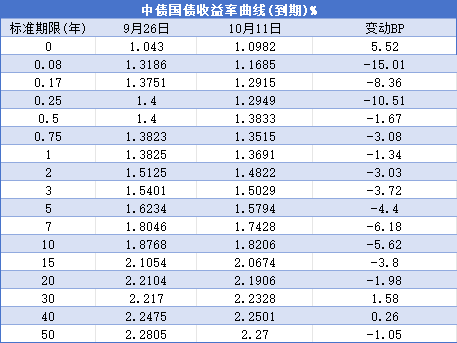
Core Viewpoint - The bond market has shown signs of recovery in the days surrounding the long holiday, with a decline in yields, particularly in the 10-year government bonds, which fell by over 5 basis points [1][4]. Market Overview - During the six working days from September 28 to October 11, bond yields experienced a downward trend, with the 10-year government bond yield decreasing by 5.62 basis points [2][3]. - The yield changes for various maturities from September 26 to October 11 include a decrease of 1.34 basis points for the 1-year bond and a decrease of 6.18 basis points for the 7-year bond [2]. Specific Events - On September 30, the market reacted positively to rumors of the central bank restarting government bond purchases, leading to a significant drop in yields [4]. - The first trading day after the holiday on October 9 saw a further decline in yields due to a large reverse repurchase operation by the central bank, totaling 1.1 trillion yuan [4][14]. - On October 11, yields fell sharply due to heightened market risk aversion following threats of increased tariffs from the U.S. [4][10]. Issuance and Market Activity - A total of 39 bonds were issued in the six working days post-holiday, amounting to 359.14 billion yuan, including 24.75 billion yuan in government bonds [8]. - Upcoming issuance plans for the week of October 13 to 17 include 32 bonds totaling 306.3 billion yuan, with a significant portion being government bonds [9]. International Context - U.S. Treasury yields also fell significantly, with the 10-year yield dropping by 7 basis points to 4.05%, influenced by trade tensions and increased demand for safe-haven assets [10]. - The Federal Reserve's recent meeting minutes indicated a strong consensus for a potential rate cut, reflecting concerns over economic uncertainty [12][13]. Institutional Perspectives - Analysts from various institutions suggest that while the bond market has stabilized, it remains susceptible to fluctuations due to equity market dynamics and policy changes [18][19][20]. - The current market sentiment is seen as having priced in negative factors adequately, but further catalysts are needed for a sustained decline in yields [19][20].