Social change

Search documents
Ser, resistir y transformar en la lucha trans | Sylvia Sofía López Pérez | TEDxParque Fundidora
TEDx Talks· 2025-12-12 16:53
社会背景与挑战 - 报告指出,25年前蒙特雷对LGBT群体非常不友好,该群体面临警察的迫害和监禁[1] - 报告强调,跨性别者在争取LGBTQ+权利方面一直处于前沿,但他们拥有的权利却最少[1] - 报告揭示,80%-90%的跨性别者失学,同样比例的跨性别女性从事性工作,这并非出于自愿,而是因为其他机会被剥夺[1] - 报告强调,即使在21世纪,仍然存在以“违反道德和良好习俗”为由逮捕跨性别者的警察法规[1] - 报告指出,跨性别者的平均寿命仅为35岁[1] 倡议与行动 - 报告提到,2001年,由于LGBT运动中跨性别者被忽视,报告人决定发出自己的声音,并与其他跨性别女性一起在Nuevo León发起了第一次性别多样性游行[1] - 报告强调了在各个领域(包括学术界、文化界、艺术界和政治界)实现LGBTQ+群体正常化的必要性[7] - 报告呼吁团结各方力量,真正加强对那些没有相同机会的人的支持,并避免停留在口头承诺[5] 身份与交叉性 - 报告强调了跨性别者身份的复杂性,以及贫困、阶级和性别认同等因素如何相互作用,从而阻碍了个人的发展[4] - 报告强调了跨性别者在生活各个方面面临的劣势,包括工作、学术和个人生活[1] - 报告强调了“有目的的可见性”的重要性,以促进对LGBTQ+群体的理解和接受[6]

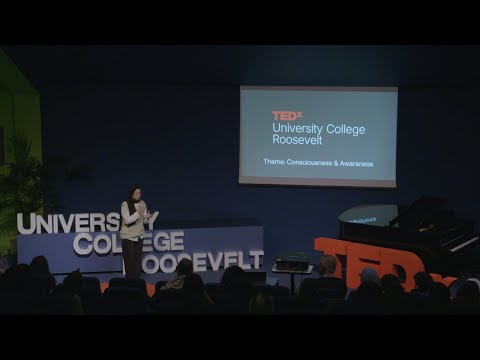
How to build bridges towards social change | Zahra Sebbar | TEDxUniversityCollegeRoosevelt
TEDx Talks· 2025-09-19 15:53
Core Message - The speech emphasizes the importance of listening to and trusting diverse voices to achieve social change [1][8][11][18][19] - It advocates for inclusivity in problem-solving and decision-making processes, especially for those whose voices are often unheard [1][8][10][11] - The speaker shares a personal story of injustice to illustrate the consequences of distrust and the power of collective action [1][6][15] Key Arguments - Social change requires bridging the gap between different perspectives by actively listening to all voices, not just the loudest [1][8][11] - Systems and policies should include the voices of the people they affect, particularly marginalized groups [8][9][10] - Assumptions can hinder effective solutions; it's crucial to challenge them and seek diverse input [12][13] - Trust is essential for building bridges and creating positive change, contrasting with systems built on distrust [15][18] Personal Experience & Advocacy - The speaker recounts being part of 50,000 families falsely accused of tax fraud by the Dutch government, leading to financial hardship and distrust [1] - This experience motivated the speaker to advocate for children and young people affected by the crisis, leading to the creation of a foundation for equal and just recovery [4][6] - The speaker highlights the importance of turning personal pain and shame into strength to drive social change [20]
‘We’ve forgotten how to disagree’: Eddie Glaude on rising political violence in U.S.
MSNBC· 2025-09-11 17:14
Political Violence & Radicalization - A recent survey in May found that 39% of Democrats believe force was justified to remove Donald Trump from the presidency [2] - The same survey found that 24% of Republicans supported the use of the US military by Donald Trump to suppress protests [2] - 55% of respondents who supported the use of force meant lethal force, such as assassinations and shootings [3] - The US is more radicalized than at any time in the four years of conducting quarterly surveys on support for political violence [2] Social & Political Factors - The US is undergoing a historic shift from a white majority to a white minority democracy [10] - This shift is contributing to political disruption and violence, fueling the rise of figures like Donald Trump and reactions from the left [10] - Incendiary rhetoric on both sides is a significant problem, exacerbating grievances [8] - Social change often leads to major political disruption and political violence [9] Potential Solutions & Challenges - Political leaders need to restrain their constituents and condemn violence from all sides [19][20] - Deplatforming people from social media is not a sufficient solution because of underlying social change reasons [11] - The current situation is reminiscent of the political violence in the 1960s, but the driving factors are different [16][17] - It will be very difficult to stop the violence now, given the current political climate and the presence of weapons [13][6]

The invisible roots of social change | Satyam Arora | TEDxYouth@AICS
TEDx Talks· 2025-08-07 14:59
Core Idea - The talk emphasizes the power of grassroots movements, highlighting that significant social and technological changes often originate from small, bottom-up efforts by ordinary people [3][4] - Grassroots movements don't appear revolutionary initially; they often seem unconventional or inconvenient, but they possess the potential to reshape the world [8] - Technology amplifies grassroots movements by providing a louder voice and better connectivity [15] Examples of Grassroots Movements - Rosa Parks' refusal to give up her seat sparked the Civil Rights Movement in the United States [5][6] - The Chipko movement in India, where villagers hugged trees to prevent logging, became a global blueprint for environmental activism [6][7] - Linus Torvalds' creation of Linux in his dorm room led to an operating system that powers Android smartphones, servers, and supercomputers [8][9][10] - Zipline, a startup, uses drones to deliver blood, vaccines, and medicines to over 3,000 clinics and hospitals in Africa [10][11] - Open Bionics creates affordable and empowering 3D-printed robotic prosthetics for children [11][12] - Embrace infant warmers, created by Stanford students, have saved over 400,000 lives in Asia by providing a portable and electricity-stable warming solution for premature babies [13][14] - The metoo movement gained global recognition through viral stories and tweets, transforming a social taboo into a global reckoning [14][15] Key Elements for Starting a Movement - Stubborn optimism, persistence, community, curiosity, and a sense of humor are essential for initiating change [19] - Individuals don't need a million followers to make a difference; they need an idea and the courage to act [20] - Real change is a slow and steady process, built by individuals solving problems in their communities [15][16]
Transforming communities in unlikely spaces | Terrance Hinton | TEDxOhioStateUniversity
TEDx Talks· 2025-08-06 15:57
[Music] When you think about social change, when you think about community, what do you envision? Do you envision one group of individuals from an affluent community serving and assisting individuals from an underserved community? Maybe you picture social change to be serving individuals within your own prospective communities. This, of course, is normal. But what if I told you that social change also takes place in unexpected places? See, I've always been fascinated by the criminal justice system. I'm a be ...
True Heroes are Movement Builders | Sheyda Brown | TEDxGreenwood
TEDx Talks· 2025-07-14 16:43
[Applause] Let me paint you a picture. It's 2011. I'm in high school at a Friday night football game.I along with my two best friends are wearing our sweatshirts that display the words cookie girls on the back. I didn't understand a single rule about football, but for social acceptance, I knew I needed to be there. A lot of my upbringing felt this way, pretending to care about things I didn't in order to assimilate.It was my way of preventing any potential rejection that might come my way, especially the ki ...
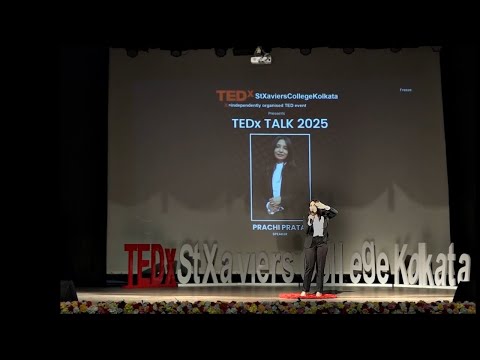
Breaking Boundaries: Legal Literacy and Social Change | Prachi Pratap | TEDxStXaviersCollegeKolkata
TEDx Talks· 2025-07-01 16:43
Core Message - The speech emphasizes that perceived limitations are often self-imposed constructs based on social, historical, and personal biases, suggesting that individuals have the power to transcend these limitations [1][17][19] - It highlights the importance of challenging existing norms and laws to bring about societal change, citing examples where individuals' actions led to significant legal and social reforms [2][3][13][14] - The speech advocates for legal literacy, emphasizing that awareness of one's rights is crucial for accessing justice and challenging systemic issues [7][9][11][12] Societal Impact & Legal Perspective - The speaker shares personal experiences and legal cases to illustrate how individuals can challenge societal norms and existing laws to effect change, including examples related to women's rights and legal rights [5][6][15][16] - The speech points out the lack of legal literacy at the grassroots level and advocates for workshops and seminars in vernacular languages to educate people about their rights [11] - It addresses the issue of "prisonization," where individuals in prison are conditioned to behave as prisoners, losing their social identity, and uses examples of individuals who overcame this mental conditioning [20][21][22][23] Call to Action - The speech encourages self-reflection to identify and challenge deeply rooted social, historical, and cultural conditioning [19] - It urges individuals to go beyond societal expectations and contribute to changing the lives of those around them, emphasizing personal responsibility in driving change [24] - The speaker advocates for challenging existing laws and norms, highlighting that landmark judgments and criminal amendments can result from such challenges [13][14]