Software - defined vehicle

Search documents
Chassis Supply Chain's "iPhone Moment": China's Tier 1 Shift as LeeKr Emerges
Prnewswire· 2026-01-19 04:11
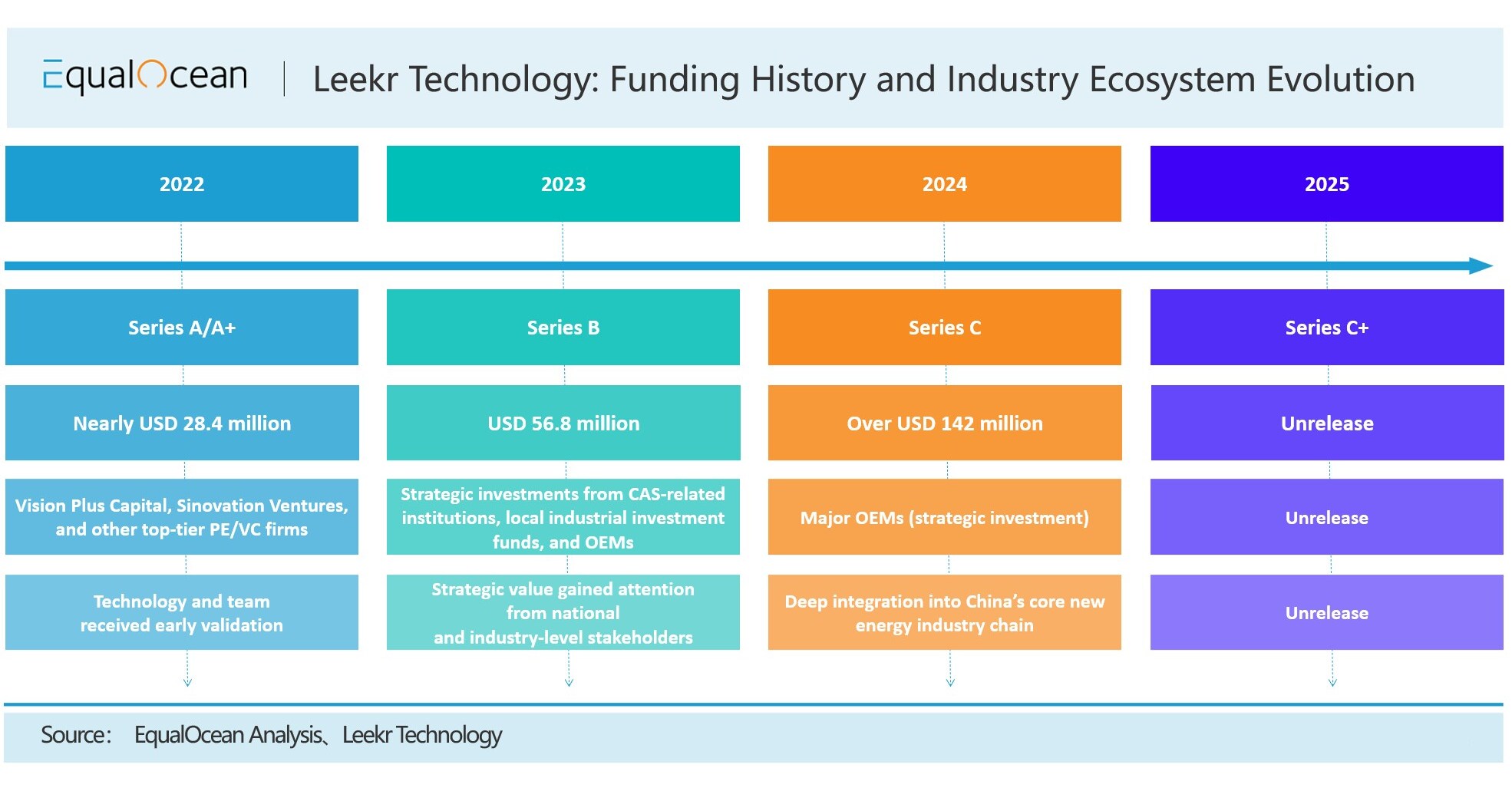
Industry Overview - China's electric vehicle (EV) industry has transformed into a leading force globally, with over 2 million EVs exported in the first ten months of 2025, nearly double the previous year [1] - Global vehicle sales reached approximately 70.53 million units from January to September 2025, with new energy vehicles (NEVs) accounting for over 22% of total sales, and nearly 70% of NEV sales growth originating from China [2] - China holds a 70%–85% global market share in critical components like batteries, driving the global shift towards electrification [2][3] Supply Chain Transformation - The automotive supply chain is undergoing a structural change, with China establishing systemic advantages in battery supply chains, electric drive platforms, and manufacturing efficiency [3] - Chassis-level system solutions are evolving from mechanical components to core enablers of intelligent driving, with technologies like brake-by-wire and steer-by-wire becoming essential [4] Company Spotlight: LeeKr Technology - LeeKr Technology, founded in 2021, has raised over USD 284 million in financing, indicating strong investor confidence in its technical direction and the broader industry trend [7][9] - The company has secured significant funding rounds, including USD 56.8 million in Series B financing in 2023, marking its transition from a promising startup to a strategic player in China's intelligent EV ecosystem [10][11] - By 2024, LeeKr closed a Series C funding round of over USD 142 million, with participation from government-guided funds and major OEMs, further integrating it into China's NEV supply chain [13][15] Strategic Partnerships and Market Position - LeeKr serves over ten automaker customers, with its products deployed across more than thirty vehicle models, showcasing its technical validation and industry trust [17] - The company is positioned to evolve from a supporting role to a key provider of foundational capabilities in the smart EV supply chain, addressing challenges of sustainable operation and scalability [24][26] Global Expansion Strategy - LeeKr's globalization strategy involves expanding alongside automotive customers into overseas markets, establishing localized manufacturing for critical components [21][22] - The cooperation with Geleximco Group exemplifies LeeKr's approach to translating China's engineering depth into globally applicable industrial capabilities [26]

DXC Introduces Next-Gen Automotive Software Platform AMBER at CES 2026
Prnewswire· 2026-01-07 14:00
Core Insights - DXC Technology has launched AMBER, a next-generation automotive software platform aimed at enhancing in-vehicle infotainment systems, developed by DXC Luxoft [2][8] - AMBER incorporates embedded AI capabilities to streamline software engineering workflows, accelerate product launches, reduce integration costs, and improve the overall in-car experience [2][4] - The platform allows automakers to innovate rapidly and reduce development time by 50%, while achieving 30% cost savings through a standardized approach [8] Company Overview - DXC Technology is a leading enterprise technology and innovation partner, providing software, services, and solutions to global enterprises and public sector organizations [9] - The company is a trusted partner to eight of the world's ten largest vehicle manufacturers, powering over 50 million vehicles [6] - AMBER is showcased at the Consumer Electronics Show (CES) in Las Vegas, highlighting its capabilities and live demonstrations [6] Industry Context - The automotive industry is undergoing rapid transformation with increasing technical complexity and tighter development cycles, prompting automakers to seek competitive advantages through technology and innovation [3] - AMBER's open architecture supports hardware independence and continuous updates, allowing manufacturers to adapt to evolving technology and consumer expectations [5] - The platform integrates third-party AI solutions, enhancing user experiences across various vehicle types, including luxury and commercial vehicles [5]


REE Automotive Receives Nasdaq Extension to Regain Compliance
Globenewswire· 2025-12-30 14:58
Core Viewpoint - REE Automotive Ltd. has been granted a 180-day extension by Nasdaq to meet the $1 minimum bid price requirement for its Class A ordinary shares, now having until June 29, 2026 to regain compliance [1][3]. Compliance Status - Nasdaq notified REE on July 1, 2025, that its Class A ordinary shares had been below $1.00 for 30 consecutive business days, triggering a deficiency under the Minimum Bid Price Requirement [2]. - Following the extension request, Nasdaq confirmed that REE meets all other continued listing criteria, allowing the company to continue trading under the symbol "REE" during the additional compliance period [3]. Compliance Requirements - To regain compliance, REE's ordinary shares must achieve a closing bid price of at least $1.00 per share for a minimum of 10 consecutive business days during the additional compliance period [4]. - The company is considering various options to regain compliance, including a potential reverse stock split if necessary [4]. Company Strategy - The company remains focused on executing its strategy and is committed to regaining compliance with Nasdaq's listing requirements [5]. - REE Automotive develops software-defined vehicle (SDV) technology aimed at enhancing vehicle safety, performance, and reliability through its advanced Zonal SDV Architecture [5]. - The technology allows for continuous updates and improvements throughout a vehicle's lifespan, making REE vehicles adaptable to market changes [5].


General Motors Company (NYSE:GM) FY Conference Transcript
2025-11-19 14:42
Summary of the Conference Call Company and Industry - The conference call involved General Motors (GM) and was part of the Barclays Global Autos and Mobility Tech Conference, focusing on the automotive industry and electric vehicles (EVs) [1][2]. Core Points and Arguments 1. **Quarterly Performance and Expectations** - GM's performance in the fourth quarter is in line with expectations, despite the sunsetting of the $7,500 consumer tax credit for EVs [3][4]. - Full-size pickups gained market share in October, indicating strong demand despite market volatility [4]. 2. **Future Projections for 2026** - GM anticipates a stronger performance in 2026 compared to 2025, driven by reduced EV losses, warranty costs, and stable tariffs [5][6]. - The company expects consumer demand to stabilize around 16 million units, which supports their inventory and incentive strategies [8][9]. 3. **Inventory Management** - GM's total dealer inventory is down 16% year-over-year, indicating effective inventory discipline [10][11]. - The company is focused on maintaining price discipline in the industry despite fluctuations in inventory levels [10]. 4. **Competitive Dynamics** - GM is prepared for increased competition as other manufacturers ramp up capacity, but believes its vehicle quality and portfolio will sustain its market position [13][14][15]. 5. **Warranty Costs and Supplier Issues** - Warranty costs are projected to be around $1.5 billion this year, primarily due to supplier quality issues [17][18]. - GM is implementing measures to improve supplier quality and stabilize warranty costs moving into 2026 [19]. 6. **Tariff Impacts** - Tariffs are expected to stabilize, with potential benefits from agreements with Korea, Mexico, and Canada [20][21]. - The company has adjusted its tariff guidance to $3.5 billion-$4.5 billion gross, with a 35% mitigation expected [22]. 7. **Electric Vehicle Strategy** - GM is currently losing approximately $4 billion-$5 billion on EVs, but is working on strategies to improve profitability through better mix, credits, and overhead management [26][28]. - The company acknowledges that demand for EVs may be lower without the previous incentives, and is adjusting production accordingly [29][30]. 8. **Research and Development (R&D) Focus** - R&D efforts are now concentrated on battery technology and software-defined vehicles, with a shift away from broad product proliferation [34][35]. - GM aims to achieve a roadmap for autonomous driving by 2028, emphasizing safety and affordability [54][55]. 9. **Financial Outlook and Capital Allocation** - GM plans to allocate $10 billion to $12 billion in capital expenditures over the next few years, while also focusing on returning cash to shareholders [47][48]. - The company has paid down $1.5 billion in debt this year and aims to maintain a strong balance sheet [48]. 10. **Market Position and Margins** - GM is targeting an 8-10% margin over the next couple of years, despite challenges from tariffs and market conditions [36][39]. - The company believes it can achieve this through disciplined cost management and a strong product roadmap [39][40]. Other Important Content - GM's customer demographic has shifted, with a broader portfolio allowing for profitability across various segments, including small SUVs and mid-size pickups [58][59]. - The company is aware of the need to adapt to changing consumer behaviors and market conditions, maintaining flexibility in inventory management [60]. - GM is focused on retaining control over its software and data as it transitions to software-defined vehicles, partnering with tech companies where beneficial [61][62].

ECARX Secured up to $150 Million to Advance Strategic Growth Initiatives and Strengthen Liquidity
Prnewswire· 2025-10-31 20:10
Core Insights - ECARX Holdings Inc. has entered into a securities purchase agreement with ATW Partners to issue convertible notes totaling up to $150 million, aimed at enhancing liquidity and strengthening its balance sheet [1][2] Financial Position - The financing is expected to improve ECARX's liquidity and provide financial flexibility for strategic priorities, including global expansion and product innovation [2] - The proceeds will support investments in software-defined vehicle and intelligent cockpit technologies [2] Company Overview - ECARX is a global automotive technology provider, delivering solutions for next-generation smart vehicles, including system on a chip (SoC) and central computing platforms [4] - Founded in 2017 and listed on Nasdaq in 2022, ECARX employs over 1,600 people across 13 locations worldwide [5] - The company has partnerships with major automakers, including Volkswagen Group and FAW Group, and its products are present in over 9.3 million vehicles globally [5]