Sustainable practices

Search documents
Walmart makes a massive move for clothing customers
Yahoo Finance· 2026-03-25 16:33
Core Insights - In an uncertain economy with rising food prices, consumers are increasingly focused on value, which is not solely defined by price but also includes quality, service, and sustainability [1][2] Consumer Behavior and Trends - Up to 40% of brand value perception is influenced by non-price factors such as quality and service [2] - American consumers are projected to spend $230 billion on eco-friendly products by 2025, accounting for approximately 24.8% of total retail spending [3] - 80% of consumers are willing to pay a premium of 9.7% for sustainable products, despite inflation [4] Walmart's Sustainability Initiatives - Walmart has partnered with Rubi Laboratories to explore carbon capture technology aimed at creating garments with zero waste [5][6] - The collaboration has progressed to pilot scale, with Rubi raising $7.5 million and securing over $60 million in multi-year agreements with fashion brands [7] - Rubi's technology transforms CO2 into cellulose polymers, requiring significantly less capital than traditional production methods [9] Environmental Impact - Rubi's technology could potentially reduce the need for logging approximately 200 million trees annually for fabric production [11] - Walmart's sustainability efforts align with its goal to be powered by 100% renewable energy by 2035 and achieve zero emissions by 2040 [20] Competitive Landscape - Other brands, including H&M and Zara, are also exploring similar carbon capture technologies for sustainable fashion [12][17] - Walmart's brand index has improved, holding a 5-point lead over the industry, but consumer loyalty remains fragile, with true loyalty dropping to 20% in 2025 [18][19] Recent Developments - John Furner became the new president and CEO of Walmart Inc. in February 2026, marking a leadership change [23] - Walmart is implementing various initiatives, including digital shelf labels and a clean label initiative, to enhance customer experience and sustainability [23]

Lindsay(LNN) - 2026 Q1 - Earnings Call Presentation
2026-01-08 16:00
Financial Performance - Revenue decreased by $10.5 million, a 6 percent decrease compared to the prior year[10] - Operating income decreased by $1.3 million, a 6 percent decrease compared to the prior year[10] - Diluted earnings per share decreased by $0.03 per share, a 2 percent decrease compared to the prior year[10] - Irrigation revenue decreased by $13.7 million[10] - Infrastructure revenue increased by $3.2 million[10] Irrigation Segment - Irrigation North America revenue decreased 4 percent to $74.3 million[15] - Irrigation international revenue decreased 15 percent to $59.1 million, but included a favorable foreign currency translation effect of $1.5 million[17] Infrastructure Segment - Infrastructure revenue increased 17 percent to $22.4 million[25] - Infrastructure operating income increased 9 percent to $4.5 million[25] Market Factors & Highlights - USDA estimated 2025 U S net farm income to be $179.8 billion, a 41 percent increase from 2024 U S net farm income of $127.8 billion[12] - The company completed share repurchases of $30 million during the quarter[7] - The company secured an $80 million irrigation and technology project in the MENA region subsequent to quarter-end[7]

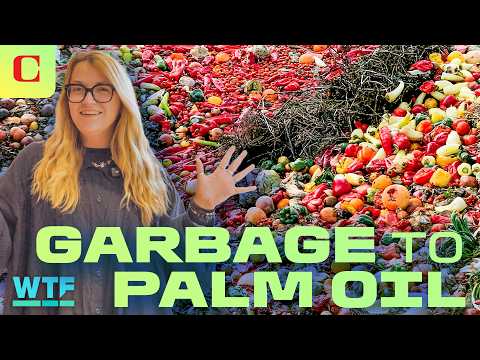
Food Made From Garbage Is Here – and It Could Save the Planet
CNET· 2025-09-07 12:01
Sustainable Food Production & Innovation - The food industry is exploring sustainable practices like lab-grown meats and bioengineering to address the future of food production [2] - Yeast, specifically Metschnikowia Pulcherrima, is being cultivated on food waste to create an oil equivalent to palm oil, cocoa butter, or rapeseed oil [5] - This oil production process involves growing yeast on waste feedstock, extracting oil droplets from the cells, and using the oil in various food products [6] - The agriculture sector contributes an estimated 297% of all carbon emissions [12] - Genetic engineering, including GMOs, is being explored as a technology to engineer plants that don't need fertilizers [8][9][10] Challenges & Consumer Perception - Palm oil production leads to deforestation, loss of animal habitats, and labor exploitation [2] - The agriculture and food industry faces challenges including climate change, extreme weather events, and food insecurity [11] - Consumer acceptance of food made from waste may be hindered by concerns about taste and disgust [7] - Industrial factory farming is considered cruel and environmentally problematic, prompting a reevaluation of what is considered 'natural' [8]