Tariff-induced economic uncertainties

Search documents
2 Railroad Stocks to Watch From the Challenging Industry
ZACKS· 2025-11-24 18:01
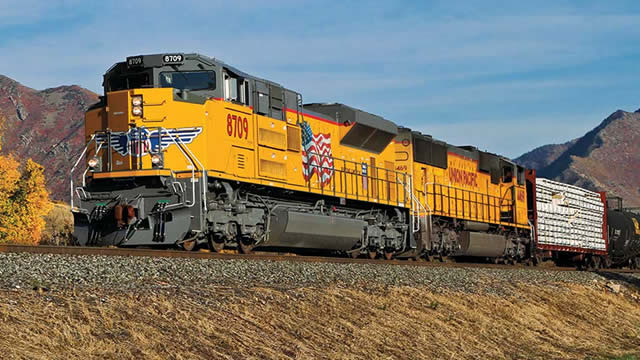
Core Viewpoint - The Zacks Transportation - Rail industry is facing multiple challenges, including tariff-induced economic uncertainties, inflationary pressures, high interest rates, and supply-chain disruptions. However, Union Pacific Corporation and CSX Corporation are positioned to navigate these challenges effectively, aided by declining fuel costs which support bottom-line growth [1]. Industry Description - The Zacks Transportation - Rail industry comprises railroad operators that transport various freight types across North America, focusing on logistics and supply-chain services. Revenue primarily comes from freight, with some companies also earning from rail-related services like repairs and land sales [2]. Factors Deciding the Industry's Outlook - Strong financial returns for shareholders are evident as companies increase dividends and buybacks, reflecting financial strength. CSX announced an 8.3% quarterly dividend increase, while Union Pacific raised its quarterly cash dividend by 3% to $1.38 per share [3]. - The decline in oil prices, which fell nearly 20% from the beginning of 2025, is a positive factor for the industry as it reduces fuel expenses, a significant cost for transportation companies [4]. - Economic uncertainty persists due to tariff policies that disrupt supply chains and increase costs, creating challenges for the industry and affecting investor sentiment [5]. Industry Performance and Valuation - The Zacks Transportation - Rail industry currently holds a Zacks Industry Rank of 211, placing it in the bottom 13% of over 250 Zacks industries, indicating gloomy near-term prospects [6][7]. - Over the past year, the industry has underperformed the S&P 500, declining 8.3% compared to the S&P 500's increase of 12.9%, while the broader sector fell by 15.5% [9][10]. - The industry is trading at a trailing 12-month price-to-book (P/B) ratio of 5.82X, lower than the S&P 500's 8.19X but above the sector's 3.12X [13]. Company Insights - Union Pacific, based in Omaha, NE, is well-positioned for growth due to stable e-commerce demand, cost-cutting efforts, and a strong track record of earnings surprises, having surpassed the Zacks Consensus Estimate in three of the past four quarters [17][18]. - CSX, located in Jacksonville, FL, anticipates total volume growth for 2025, focusing on operational excellence and efficiency initiatives, with capital expenditures projected at $2.5 billion this year [21][22]. CSX has also surpassed the Zacks Consensus Estimate in two of the past four quarters [23].


DAL vs. UAL: Which Airline Stock is a Stronger Play Now?
ZACKS· 2025-04-30 15:50
Core Viewpoint - The current economic uncertainties, particularly due to tariffs, are negatively impacting domestic air travel demand for major U.S. airlines, including Delta Air Lines (DAL) and United Airlines (UAL), leading to a reassessment of their investment potential. Group 1: Delta Air Lines (DAL) - DAL is facing a slowdown in domestic air travel demand, prompting the withdrawal of its full-year 2025 outlook and a reduction in planned capacity growth from 3-4% to flat in the second half of 2025 [4][5] - Despite challenges, DAL benefits from declining oil prices, which have led to a 7% year-over-year decrease in fuel expenses in Q1 2025, positively impacting its bottom line [6] - DAL resumed quarterly dividends in 2023 and increased its payout by 50% in June 2024, reflecting confidence in cash flow and appealing to income-seeking investors [7] - The airline's liquidity is strong, ending Q1 2025 with $3.7 billion in cash against $2.9 billion in debt, indicating sufficient cash to meet obligations [8] Group 2: United Airlines (UAL) - UAL is also experiencing a slowdown in domestic travel but has seen strong international revenues, with Atlantic and Pacific unit revenues increasing by 4.7% and 8.5% year-over-year, respectively [9] - UAL has provided earnings per share guidance for 2025 under two scenarios: $11.50 to $13.50 in a stable market and $7 to $9 in a recessionary environment [10][11] - To address weak demand, UAL plans to reduce scheduled domestic capacity by 4 points starting in Q3 2025, while facing high labor costs and fleet delivery delays due to issues with Boeing's 737 MAX [12][13] - UAL announced a $1.5 billion share buyback plan in October 2024, marking its first buyback since the pandemic, and has repurchased $451 million in shares through April 2025 [14] Group 3: Comparative Analysis - The Zacks Consensus Estimate indicates a 0.6% decrease in DAL's 2025 sales, while UAL is expected to see a 2.9% increase in the same period [15][16] - Both airlines have seen their EPS estimates trending downward over the past 30 days, with DAL's 2025 EPS expected to drop by 12.7% and UAL's by 3.6% [15][16] - Year-to-date, DAL and UAL stocks have declined significantly, with DAL down 30.5% and UAL down 29% [18] - DAL is trading at a forward sales multiple of 0.44, while UAL is at 0.37, both below their industry's average, indicating attractive valuations [21] Group 4: Conclusion - The uncertain market environment is adversely affecting both DAL and UAL, but DAL's dividend payments and stronger liquidity position make it a more favorable investment compared to UAL, which does not offer dividends and faces fleet-related concerns [24][25][26]