Textile recycling

Search documents
Climatex secures $4.1m in latest funding, appoints new CEO-designate
Yahoo Finance· 2026-03-02 11:25
Core Insights - Climatex has secured $4.1 million in funding to support the expansion of its engineered construction threads and textile solutions aimed at promoting circularity and recycling-readiness in the textile industry [1][5] - The company has filed two new patents for innovative technologies: a dissolvable thread sewing system called Stitchlock and a circular knitting process known as Knitlock, both designed for controlled disassembly and material recovery [1] Company Developments - Michael Kleindl, founding partner of Collateral Good, expressed excitement about supporting Climatex's growth phase, highlighting the uniqueness and strong protection of its patented circular textile technologies [2] - Camilla Skjønning Jørgensen has been appointed as CEO-designate to lead Climatex's international scale-up efforts, bringing over 20 years of experience in sustainability and innovation within the fashion and textile sector [3] Strategic Focus - In her new role, Jørgensen will focus on extending Climatex's technology into global markets such as workwear, fashion, and interior design, while also building partnerships with industrial clients [3] - Climatex aims to rethink textile construction at the product design stage to enable high-quality, durable products that are designed for disassembly and recycling from the outset [4] Market Positioning - Climatex specializes in engineered construction threads that facilitate circular textile systems and licenses its technologies to global manufacturing partners and thread producers [4] - Current co-CEOs Adrian Obrist and Patric Rupp will remain on the board as shareholders, emphasizing the company's commitment to its vision of a circular economy [3][4]
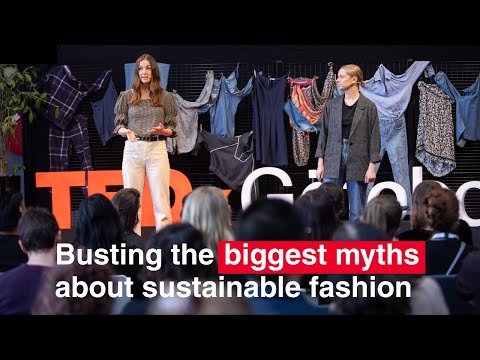
Busting the myths about sustainable fashion | Maja Nellström & Matilda Lidfeldt | TEDxGöteborg
TEDx Talks· 2025-07-14 16:20
Environmental Impact of Fashion Industry - The fashion industry is resource-intensive and contributes to climate change and water scarcity [1] - The industry has been focusing on the wrong solutions regarding environmental impact [2] - Textile recycling alone won't solve the fashion industry's environmental problem [4] - Fiber production accounts for only about 10% of the total climate impact of a cotton t-shirt, while yarn to garment production accounts for more than 70% [7] - Scaling up textile recycling in Europe from less than 1% to 10% by 2035 would only decrease the climate impact by less than 1% [9][10] - Decreasing clothing consumption by 10% would directly reduce the climate impact by 10% [10] Consumer Behavior and Transportation - Transports account for about 15% of the total climate impact of a cotton t-shirt [12] - User transport (transport to and from the store) accounts for about 13% of the total climate impact, which is more than the t-shirt's trip across the ocean [14] - Buying secondhand clothes can lower the carbon footprint only if it leads to less consumption of new clothes [19] Recommendations for Consumers - Focus on using what is already in the wardrobe [21] - When shopping for clothes, choose walking, cycling, or public transportation whenever possible [21] - Buy only the clothes that will be used, whether new or secondhand [21] - Buying less is more effective than buying smarter when it comes to fashion and the climate [21]