Transaction Cost Theory

Search documents
资产代币化:除了效率提升,投资者还需关注什么?
Sou Hu Cai Jing· 2025-11-28 06:04
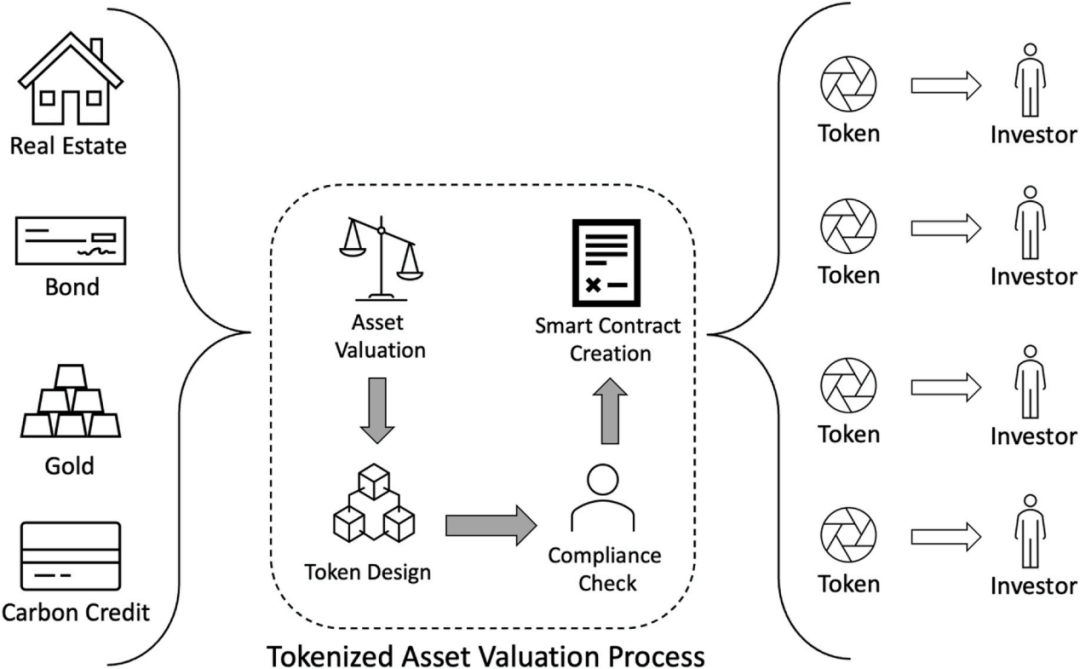
Core Insights - The article discusses how blockchain technology is reshaping traditional asset management through asset tokenization, highlighting its potential to enhance transaction efficiency and create value while also presenting new challenges in governance, risk distribution, and market trust [1][2]. Group 1: Asset Tokenization Overview - Asset tokenization refers to converting physical or digital assets into blockchain-based tokens, enabling trading and management on decentralized platforms, which alters liquidity structures and significantly reduces costs and time delays associated with traditional transactions [2][3]. - The motivation behind tokenization is to enhance asset liquidity, lower investment barriers, and promote more effective resource allocation [3]. Group 2: Transaction Cost Theory (TCT) and Tokenization - Transaction Cost Theory (TCT) provides a framework for analyzing cost structures in economic exchanges, indicating that traditional markets often have high transaction costs due to information asymmetry and imperfect contract enforcement [5]. - Tokenization reduces these costs through automation via blockchain and smart contracts, enhancing market efficiency, but it also raises concerns about governance and regulatory challenges in decentralized environments [5]. Group 3: Methodology - The research involved four case studies representing different asset classes: real estate, gold, bonds, and carbon credits, utilizing semi-structured interviews with 30 participants from various roles to gather data on transaction efficiency, value creation, governance, and market trust [6]. Group 4: Findings on Transaction Mechanisms - Tokenization significantly impacts transaction mechanisms by eliminating intermediaries and reducing costs, as seen in real estate where smart contracts facilitate direct ownership transfers, cutting down on time and fees [8]. - However, the removal of intermediaries introduces challenges in dispute resolution and error handling, potentially undermining investor confidence [8]. Group 5: Access and Ownership - Tokenization lowers investment barriers for high-value assets through fractional ownership, allowing smaller investors to participate in markets previously inaccessible, thus democratizing investment opportunities [9]. - It also enhances trading flexibility for traditionally illiquid assets, as demonstrated in the carbon credit market, where real-time trading is made possible [9]. Group 6: Governance and Oversight - Tokenization promotes decentralized governance, allowing token holders to participate in key decisions, which theoretically reduces agency costs and single points of failure [10]. - However, decentralized governance faces challenges in coordination efficiency and compliance, particularly across different regulatory jurisdictions [10]. Group 7: Compliance and Trust - The immutability and transparency of blockchain are seen as tools to enhance market trust, providing reliable transaction records and preventing fraud [12]. - Nonetheless, the rigidity of blockchain can limit the system's ability to respond to errors or market manipulation, potentially harming long-term trust [12]. Group 8: Discussion on Efficiency and Value Creation - Tokenization enhances transaction efficiency by eliminating intermediaries and lowering costs, with significant implications for various asset classes, particularly in real estate [15]. - It creates value by enabling broader access to previously inaccessible asset classes, although market volatility and security vulnerabilities may offset theoretical benefits [15]. Group 9: Decentralization and Risk Distribution - While decentralization improves efficiency and inclusivity, it complicates risk distribution and trust mechanisms, as the absence of intermediaries can increase system vulnerability to errors and fraud [16]. - Decentralized governance may be less efficient due to participant interest divergence and high coordination costs, while blockchain's transparency can limit flexibility in addressing market manipulation [16].