Universal Data Lake

Search documents
挖掘“非结构化”数据价值的5种方法
3 6 Ke· 2025-12-09 04:06
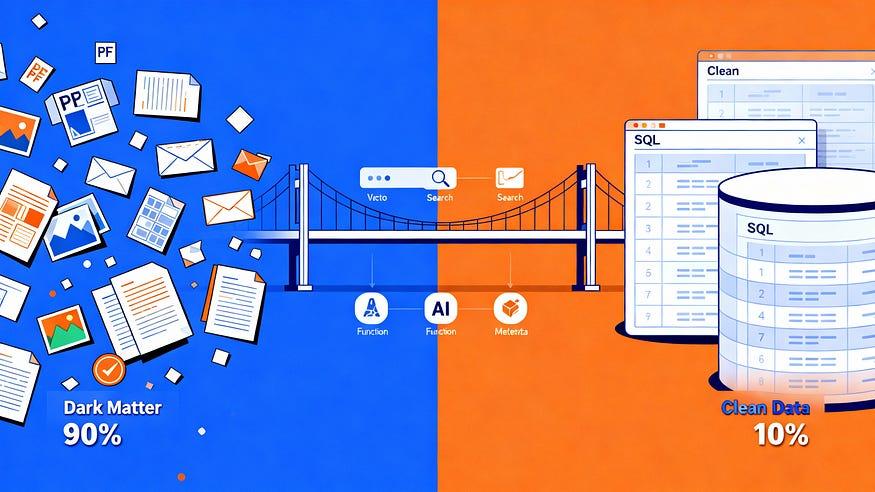
Core Insights - The future of data management is shifting towards integrating unstructured data with structured data, emphasizing the need for advanced data platforms that can handle both types effectively [1][15]. Group 1: Unstructured Data Challenges - By 2025, CEOs will prioritize insights from unstructured data, such as vendor contracts in PDF format, over traditional structured data queries [3]. - The current disconnect in data management stems from the lack of efficient connections between vector databases and relational databases, complicating the retrieval of specific information from unstructured sources [4]. - The processing of unstructured data is costly, with estimates suggesting that handling 1 PB of unstructured text for retrieval-augmented generation (RAG) could incur API costs up to $150,000 if not optimized [6]. Group 2: Solutions and Recommendations - Experts recommend building a model routing system that utilizes smaller language models for basic extraction tasks, reserving more complex models for intricate reasoning tasks [6]. - Investment in better data ingestion layers is crucial, as improved parsers yield a return on investment ten times greater than enhancements in language learning models [9]. - The importance of metadata is highlighted, as successful data teams will embed structured attributes into unstructured data before it enters vector storage [10]. Group 3: Evolution of Data Products - Documents are evolving from mere data blocks to data products, with a focus on extracting actionable insights from contracts and other unstructured formats [12]. - The emergence of a "universal data lake" is anticipated, where various data types coexist and are managed under a single directory, enhancing accessibility and usability [12]. - Companies are advised to audit their data directories to ensure that search results yield relevant data formats, indicating the effectiveness of their data management systems [13].