
credit score

Search documents
X @The Wall Street Journal
The Wall Street Journal· 2026-03-03 22:01
A credit score is an important metric for building a financial life. But for a lot of young people, it’s a mysterious and confusing number. https://t.co/x44VbEqtam https://t.co/Cn0SEO4UPs ...
How to apply for a personal loan in 7 steps
Yahoo Finance· 2026-02-28 21:54
Core Insights - The process of obtaining a personal loan is straightforward, with most lenders providing an online application that requires basic information such as income, credit history, and bank account details [2][3] Group 1: Credit Score Impact - Borrowers with excellent credit can access loans up to $100,000 with repayment terms of up to seven years, while those with fair or bad credit may face higher rates and borrowing limits [3] - Personal loan APRs can range from just below 6% to 35.99%, heavily influenced by the borrower's credit score, with higher scores leading to lower rates and larger loan amounts [4][5] - According to TransUnion's report, the median estimated APR varies significantly across credit score ranges, with near prime borrowers (601-660) facing a median APR of 26.90% and super prime borrowers (781+) enjoying a median APR of 10.90% [6] Group 2: Lender Requirements - Lenders assess multiple criteria beyond credit scores, including stable income and employment history, which are crucial for loan approval [8] - Most personal loans are unsecured, making them quicker and easier to obtain compared to collateral-backed loans, and shopping around with multiple lenders can yield better deals [8][9]
A 20-Year-Old Was 'Guilt-Tripped' By Her Mom To Co-Sign One Car And Secretly Signed Her Onto Another. 'Both Cars Have Been Repossessed'
Yahoo Finance· 2026-02-20 20:31
Group 1 - A young woman, Arly, experienced significant credit damage starting at age 20 due to co-signing a car loan under pressure from her mother, leading to a debt of approximately $20,000 by age 26 [1][2][6] - Initially, Arly had an 800 credit score, but after co-signing, she was misled into taking on a second car loan, resulting in repossession of both vehicles and additional personal loan debt [2][4][5] - The hosts of "The Ramsey Show" highlighted the power imbalance in familial financial decisions, emphasizing that creditors do not consider personal circumstances when dealing with debt [6][7]
Why This One Money Expert Can’t Stand Dave Ramsey’s Advice
Yahoo Finance· 2026-01-05 14:09
Core Argument - Tori Dunlap criticizes Dave Ramsey's financial advice for being overly rigid and not accounting for systemic barriers that affect individuals' ability to manage debt and build wealth [1][3]. Group 1: Guilt-Based Frugality Messaging - Dunlap acknowledges Ramsey's strict approach but believes it fails to recognize systemic issues such as student debt averaging over $42,000 per borrower and wage stagnation affecting 73% of employees [3]. Group 2: Overly General Debt Recommendations - Dunlap argues that Ramsey's blanket avoidance of all debt is misguided, as different types of debt have varying impacts on financial health [4][5]. - She highlights that paying off low-interest debt with the same urgency as high-interest debt can lead to significant financial losses, especially when considering the S&P 500's nearly 13% annual return over the past decade [6]. Group 3: Dismissal of Credit Scores - Dunlap disagrees with Ramsey's negative view of credit scores, asserting that they are valuable tools for improving financial situations when used responsibly [7].
VantageScore CEO: Divergence in consumers’ credit risk not revealed in average credit score
CNBC Television· 2025-12-11 20:07
Vantage Score Overview - Vantage Score is a leading national credit score established approximately 20 years ago by Experian, Equifax, and TransUnion [2] - Over 220 million people use Vantage Score to check their credit score [3] - Vantage Score utilizes alternative data like rental payment history, giving credit to consumers who pay rent on time, unlike some competitors [3] K-Shaped Economy Impact - The dominant theme is the K-shaped economy, with higher and middle-income consumers continuing to shop while lower-income consumers are not shopping as much [5] - Higher and middle-income consumers' late payments have dropped in three of the last four months, while lower-income consumers' delinquencies have increased [7] - Homeownership is a significant driver of the K-shape, as homeowners have more of a cushion and are not as exposed to rising rent [8] Consumer Sentiment and Credit Health - The average Vantage Score was 701 through the end of October, indicating overall healthy credit for the average consumer [12] - However, this average masks the divergence between high and low-income consumers, with many lower-income consumers facing challenges [13] - Lowering interest rates and a resurgent housing market could help lower-income consumers [14] Future Outlook - Vantage Score aims to expand homeownership opportunities to millions more consumers [9] - Retail and consumer spending make up two-thirds of the US economy, and home purchases tend to stimulate spending in other areas [10]


X @The Wall Street Journal
The Wall Street Journal· 2025-11-19 20:49
Company Initiatives - Block (parent company of Cash App and Afterpay) plans to launch its own credit score system for users [1]
WARNING: Never Use This Credit Card
Mark Tilbury· 2025-11-18 14:17
Credit Score Impact - Using store credit cards can negatively impact credit score [1] - Credit scores drop when credit utilization exceeds 30% [2] - Lenders perceive high credit utilization as reckless, even with timely payments [2] Store Credit Card Risks - Store credit cards offer small discounts that can be a trap [1] - These cards often have low credit limits, leading to quick maxing out [1] Alternative Solutions - Consider using cards that help build credit instead [2]
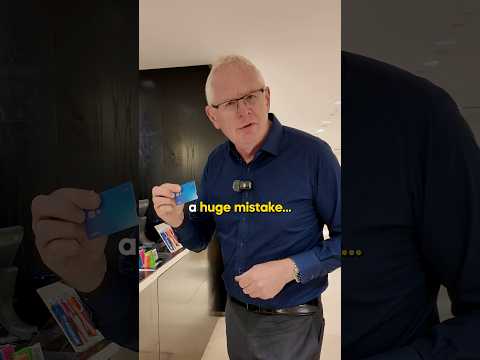
I have more than 20 credit cards — but I don't need them all. Would canceling a few cause a huge hit to my credit score?
Yahoo Finance· 2025-10-04 11:00
Core Insights - Canceling credit cards can negatively impact credit scores due to factors such as credit history length, credit mix, and credit utilization ratio, which is the second-most important factor in credit scoring [1][4][8] - The average American carries approximately 3.7 credit cards, with nearly 75% using credit cards for shopping, indicating a widespread reliance on this payment method [3][4] Impact of Canceling Credit Cards - Canceling a credit card shortens credit history and alters credit mix, both of which are significant factors in credit scoring [1][4] - The credit utilization ratio increases when a card is canceled, as the available credit decreases while the amount used remains the same, leading to a higher utilization ratio [1][4] - Payment history, which accounts for 35% of the credit score, is also affected by canceling a card, as it may result in the loss of positive payment history [1][4] Considerations for Canceling Cards - It may be justified to cancel credit cards if managing multiple cards leads to late payments or if cards have annual fees that are not worth the cost [6][7] - Keeping cards without annual fees or those that are the oldest can be beneficial for maintaining a good credit score [7][8] - A strategic approach to canceling cards, such as focusing on those with annual fees or lower credit limits, can help mitigate the impact on credit scores [10][11] Recommendations for Managing Credit Cards - Gradually canceling unnecessary cards rather than all at once can limit the negative impact on credit scores [11][12] - Maintaining a manageable number of credit cards, ideally around three to four, allows for the benefits of rewards programs without overwhelming management [12][13] - Regularly redeeming rewards and using card perks can justify keeping multiple cards, but excessive cards can lead to difficulties in tracking payments [13]
FHFA director Bill Pulte on FICO's changes to credit score licensing
CNBC Television· 2025-10-03 17:01
Housing Market Competition & Affordability - FHFA emphasizes the need for increased competition in the housing market to lower costs for consumers [2][4][8] - The director believes fostering competition is key to lowering costs, moving away from a perceived "cartel" situation with credit bureaus and FICO [4][8] - FHFA aims to create a competitive market where businesses lower costs and pass savings to consumers [4] - The director disputes claims that the new FICO program will add $99 to the cost of a typical mortgage [7] Credit Bureaus & FICO - FHFA encourages credit bureaus to be creative and competitive [5] - FICO is recognized for developing creative and constructive solutions [3] - The director denies having a personal vendetta against FICO [3] Mortgage Market & Interest Rates - The director expresses concern about the rise in mortgage rates from approximately 2-3% to 7% and hopes for a decrease [10][11] - The director believes the Fed's actions on interest rates will impact mortgage rates [9] - The director acknowledges a recent setback in mortgage applications and refinancing activity [9] Industry Collaboration - The director calls on all stakeholders, including FICO, credit bureaus, title companies, mortgage insurers, and homebuilders, to contribute to a competitive, safe, and sound market [6][7]

FICO to license scores directly to lenders skipping credit bureaus
CNBC Television· 2025-10-02 15:14
Market Dynamics - FICO's shares are surging, while credit bureaus are experiencing pressure [1] - FICO is now licensing its scores directly to lenders, bypassing credit bureaus [2] - Credit bureaus like TransUnion, Equifax, and Experian are facing stock hits due to disintermediation [2] - 90% of lenders use FICO scores [2] Pricing and Fees - FICO will charge $4.95 per credit score, a 50% reduction compared to the credit bureaus' merged system [3] - FICO charges $33 when the loan closes [3] Regulatory Response - FHFA Director Bill Py expressed dissatisfaction with FICO and credit bureau pricing [3] - Bill Py initiated a full-scale review of the credit bureaus [4] - Bill Py acknowledged FICO's decision as a positive first step and encouraged similar actions from credit bureaus [4]
