
fiscal discipline

Search documents
X @Bloomberg
Bloomberg· 2026-03-09 16:36
Rachel Reeves has spent time as Britain’s Chancellor of the Exchequer seeking to win over skeptical bond investors with a message of fiscal discipline. Yet with the clamor for an energy bailout growing louder, that discipline faces its greatest test. https://t.co/8PwWsPaNWR ...
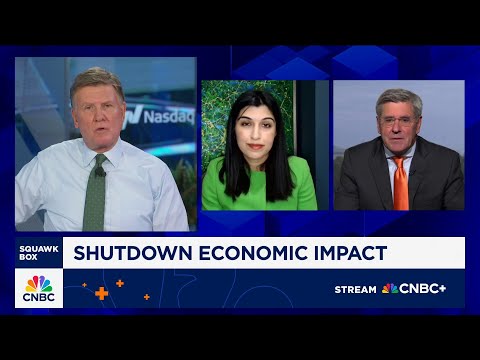
Shutdown stalemate day 34: The battle over health care costs
CNBC Television· 2025-11-03 13:45
Fiscal Discipline and Deficit Concerns - The US is facing a \$2 trillion annual deficit [2] - The national debt has increased from \$1 trillion to \$38 trillion over the past 40 years [3] - The current deficit is 6% of GDP and is projected to rise to 8-9% by the end of the decade [7][8] - Republicans are proposing \$1.5 trillion in budget cuts over 10 years, representing a small fraction (1.875%) of the total \$80 trillion budget [3] Healthcare Affordability and the Affordable Care Act (ACA) - Healthcare costs have almost tripled since the Affordable Care Act was passed 15 years ago [11] - The average family is now paying \$35,000 to \$40,000 per year for healthcare [13] - Concerns exist that expanding the ACA will primarily benefit large insurance companies, with 80% of the money potentially going to them [17] - Some argue that the ACA has been unaffordable and may have exacerbated healthcare inflation [6] Potential Consequences of Healthcare Cuts - Cuts to healthcare programs could lead to approximately 100,000 excess premature deaths over the next decade [9] - Reducing health insurance coverage may have adverse health consequences for families who have already budgeted for current premiums [19] Fraud in Healthcare Programs - Government auditors estimate over \$200 billion in fraud occurs annually in Medicare and Medicaid, involving ineligible individuals receiving benefits [4] Future Fiscal Challenges - Social Security and Medicare trust funds are set to expire within the next decade, posing significant fiscal challenges [20]

The Case For $7,000 Gold
Forbes· 2025-09-29 20:05
Core Viewpoint - The suspension of the U.S. dollar's convertibility into gold in 1971, known as the "Nixon Shock," marked a significant shift from fiscal discipline to a floating exchange rate system, leading to rampant government spending and increasing national debt [2][4][5]. Historical Context - Prior to 1971, the U.S. dollar was backed by gold, with a fixed exchange rate of $35 per ounce. Post-1971, the dollar became a fiat currency with no intrinsic value, contributing to inflation and national debt [3][5]. - U.S. government debt has surged from approximately $400 billion in 1971 to $37.5 trillion today, representing about 124% of GDP. Global debt has also escalated to $324 trillion, over 235% of world GDP [5]. Monetary Policy and Debt - The detachment from the gold standard allowed governments to increase spending without the need for fiscal restraint, leading to significant budget deficits financed by the Federal Reserve [4][5]. - The current economic environment is characterized by record levels of margin debt, which has risen to $1.06 trillion, up nearly 33% from the previous year, indicating potential market vulnerabilities [10][11]. Gold as an Investment - Gold is viewed as a hedge against excessive debt and monetary mismanagement, with projections suggesting a potential price increase to $7,000 per ounce by the end of President Trump's second term [7][12][16]. - Central banks are actively increasing their gold reserves, with a net purchase of 200 metric tons in the first seven months of the year, reflecting a 4% increase year-over-year [8][13]. Investment Strategy - A recommended investment strategy includes a 10% allocation to gold, split between physical bullion and high-quality gold mining equities, emphasizing the importance of regular rebalancing [15].

X @Bloomberg
Bloomberg· 2025-08-14 00:16
As Indonesian President Prabowo Subianto presents his 2026 budget to parliament Friday, the market will be watching how he intends to promote his populist agenda while maintaining fiscal discipline https://t.co/GAJ5Ri5GpO ...