
Hedge Funds

Search documents
Weekly Commentary: Sometimes Not Liquid At All
Seeking Alpha· 2026-02-28 08:45
Core Viewpoint - The article reflects on the author's extensive experience in the investment industry, particularly focusing on short-selling strategies and macroeconomic analysis, emphasizing the importance of understanding current financial developments and their implications for the market [1] Group 1: Professional Background - The individual has approximately 30 years of experience as a "professional bear," starting in late 1989 as a trader for a short-biased hedge fund [1] - The author worked with notable firms such as Fleckenstein Capital and East Shore Partners, and had a significant tenure at PrudentBear from January 1999 to the end of 2014 [1] - Prior to entering the investment field, the author served as a treasury analyst at Toyota during critical economic periods, which sparked an interest in macro analysis [1] Group 2: Influences and Insights - The author was influenced by Dr. Richebacher's writings, which introduced Austrian economics and shaped a lifelong passion for economic and macro analysis [1] - The author believes that significant developments in finance and policymaking are often overlooked by conventional analysis and media, leading to the creation of the Credit Bubble Bulletin to highlight these issues [1] - The article references the importance of contemporaneous analysis, drawing parallels to historical economic writings during the Roaring Twenties and Great Depression [1]

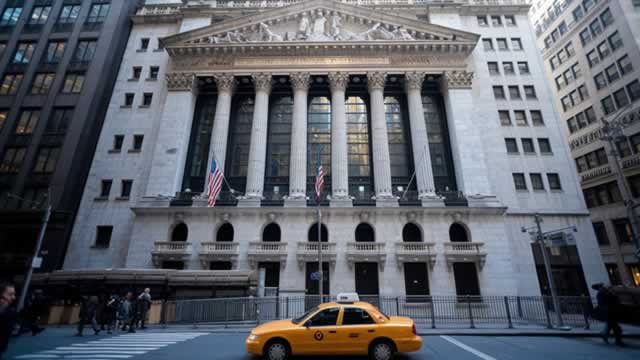
Here's what's necessary to return the incredibly concentrated U.S. stock market to normal levels
MarketWatch· 2026-02-26 10:22
Core Insights - D.E. Shaw, a prominent hedge fund manager, has analyzed the duration required for concentrated U.S. stock markets to revert to normal conditions [1] Group 1 - The analysis focuses on the current state of U.S. stock markets, which are experiencing significant concentration [1] - D.E. Shaw's calculations provide insights into market recovery timelines, indicating potential future trends for investors [1]

Man Group shares fall as profits decline, assets hit record
Reuters· 2026-02-26 08:31
Core Viewpoint - Man Group's shares declined despite a significant increase in assets under management, attributed to a drop in profits amid market volatility in the first half of 2025 [1][2]. Group 1: Financial Performance - Man Group reported a 35% increase in assets under management, reaching a record $227.6 billion in 2025 [1]. - Profit before tax fell by 14% to $407 million, although this figure exceeded analyst expectations [1][2]. - Total core net management fees decreased by approximately 2% to $1.1 billion compared to 2024 [5]. Group 2: Market Context - The hedge fund industry in 2025 showed a divide in performance, with some funds successfully navigating market challenges while others struggled due to algorithmic strategies [3]. - Systematic hedge fund peers averaged a decline of over 11% by the end of May 2025, while Man Group's systematic funds, particularly the AHL flagship funds, finished the year with returns over 5% [3][4]. Group 3: Analyst Insights - Analysts from Jefferies had anticipated assets to rise to $225 billion and profit before tax to be $342.9 million, indicating that Man Group's results surpassed these expectations [2]. - Deutsche Bank analysts noted that Man Group shares remain inexpensive relative to management and performance fee profits, as well as expected dividends [5].

Hedge funds creep back into tech stocks after weeks of selling
Reuters· 2026-02-24 09:36
Hedge funds creep back into tech stocks after weeks of selling | ReutersSkip to main content[Exclusive news, data and analytics for financial market professionalsLearn more aboutRefinitiv]Traders work on the floor at the New York Stock Exchange (NYSE) in New York City, U.S., February 19, 2026. REUTERS/Brendan McDermid [Purchase Licensing Rights, opens new tab]- Companies[JPMorgan Chase & Co]FollowLONDON, Feb 24 (Reuters) - Hedge funds last week bought the biggest tech stocks as well as those considered vuln ...

Mounting Uncertainty
Seeking Alpha· 2026-02-23 22:05
I'm at about 30 years persevering as a “professional bear.” My lucky break came in late-1989, when I was hired by Gordon Ringoen to be the trader for his short-biased hedge fund in San Francisco. Working as a short-side trader, analyst and portfolio manager during the great nineties bull market – for one of the most brilliant individuals I’ve met – was an exciting, demanding and, in the end, a grueling and absolutely invaluable learning experience. Later in the nineties, I had stints at Fleckenstein Capital ...

Hedge Funds Buy Mag 7, Eli Lilly — IVV, SPY, QQQ See Heavy Q4 Accumulation - iShares Core S&P 500 ETF (ARCA:IVV), Invesco QQQ Trust, Series 1 (NASDAQ:QQQ), State Street SPDR S&P 500 ETF Trust (ARCA:SP
Benzinga· 2026-02-23 16:51
Hedge funds accumulated large amounts of some of the largest U.S. equity ETFs in the fourth quarter of 2025, with the data reflecting their affinity for mega-cap tech and growth stocks.IVV led the list with a total of $41.5 billion in hedge fund allocations. BlackRock led the allocations with $6.3 billion, followed by Schonfeld Strategic Advisors with $5.4 billion and Millennium Management with $4.7 billion.SPY received $18.8 billion in allocations, with Jane Street Group contributing $5.5 billion. Capula M ...
Hedge Funds That Piled Into US Bitcoin Funds Are First to Exit
Yahoo Finance· 2026-02-23 09:33
Hedge funds that helped fuel a boom in US exchange-traded funds holding Bitcoin are in rapid retreat. Aggregate Bitcoin ETF allocations among the largest hedge fund holders fell 28% from the third to the fourth quarter of 2025, according to data compiled by CF Benchmarks, a wholly-owned subsidiary of crypto exchange Kraken. Most Read from Bloomberg Bitcoin is down almost 50% from its October peak of over $126,000. The token slid as much as 4.8% in early Asia trading on Monday to nearly $64,300, its low ...
Hedge Fund Fermat Says Surge in Cat-Bond Sales Is ‘Breathtaking’
Insurance Journal· 2026-02-20 14:49
Market Overview - The market for catastrophe bonds is experiencing an unprecedented influx of new issuers, with 16 new issuers expected in 2025, which is up to eight times the historical average for first-time issuers [1] - Cat bond sales are projected to reach approximately $24 billion this year, potentially matching last year's record [1] Drivers of Growth - The rise in inflation has increased the cost of rebuilding property by about 50% over the past five years, prompting insurers and reinsurers to transfer more risk to capital markets [2] - This trend has allowed alternative investment managers like Fermat Capital Management to play a larger role in providing financial support during natural disasters [2] Investment Performance - Fermat's returns in 2025 are expected to align with the 11% increase in the Swiss Re Cat Bond Index from the previous year [3] - Catastrophe bonds have yielded returns comparable to the MSCI World Index over the past five years, outperforming US corporate bonds [3] Market Dynamics - The influx of investor capital has led to a decrease in cat bond yields, currently around 6.5% above the US Treasury rate, down from approximately 11% in early 2023, yet still above the historical average of 5% [6][7] - The cat bond market is anticipated to reach $70 billion this year, factoring in the expected expiry of older bonds [7] Company Growth - Fermat Capital Management now manages about $11 billion in assets, an increase from $10.2 billion a year ago, despite losing a $3 billion portfolio management deal [8] - The flagship UCITS Cat Bond Fund has seen its net asset value grow to approximately $2.6 billion, more than tripling in size over the past year [9] New Developments - The UK government-backed program Flood Re issued its first cat bond for flood-related losses, reflecting the increasing severity of floods in Britain [10] - Fermat has confirmed its investment in the Flood Re cat bond, highlighting its commitment to addressing significant issues in the market [10]

Meet the $54 Billion Fund Manager Nobody’s Talking About
Yahoo Finance· 2026-02-18 16:19
Core Insights - Philippe Laffont, founder of Coatue Management, manages over $54 billion in assets, yet remains largely unknown to the public [3][4] - Laffont's net worth is estimated at $7.9 billion, ranking him 453rd among the wealthiest individuals globally [4][5] - Coatue Management is characterized by its aggressive focus on technology investments, as highlighted on its homepage [7] Company Overview - Coatue Management was founded in 1999 by Philippe Laffont, who previously worked at Tiger Management [4] - The firm is described as "tech-obsessed," indicating a strong emphasis on technology-sector investments [7] Investment Strategy - Laffont's investment approach is bold and focused on technology, which may provide valuable insights for retail investors [6] - The firm has financial interests in several prominent tech-forward companies, reflecting its strategic focus [8]
Michael Burry made $100M by betting against the housing market in 2008, now he’s set his sights on AI with these moves
Yahoo Finance· 2026-02-16 17:45
Group 1: Market Sentiment and Predictions - Concerns about speculation in the AI sector are rising, with Goldman Sachs CEO David Solomon warning that much of the capital invested in AI may not yield returns [1] - Burry's firm, Scion Asset Management, disclosed bearish positions against Nvidia and Palantir, indicating a belief that these stocks may decline [3] - Goldman Sachs and Morgan Stanley have warned of a potential market correction, with Goldman forecasting a possible 10%–20% drawdown in stocks within the next 12 to 24 months [5] Group 2: Company Performance - Palantir, a key player in the AI boom, saw its share prices soar in 2025 but has recently lost momentum [2] - Nvidia has emerged as a leading chipmaker in the AI race, with its shares surging 41% in late 2025 and an impressive 1,240% increase over the past five years, briefly reaching a $5-trillion valuation in October [2] Group 3: Investment Strategies - A put option allows investors to sell a stock at a predetermined price, typically used when expecting a decline in stock price [3] - Burry's comments on market bubbles suggest a cautious approach, advising that sometimes the best strategy is to avoid certain investments altogether [4][6]
