
保险

Search documents
从风险兜底到风险减量!科技保险如何赋能广东“两业融合”
Nan Fang Du Shi Bao· 2026-02-24 09:40
Core Viewpoint - The conference focused on the collaborative development of manufacturing and service industries, emphasizing the role of technology insurance in supporting technological innovation and modern industrial system construction in Guangdong [2][3]. Group 1: Industry Trends and Challenges - The push for high-level technological self-reliance and the development of strategic emerging industries such as new energy and aerospace is seen as a core engine for national high-quality development [3]. - The manufacturing sector faces a gap between hard investments and soft support from the service sector, leading to a reluctance among technology companies to innovate due to perceived risks, while financial institutions struggle with risk identification [3][4]. Group 2: Company Initiatives and Strategies - Ping An Property & Casualty Insurance aims to use technology insurance as a stabilizing force in the technology industry, transitioning from passive risk coverage to active empowerment [4][5]. - The company has over 20,000 research personnel and has applied for 4,342 patents, showcasing its commitment to enhancing technological capabilities [4]. - Ping An is developing a comprehensive insurance product system that supports the entire lifecycle of innovation, including coverage for research and development losses and patent protections [5]. Group 3: Financial Empowerment and Regional Development - As of 2025, Ping An has served over 15,000 technology companies in Guangdong, providing risk coverage exceeding 19.6 trillion yuan and paying out over 610 million yuan in claims [6]. - The company has pioneered artificial intelligence liability insurance, providing 4.34 billion yuan in risk coverage for 46 research and manufacturing enterprises [6]. - Ping An's practices reflect a broader trend of financial institutions addressing the challenges of industry-finance collaboration, transforming insurance from a risk compensator to a risk reduction service provider [6][7].



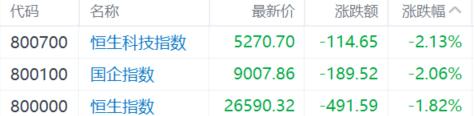
恒生指数下跌1.82% 恒生科技指数下跌2.13%
Xin Hua Cai Jing· 2026-02-24 09:31
新华财经香港2月24日电(记者林迎楠)24日,港股主要指数低开,截至收盘,恒生指数下跌1.82%至 26590.32点,恒生科技指数下跌2.13%至5270.70点,国企指数下跌2.06%至9007.86点。 当日恒指低开168.23点,开报26913.68点,开盘即为当日最高点,早盘期间震荡向下,午后有所反弹, 最终恒指跌491.59点,主板成交超2509亿港元。当日,港股通(南向)净流入超31亿港元。 整体来看,港口运输、百货业、建材水泥、高铁基建等股多为上涨,黄金、新能源车企、石油与天然 气、航空等股有涨有跌,新消费、有色金属、商业航天、生物医药、科网、银行、券商、房地产等股多 有下跌。 个股方面,小米集团跌2.24%,长飞光纤光缆涨1.17%,中国平安跌4.12%,中芯国际跌2.39%,泡泡玛 特跌5.88%,智谱涨12.14%,友邦保险跌0.93%,荣昌生物跌3.78%,建设银行跌1.83%,小鹏汽车涨 1.65%,商汤跌5.78%,老铺黄金跌6.46%,国泰君安国际跌4.48%,中国石油股份跌0.10%。 成交额前三的个股中,腾讯控股跌3.35%,成交超188亿港元;阿里巴巴跌2.76%,成交超1 ...
友邦保险(01299.HK)拟3月19日举行董事会委任的委员会会议批准全年业绩
Ge Long Hui· 2026-02-24 09:27
Group 1 - AIA Group (01299.HK) announced that a committee appointed by the company's board will hold a meeting on March 19, 2026, to consider and approve the release of the company's annual results for the year ending December 31, 2025, and to consider the proposal for a final dividend payment, if any [1]

2025 年四季度保险业资金运用情况点评:压实固收底仓,增持权益有空间
Guoxin Securities· 2026-02-24 09:17
Investment Rating - The investment rating for the insurance industry is "Outperform the Market" (maintained) [1][5] Core Insights - As of the end of Q4 2025, the balance of insurance funds reached 38.5 trillion yuan, a year-on-year increase of 15.7% [2][4] - The proportion of equity investments in insurance funds reached a nearly four-year high at 9.7%, while bond allocations remained high at 48.6% [2][10] - The overall investment yield for the year is expected to improve significantly due to the shift towards equity assets amid a declining long-term interest rate environment [2][26] Summary by Sections Industry Overview - The insurance industry has seen a continuous double-digit growth in fund utilization for three consecutive years, with a notable increase in stock and securities investment [4][10] - The net increase in stock investment for 2025 was 1.31 trillion yuan, significantly higher than the previous two years [11][13] Investment Strategy - The core strategy for insurance capital allocation moving forward includes increasing holdings in high-dividend assets, maintaining long-term bonds as a fundamental component, and exploring alternative asset classes [3][26] - The comprehensive solvency adequacy ratio for the industry was 181% at the end of 2025, indicating a strong capital position that supports further equity investments [3][26] Market Trends - The insurance sector is expected to continue increasing its equity investment ratio and scale in 2026, driven by strong sales of dividend insurance products and potential capital injections from shareholders [18][19] - Regulatory support and favorable market conditions are anticipated to enhance the attractiveness of equity investments for insurance companies [24][25]
港股收评:三指齐跌!恒科指跌2.13%,权重科技股全线下挫
Ge Long Hui· 2026-02-24 08:43
Market Overview - The Hong Kong stock market experienced significant declines, with the Hang Seng Index dropping by 1.82% and the Hang Seng Tech Index falling by 2.13% due to fears of tariffs and geopolitical tensions, influenced by a sharp decline in US stocks [1][2] - Major financial stocks, including banks and insurance companies, showed weak performance, particularly in the insurance sector, which saw notable declines [2][3] Sector Performance - The financial sector, particularly insurance stocks, faced substantial losses, with China Life down over 6% and New China Life down over 5% [12][13] - The entertainment and tourism sectors also suffered, with China Duty Free Group experiencing a drop of over 10% following the loss of some operating rights at Shanghai Airport [10][11] - Conversely, the semiconductor sector saw gains, with companies like Zhaoyi Innovation rising by nearly 12% due to strong demand driven by AI [8][9] Specific Company Movements - Major tech stocks such as Meituan and Tencent saw declines of over 4% and 3.35% respectively, contributing to the overall market downturn [3] - In the oil and gas sector, companies like Shandong Molong and Sinopec Oilfield Services saw increases of over 11% and 5% respectively, driven by concerns over potential disruptions in global oil supply due to geopolitical tensions [4][5] Future Outlook - Analysts predict that the insurance sector may face pressure in Q4 due to a temporary pullback in growth stocks, although a recovery is expected as growth styles strengthen in 2026 [12][13] - The commercial vehicle market is anticipated to grow significantly, with a reported 19% year-on-year increase in sales in January 2025, driven by the rise of new energy vehicles [6]
国联民生证券:银保渠道的重要性持续凸显 头部保险公司市场份额有望继续提升
智通财经网· 2026-02-24 08:23
Group 1 - The core viewpoint is that the bancassurance channel is expected to become a significant source of premium and NBV growth for the life insurance industry by 2026, with leading companies likely to expand their advantages [1] - There is a strong demand from residents for stable-yield financial products, leading to an increase in new single premiums in the bancassurance channel as residents shift funds from deposits to insurance products [1] - The popularity of participating insurance products, which offer relatively high returns and low volatility, aligns with the conservative investment preferences of bank customers [1] Group 2 - Banks are increasingly focusing on non-interest income and insurance services due to narrowing net interest margins and intensified competition in wealth management [2] - The importance of intermediary income from selling insurance products is rising for banks to enhance their non-interest income and diversify revenue sources [2] - Insurance companies' offerings, including savings and protection products, as well as health management and retirement community services, are crucial for banks to better serve their clients [2] Group 3 - Insurance companies that excel in the bancassurance channel and have a strong presence in the health and wellness ecosystem are likely to increase their market share in this channel [3] - The "reporting and banking integration" is leading to a decrease in the cost ratio of the bancassurance channel, making competition more rational [3] - Smaller insurance companies may struggle to compete for market share in the bancassurance sector, while leading companies with brand value and comprehensive service capabilities are expected to attract more clients and banks [3]

港股收评:恒指大跌1.82%,科技与金融齐挫,半导体储存概念股逆势上扬
Ge Long Hui· 2026-02-24 08:23
关税恐慌再现、以及地缘政治紧张,受美股大跌影响,港股马年第三个交易日三大指数大幅下挫,恒生 指数跌1.82%,国企指数跌2.06%,恒生科技指数盘中一度跌至2.7%,最终收跌2.13%。 具体盘面上,权重科技股全线下跌拖累大市走低,其中,美团跌超4%,腾讯盘中刷新阶段新低,小 米、阿里巴巴、京东皆有跌幅;大金融股(银行、保险、券商)全天表现弱势,尤其是保险股跌幅尤其明 显,中国人寿大跌6%,新华保险跌5.79%,中国银河、中金公司领衔中资券商股下跌;春节挡票房同比 大幅下滑,影视板块跌幅较大,濠赌股、机器人概念股、光伏股、苹果概念股、内房股、有色金属股纷 纷走低。 另一方面,半导体储存概念股逆势上扬,兆易创新大涨近12%领衔,集运欧线早盘一度大涨13%,港口 及海运股全天活跃,此外,AI应用"双雄"智谱、MINIMAX-WP表现强势。(格隆汇) ...
每日报告精选(2026-02-13 09:00——2026-02-24 15:00)-20260224
国泰海通· 2026-02-24 07:59
Group 1: Macroeconomic Insights - In 2026, the maturity of fixed deposits in China is projected to reach approximately 76-77 trillion yuan, with a significant seasonal peak of 32-34 trillion yuan in the first quarter[5] - The year-on-year increase in maturity pressure for 2026 is estimated at 9.6-10.8 trillion yuan, corresponding to a growth rate of 14.4%-16.3%, which is lower than the 17.7% growth rate in 2025[6] - About 25 trillion yuan of high-interest deposits are set to mature, representing approximately 32% of the total maturity volume, indicating a core pressure for renewal[6] Group 2: Trade and Tariff Analysis - As of November 2025, the effective tariff rate in the U.S. reached 9.8%, the highest since 1946, with China facing the highest actual tariff rate of 30.9%[9] - The actual tariff increase for China and India was significant, with increases of 20.2 and 17.3 percentage points respectively compared to 2024[10] - The U.S. is diversifying its import sources, with a notable decrease in imports from Asia, particularly China, while increasing imports from countries like Vietnam and Mexico[12] Group 3: Economic Recovery and Consumer Behavior - During the Spring Festival, average daily cross-regional passenger flow reached 248 million, a year-on-year increase of 5.1%, indicating a recovery in consumer activity[17] - The consumer confidence index is stabilizing, suggesting that the negative impact of previous economic conditions is beginning to ease[28] - The overall inflation rate in the U.S. for January was 2.4%, with core inflation pressures still present, particularly in sectors like transportation and education[31]
“AI末日报告”作者发声:市场恐慌超预期,呼吁征收“AI税”来应对失业
硬AI· 2026-02-24 07:54
硬·AI 作者 | 张雅琦 编辑 | 硬 AI 一份关于AI冲击的情景推演报告在周末引发全球市场抛售风暴之后,报告共同作者Alap Shah周二公开发 声,坦言市场反应远超预期,并呼吁政府对AI征税,以应对可能到来的大规模失业浪潮。 一份AI冲击情景报告引爆全球抛售,IBM单日暴跌13%创25年之最。报告作者Shah直言市场反应"远超预期",并警告未 来18个月白领岗位或减少5%,呼吁政府对AI征税以遏制失业负反馈循环——若就业消失速度快于预期,整体消费经济都 将面临风险。他表示,"如今人人满仓AI,增量买家不多了。" 01 市场反应远超预期 这份由Citrini Research在社交媒体发布的报告,叠加Nassim Taleb的市场警告及AI初创公司Anthropic的 相关声明,共同触发大规模抛售。IBM股价单日大跌13%,创25年来最大单日跌幅;DoorDash、美国运 通、KKR及黑石跌幅均超6%;相关软件ETF下挫4.8%,较去年9月高点的累计跌幅已扩大至约35%。 Shah坦言对市场反应感到意外。 "我原本预计会有小幅反应,但绝对比我们预期的要大," 他在周二表 示。 他分析称,考虑到美国市场所 ...


“AI末日报告”作者发声:市场恐慌超预期,呼吁征收“AI税”来应对失业
Hua Er Jie Jian Wen· 2026-02-24 07:36
Core Insights - A report on the impact of AI has triggered a global market sell-off, with the co-author Alap Shah acknowledging that the market reaction exceeded expectations and calling for government taxation on AI to address potential mass unemployment [1][2] Group 1: Market Reaction - The report, released by Citrini Research, combined with warnings from Nassim Taleb and statements from AI startup Anthropic, led to significant market sell-offs, including IBM's stock dropping 13%, the largest single-day decline in 25 years [2] - Shah expressed surprise at the magnitude of the market reaction, which he initially expected to be minor, noting that the AI trading environment has been bullish for over three and a half years, leaving few incremental buyers [2] Group 2: Employment Impact - Shah highlighted that the U.S. has not created any significant white-collar jobs in the past three years, predicting that AI will replace many positions, particularly in information-related roles, with an expected 15% unemployment rate among white-collar workers within 18 months if no policy interventions are made [3] - The report suggests that the impact of AI on white-collar employment will be most pronounced in the U.S. due to its dynamic labor market, where layoffs are easier compared to other regions [3] Group 3: Proposal for AI Tax - Shah urged the government to consider taxing the incremental or unexpected gains from AI to protect consumer demand and mitigate the economic risks associated with job displacement [4][5] - He warned that failing to tax AI could undermine the consumer economy, which is critical for overall economic stability [5] Group 4: Industry Differentiation - The benefits of AI are becoming unevenly distributed across industries, with the software sector facing significant sell-offs due to fears of AI disruption [6] - Shah indicated that intermediary industries, such as finance and insurance, are at risk, as AI could eliminate transaction fees charged by companies like Mastercard and Visa, fundamentally altering the payment industry [6] - In terms of investment strategy, Shah mentioned a focus on shorting companies likely to be disrupted by AI while holding semiconductor stocks expected to benefit from AI advancements [6]