Restaurants

Search documents
Chipotle rival Mexican chain closed all its restaurants
Yahoo Finance· 2026-01-02 21:30
Core Insights - Chapter 11 bankruptcy can provide restaurant chains like Red Lobster an opportunity for restructuring and recovery, leveraging brand value to attract investors [1][2] - Red Lobster filed for Chapter 11 in 2024 due to financial pressures from rising labor costs, unfavorable leases, and supply chain issues, allowing it to restructure debt and secure financial support for continued operations [3] Company Overview: Red Lobster - Red Lobster's successful Chapter 11 reorganization involved streamlining operations, reducing expenses, and establishing a sustainable financial structure [2] - The brand's value plays a crucial role in attracting investment for recovery efforts [1] Company Overview: Don Pablo's - Don Pablo's was once a leading Mexican restaurant chain in the U.S., with over 100 locations at its peak, competing closely with Chi-Chi's [5][7] - The brand was known for high-quality ingredients in its menu offerings, contrasting with fast-food competitors like Taco Bell [6] - Despite its past success, Don Pablo's has no open locations today, highlighting the challenges of maintaining brand relevance in the restaurant industry [4]
Noodles & Company receives delisting determination letter
Yahoo Finance· 2026-01-02 18:15
Core Viewpoint - Noodles & Company is facing imminent delisting from the Nasdaq Stock Market due to its stock price falling below the required minimum of $1 per share, with a current price of 63 cents as of December 22, 2025 [1] Group 1: Delisting and Compliance - The company received a delisting warning on June 24, 2025, and was given 180 days to comply with the minimum share price requirement [2] - Noodles & Company plans to request a hearing to stay the delisting process, which will allow it to continue trading while the hearing is pending [2] - A special stockholder meeting is scheduled for February 4, where the company will propose a reverse stock split to increase its share price [2] Group 2: Financial Performance and Strategy - The company has been attempting a turnaround for over a year, launching a revamped menu and operational improvements [4] - For the quarter ending September 30, the company reported a 4% increase in same-store sales, with October showing an 8% increase, despite a 0.5% decrease in total revenue and a net loss of $9.2 million [4] - Noodles & Company has engaged Piper Sandler to explore options for maximizing shareholder value, including a potential sale of the company [4] Group 3: Investor Actions - Activist investor Galloway Capital Partners has urged Noodles & Company to sell approximately 200 of its 349 company-owned restaurants [4]
RAVE vs. GTIM: Which Restaurant Stock Belongs in Your Portfolio Today?
ZACKS· 2026-01-02 17:40
Core Viewpoint - The restaurant industry is facing challenges due to cautious consumer spending and cost pressures, with Rave Restaurant Group, Inc. (RAVE) and Good Times Restaurants Inc. (GTIM) representing two distinct business models in this environment [1][2]. Company Overview - RAVE operates an asset-light, franchise-driven model primarily through Pizza Inn and Pie Five, allowing for lower costs and flexibility in expansion [1][2]. - GTIM has a more operations-intensive dual-brand portfolio that includes both quick-service and full-service concepts, which creates broader revenue opportunities but also increases sensitivity to execution and labor costs [2]. Stock Performance - RAVE has outperformed GTIM, with a stock increase of 22.2% over the past year compared to GTIM's decline of 52.6% [3]. - Over the past three months, RAVE's stock rose by 4.1%, while GTIM's stock fell by 26.2% [3]. Valuation Metrics - RAVE's trailing 12-month enterprise value-to-sales (EV/S) ratio is 2.9X, above its five-year median of 1.9X, indicating a higher valuation [5]. - GTIM's trailing 12-month EV/S multiple is 0.1X, below its five-year median of 0.2X, suggesting it is undervalued compared to the sector average of 1.8X [5]. Factors Supporting RAVE - RAVE's business model is well-suited for a cost-conscious consumer environment, allowing for participation in sales trends through royalties while maintaining low capital needs [6]. - The Pizza Inn brand is showing improving momentum due to value-focused promotions, which support traffic and comparable performance [7]. - RAVE maintains a strong liquidity position with significant cash and short-term investments, enhancing its operational resilience [8]. Factors Supporting GTIM - GTIM is undergoing an operational reset to address softer sales, with early fiscal 2026 showing signs of stabilization in performance [9]. - The company is enhancing traffic and guest engagement through improved marketing and menu initiatives, including refreshed advertising strategies and loyalty programs [10]. - GTIM's dual-brand model provides exposure to various dining occasions, supporting long-term growth potential [11]. Investment Recommendation - RAVE is currently viewed as a better investment option compared to GTIM due to its stronger stock performance, scalable model, and fewer execution challenges [14][15].


CMG's Throughput Push Accelerates: Can HEAP Reshape Store Economics?
ZACKS· 2026-01-02 15:15
Core Insights - Chipotle Mexican Grill, Inc. (CMG) is enhancing its operational focus to maintain transaction momentum amid a challenging consumer environment, emphasizing restaurant throughput through the implementation of its high-efficiency equipment package (HEAP) [1][4] Group 1: HEAP Initiative - HEAP includes upgraded kitchen equipment such as dual-sided planchas, three-pan rice cookers, and higher-capacity fryers, aimed at simplifying preparation and improving line flow while maintaining food quality [2] - As of Q3 2025, HEAP has been installed in approximately 175 restaurants, showing early results of improved labor efficiency, consistent culinary execution, and higher guest satisfaction scores, along with yield savings that support unit-level economics [2][10] - The rollout of HEAP is viewed as a long-term structural investment, with management expecting it to take about three years to complete [3][10] Group 2: Operational Strategy - The throughput initiative is part of Chipotle's broader execution framework that includes operations, marketing, and digital engagement, which is crucial as consumer demand remains uneven [4] - Incremental capacity gains from operational efficiency are expected to play a significant role in supporting growth, with HEAP potentially enhancing throughput and reinforcing unit economics over time [4][7] Group 3: Competitive Landscape - Chipotle's focus on throughput-enhancing equipment aligns it with competitors like Starbucks and McDonald's, though each company has distinct operational strategies [5][6] - Starbucks emphasizes speed, consistency, and service quality through its Green Apron Service model, while McDonald's focuses on value platforms and menu innovation alongside operational execution [5][6] - Chipotle's HEAP initiative is a targeted effort to enhance kitchen capacity and consistency, differentiating it from broader menu or service model adjustments seen in competitors [7] Group 4: Financial Performance - Chipotle's shares have decreased by 38.2% over the past year, compared to an 8.4% decline in the industry [8] - The company trades at a forward price-to-sales ratio of 4.11X, which is above the industry average of 3.47X [11] - The Zacks Consensus Estimate for Chipotle's 2026 earnings per share (EPS) indicates a year-over-year increase of 4.7%, with EPS estimates remaining unchanged over the past 30 days [12]

Kura Sushi Likely To Report Q1 Loss; These Most Accurate Analysts Revise Forecasts Ahead Of Earnings Call - Kura Sushi USA (NASDAQ:KRUS)
Benzinga· 2026-01-02 14:16
Core Insights - Kura Sushi USA, Inc. is set to release its first-quarter earnings results on January 7, 2026, with analysts predicting a quarterly loss of 16 cents per share, compared to a loss of 8 cents per share in the same quarter last year [1] - The consensus estimate for Kura Sushi's quarterly revenue is $73.05 million, an increase from $64.46 million a year earlier [1] Financial Performance - On November 6, Kura Sushi reported better-than-expected fourth-quarter financial results and raised its FY 2025 sales guidance [2] - Following the announcement, Kura Sushi shares increased by 1.7%, closing at $52.33 [2] Analyst Ratings - TD Cowen analyst Andrew M. Charles maintained a Hold rating and reduced the price target from $79 to $59 on November 7, 2025 [3] - Barclays analyst Jeffrey Bernstein kept an Equal-Weight rating and lowered the price target from $75 to $67 on October 22, 2025 [3] - Citigroup analyst Jon Tower maintained a Neutral rating and raised the price target from $85 to $96 on July 9, 2025 [3] - Roth Capital analyst George Kelly maintained a Buy rating and increased the price target from $89 to $106 on July 9, 2025 [3]

Kura Sushi Likely To Report Q1 Loss; These Most Accurate Analysts Revise Forecasts Ahead Of Earnings Call
Benzinga· 2026-01-02 14:16
Core Insights - Kura Sushi USA, Inc. is set to release its first-quarter earnings results on January 7, 2026, with analysts predicting a quarterly loss of 16 cents per share, compared to a loss of 8 cents per share in the same quarter last year [1] - The consensus estimate for Kura Sushi's quarterly revenue is $73.05 million, an increase from $64.46 million a year earlier [1] Financial Performance - On November 6, Kura Sushi reported better-than-expected fourth-quarter financial results and raised its FY 2025 sales guidance [2] - Following the announcement, Kura Sushi shares increased by 1.7%, closing at $52.33 [2] Analyst Ratings - TD Cowen analyst Andrew M. Charles maintained a Hold rating and reduced the price target from $79 to $59 on November 7, 2025 [3] - Barclays analyst Jeffrey Bernstein kept an Equal-Weight rating and lowered the price target from $75 to $67 on October 22, 2025 [3] - Citigroup analyst Jon Tower maintained a Neutral rating and raised the price target from $85 to $96 on July 9, 2025 [3] - Roth Capital analyst George Kelly maintained a Buy rating and increased the price target from $89 to $106 on July 9, 2025 [3]
Should You Be Confident in Chipotle Mexican Grill’s (CMG) Growth Trajectory?
Yahoo Finance· 2026-01-02 12:14
Core Insights - SGA's U.S. Large Cap Growth Strategy experienced a return of -1.3% (Gross) and -1.4% (Net) in Q3, underperforming against the Russell 1000 Growth Index (10.5%) and the S&P 500 Index (8.1%) due to market leadership favoring lower-quality stocks and cyclical industries [1] Company Performance - Chipotle Mexican Grill, Inc. (NYSE:CMG) had a one-month return of 8.35% but saw a significant decline of 38.22% over the last 52 weeks, closing at $37.00 per share with a market capitalization of $49.613 billion on December 31, 2025 [2] - In Q3, Chipotle's comparable sales growth fell short of consensus by 1%, declining 4% against a tough 11% comparison from the previous year, indicating a challenging consumer environment [3] - Management targets low-teens revenue and mid-teens profit growth, supported by 8-10% annual unit expansion and low to mid-single-digit same-store sales growth over the next 3-5 years [3] Strategic Initiatives - Chipotle aims to expand its footprint to 7,000 restaurants in North America, with strong new unit economics supporting this growth [3] - The company is also exploring international expansion, gaining traction in Canada and Europe, and establishing partnerships in regions like the Middle East, Asia, and Latin America [3] - There are opportunities for improving comparable sales growth through new menu innovations, throughput improvements, and enhanced digital marketing initiatives [3] Financial Health - Chipotle maintains a net cash balance sheet and generates strong free cash flow, which can be utilized for store expansion plans [3] - Despite a challenging consumer spending environment, confidence remains in Chipotle's long-term trajectory, with the company adding to its position during the quarter [3]
Red Lobster’s 36-year-old CEO led the company after bankruptcy. Now he’s plotting the ‘greatest comeback in the history of the restaurant industry’
Yahoo Finance· 2026-01-02 11:20
Core Insights - Red Lobster filed for bankruptcy in 2024 but successfully emerged from it within three months, overcoming challenges such as an $11 million endless-shrimp promotion that contributed to its financial troubles [1][2] Company Leadership and Strategy - Under the leadership of Damola Adamolekun, who previously served as CEO of P.F. Chang's, Red Lobster is on a recovery path, expecting positive net income in fiscal 2026 and a 43% growth in adjusted EBITDA from fiscal 2025 to 2027 [2] - Adamolekun, recognized as one of Fortune's 100 Most Powerful People in Business, emphasizes risk management and operational efficiency, planning to eliminate unprofitable promotions like the endless-shrimp deal that led to significant losses [3][5][6] Industry Context - The restaurant and hospitality industry is facing significant challenges, including recovery from the COVID-19 pandemic, supply chain issues, and labor shortages, making Adamolekun's turnaround efforts particularly noteworthy [4] - The National Restaurant Association highlights the difficulties in the industry, yet Adamolekun's previous success in leading P.F. Chang's through similar challenges provides a hopeful precedent for Red Lobster [4]
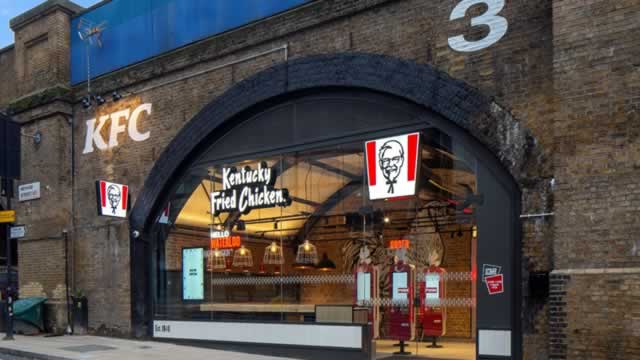
Shares of KFC and Pizza Hut Indian operator Devyani jump on merger with rival franchisee Sapphire
CNBC· 2026-01-02 06:10
Core Viewpoint - The merger between Devyani International and Sapphire Foods India aims to consolidate operations for Yum! Brands' franchises in India, enhancing growth potential and operational efficiencies [2][3][4]. Group 1: Merger Details - Devyani International plans to merge with Sapphire Foods India, with a transaction value reported at $934 million [2]. - Under the merger terms, Devyani will issue 117 shares for every 100 shares of Sapphire [3]. - The merger is expected to be completed within 12 to 15 months, pending regulatory and shareholder approvals [3]. Group 2: Market Impact - Following the announcement, shares of Devyani International rose by 5.3%, while shares of Sapphire Foods India fell by 6.4% [1][3]. - The merger is anticipated to accelerate KFC's expansion in India and revitalize Pizza Hut, which currently lags behind Domino's [3]. Group 3: Financial Projections - Devyani International expects annual synergies of approximately 2.1 billion to 2.2 billion rupees (around $23 million to $25 million) starting from the second full year post-merger [5]. Group 4: Strategic Importance - Yum! Brands views India as a high-priority market with significant growth potential, indicating that the merger will create greater value for shareholders through improved supply chain operations [4]. - India ranks third in the concentration of Yum! Brand stores globally, following the U.S. and China [7].


Indian KFC, Pizza Hut operator Devyani rises after $934 mln merger with peer Sapphire foods
Reuters· 2026-01-02 04:00
Core Viewpoint - Devyani International, the operator of KFC and Pizza Hut in India, has entered into a $934 million merger deal with Sapphire Foods, creating a significant player in the fast-food industry [1] Company Summary - Devyani International's stock rose by 7.3% following the announcement of the merger deal [1] - The merger is expected to enhance the market position of the combined entity in the fast-food sector [1] Industry Summary - The merger between Devyani International and Sapphire Foods is anticipated to create a major fast-food company, indicating consolidation trends within the industry [1]