
Credit Card

Search documents
6 Riskiest Places To Swipe Your Credit Card & How To Thwart Thieves
Yahoo Finance· 2025-09-21 00:02
Core Insights - The risk of credit card fraud persists beyond the point of transaction, with potential data breaches affecting businesses that store credit card information [1] - Various industries, including ATMs, gas stations, mobile vendors, dining establishments, and chain retailers, are particularly vulnerable to credit card fraud [2][3][4][6][8] Group 1: Fraud Vulnerabilities - ATMs are targeted by thieves using skimming devices, and advancements like chip cards have led to the development of "shimmers" that can read chip-based cards [3] - Gas stations are hotspots for credit card fraud due to high customer volume and low supervision, allowing fraudsters to install skimmers and capture PINs [4][5] - Mobile vendors at events can pose risks, as attendees may not be able to distinguish between legitimate vendors and those using card skimmers [6] Group 2: Dining and Retail Risks - Dining establishments may run cards in back areas, where servers could potentially use skimmers to charge more than the meal cost [7] - Chain retailers, despite having more resources for security, are still attractive targets for thieves due to the high volume of transactions [8]
Amex Bets Big On Premium Segment, Unveils $3,500 Perks For Platinum Cards While Raising Annual Fee - Adobe (NASDAQ:ADBE), American Express (NYSE:AXP)
Benzinga· 2025-09-19 08:26
Core Insights - American Express has announced significant upgrades to its U.S. Platinum cards, adding new perks valued at over $3,500 annually while increasing the annual fee by $200 to $895 [1][3]. Summary by Categories Perks and Benefits - The updated perks include dining credits via Resy, shopping credits at Lululemon, and Uber One memberships, along with enhanced hotel and entertainment benefits [2]. - Platinum Business cardholders will receive new credits for Dell and Adobe purchases, a $600 hotel credit, and up to $3,600 in additional statement credits for top spenders [2]. Financial Implications - The increase in annual fee to $895 is expected to provide a long-term boost to American Express's financial results [3]. - The company believes that the value provided through the new perks significantly exceeds the annual fee, enhancing customer satisfaction and retention [3]. Target Demographics - The card refresh aligns with American Express's strategy to target affluent customers, particularly Millennials and Gen Z, who are comfortable with credit card fees and view them as subscription-like products [5][6]. - Millennials and Gen Z account for 35% of all U.S. consumer spending for American Express, a significant increase from 19% in 2019 [7]. Spending Trends - Since the launch of Resy benefits, Amex cardholders have increased their spending at participating U.S. restaurants by 25%, making them attractive to restaurant partners [4]. - The trend indicates a strong willingness among customers to pay for premium card benefits, as evidenced by record increases in card fees reported in Q2 earnings [7].


Long-Term Bullish Signal Rarely Fails Visa Stock
Forbes· 2025-09-18 19:55
Core Insights - Visa's stock has been trading between $340 and $355 since August, following a rejection at the $360 level in July, after reaching an all-time high of $375.51 on June 11, contributing to an 18.4% year-over-year gain [1] Group 1: Stock Performance and Trends - Visa stock is currently near its 12-month moving average, having closed above this trendline in 80% of the last 20 months. Historically, this has led to a price increase one month later 83% of the time, averaging an 8.2% gain [2] - A similar price movement from the current level could push Visa's stock above $368, with long-term returns averaging a 19.3% gain after three months in 89% of cases, potentially reaching new highs around $406 [3] Group 2: Options Market Sentiment - The options market shows a high level of pessimism, with Visa's 50-day put/call volume ratio at 1.11, ranking higher than 71% of readings from the past year. The put/call open interest ratio of 1.06 is in the 83rd percentile, indicating a strong put bias among short-term options traders [5] - Current conditions suggest it may be a favorable time to consider options trading, as Visa's Volatility Index (SVI) of 21% is in the low 12th percentile of its annual range, indicating low volatility expectations from options traders [6]

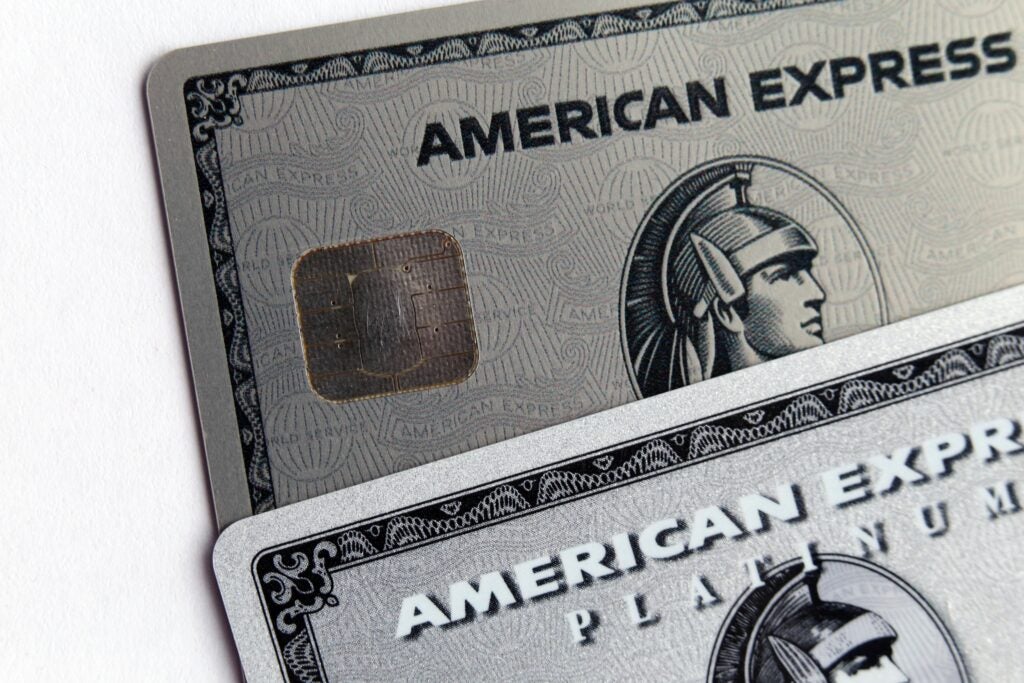
American Express hikes Platinum card annual fees to $895, unveils new benefits — Here's what cardholders will get
MINT· 2025-09-18 16:52
Core Viewpoint - American Express Co. (Amex) is increasing the annual fee for its Platinum consumer credit card to $895, marking a $200 rise, effective from December 2, 2025, and January 2, 2026, depending on the user [1][2]. Summary by Sections Fee Increase - The new annual fee for both U.S. Consumer and Business Platinum Cards will be $895, with the increase taking effect at the next renewal date for cardholders who opened accounts before September 18, 2025 [2][5]. New Benefits - The Platinum card now offers over $3,500 in value, including $400 a year in dining credits at Resy restaurants, up to $300 for expenses at Lululemon Athletica Inc., and $200 towards the purchase of health-focused Oura rings [2][3]. Enhanced Credits - The maximum annual credit for bookings through the Fine Hotels & Resorts collection is increasing to $600 from $200. Additionally, the digital-entertainment credit is boosted to $25 a month, and cardholders will receive $120 in statement credits each year for an auto-renewing Uber One membership, alongside the existing $200 Uber Cash benefit [4]. Existing Benefits - All existing benefits will continue or be improved, including credits for Clear Plus, airline fees, Walmart memberships, and a $50 gift card for Saks Fifth Avenue offered semi-annually. Business Platinum cardholders will also receive enhanced perks, including a $600 hotel credit [5]. Market Position - The 29% fee hike positions Amex Platinum among the highest tier of premium consumer credit cards, surpassing the $795 fee for JPMorgan Chase's Sapphire Reserve card and Amex's own Delta SkyMiles Reserve card, which costs $650 annually [5]. Consumer Spending Insights - Wealthy customers, representing the top 10% of earners, contributed over 49% of total expenditures last quarter, indicating a significant market for premium credit cards [6].


How much value do you actually get out of the new Amex Platinum?
Yahoo Finance· 2025-09-18 16:41
Core Points - The Platinum Card® from American Express has been refreshed with new perks and enhanced benefits, including a welcome bonus of up to 175,000 Membership Rewards® Points after spending $8,000 in the first six months and up to $600 annual hotel credit on select prepaid hotel bookings through Amex Travel [1][33] - The annual fee has increased to $895, making it essential for users to evaluate the card's benefits, which can potentially exceed $3,500 in annual value [2][34] New and Enhanced Benefits Overview - Enhanced hotel credit allows users to receive up to $300 back in statement credits each half of the year on prepaid Fine Hotels + Resorts or The Hotel Collection bookings through Amex Travel, with a medium usability score [4][7] - Enhanced digital entertainment credit provides up to $25 back each month on various streaming services, making it easy to use [5][8] - New Resy credit offers up to $100 back per quarter on purchases at Resy restaurants, with a medium usability score due to limited availability in some markets [6][9] - New lululemon credit provides up to $75 back per quarter, but has a medium usability score as it may be challenging to find suitable items [9][15] - New Uber One credit offers up to $120 annual credit for an Uber One membership, which is easy to use [11][15] - New Oura credit allows for up to $200 back in statement credits for purchasing an Oura Ring, but has a hard usability score due to the high cost of the product [12][15] - New hotel elite status with The Leading Hotels of the World provides benefits for those who stay at its properties, but has a hard usability score [14][16] Additional Credits - Existing credits include up to $200 annual airline fee statement credit, which has a medium usability score [22][23] - CLEAR Plus statement credit covers the cost of an annual membership, with easy usability [19][23] - Walmart+ statement credit offers up to $155 annual credit, which is easy to use [20][23] - Uber Cash provides up to $200 annual credit for Uber rides or Uber Eats orders, with easy usability [24][23] - Saks Fifth Avenue credit offers up to $100 annually, but has a medium usability score due to high prices [30] Conclusion - The Amex Platinum Card can provide significant value if users can effectively utilize its benefits, despite the high annual fee [34][36] - Many benefits have specific requirements that may limit their usability, which is a notable concern for potential cardholders [34][36]
Amex just revamped the Platinum Card — here's how much you can get with this luxury travel card
Yahoo Finance· 2025-09-18 14:17
Core Insights - American Express is significantly updating its Platinum Card and Business Platinum Card, introducing a new design and increased annual fees while enhancing benefits and credits [1][2][3] Group 1: Annual Fee Changes - The annual fee for the Amex Platinum Card will increase to $895, marking a $200 rise from the previous fee of $695 [2][3] - This is the first fee increase since 2021, when the fee rose from $550 to $695 [3] Group 2: Enhanced Benefits - Cardholders can now access over $3,500 in annual benefits, a substantial increase from the previous claim of over $1,500 [4] - The hotel credit has been enhanced to provide up to $600 in statement credits each year for prepaid bookings through Amex Travel, up from $200 [9][15] - New complimentary Leaders Club Sterling Status will be available, offering benefits at over 400 luxury properties worldwide [10] Group 3: Additional Annual Credits - New annual credits include up to $400 for dining through Resy, up to $300 for digital entertainment, up to $300 for Lululemon purchases, and up to $200 for Oura Ring purchases [16] - Existing benefits such as airline incidental credits and CLEAR Plus credits will remain intact, adding to the overall value of the card [12] Group 4: Business Platinum Card Updates - The Business Platinum Card will also see its annual fee rise to $895, with enhanced benefits for business travelers [21] - New credits for the Business Platinum include up to $600 for hotel bookings and up to $3,600 in credits for flights and Amex's One AP tool after meeting spending requirements [24] Group 5: Rewards Structure - The rewards structure for the Business Platinum Card will now offer 2x points on eligible purchases in key business categories and for purchases of $5,000 or more, up from 1.5x points [26]
American Express boosts annual fee for Platinum card as it packs in more perks (AXP:NYSE)
Seeking Alpha· 2025-09-18 11:50
Group 1 - American Express has increased the annual fee for its high-end Platinum card to $895 from $695, representing a $200 increase [2] - The company has added new perks to the Platinum card, including a $400 dining out credit and a $600 hotel credit, aimed at attracting upscale consumers and businesses [2]

There's Nothing Like Platinum™: American Express Unveils Updated U.S. Consumer and Business Platinum Cards, Each with Over $3,500 in Annual Value
Businesswire· 2025-09-18 11:05
Core Insights - American Express has introduced significant enhancements to its U.S. Consumer and Business Platinum Cards, which are now available immediately [1] - The updated Platinum Cards provide expanded lifestyle and business benefits, offering access to over $3,500 in annual value [1] - A limited-edition mirror card design has also been launched as part of these enhancements [1] Summary by Category Lifestyle Benefits - The enhancements build on existing benefits for Consumer and Business Platinum Card Members, providing even more value in relevant categories such as travel, dining, and entertainment [1] Business Benefits - The updated cards are designed to cater to both consumer and business needs, reflecting a focus on maximizing value for cardholders [1]

Swisscard AECS GmbH Extends FICO Platform Decisioning with AI-Powered Optimisation
Businesswire· 2025-09-18 08:00
Group 1 - Swisscard has extended its partnership with FICO to enhance its credit limit strategies [1] - The collaboration will leverage FICO® Platform's AI-powered decision optimization capabilities [1] - The partnership aims to provide greater flexibility on spending limits while managing risk based on customer behaviors [1] Group 2 - Swisscard is recognized as the leading premium credit card provider in Switzerland [1] - The company has been utilizing FICO® Platform for onboarding and credit card limit management for several years [1]


Japanese TradFi giant Credit Saison launches $50M blockchain fund to bridge US startups with Asia
Yahoo Finance· 2025-09-15 23:30
A glowing onigiri emblem anchors a neon bridge of blockchain rails linking San Francisco’s skyline to Tokyo Tower and a torii-framed bay, as coins flow into a rising venture pool Credit Saison, Japan’s third-largest credit card company, said Monday it is creating a new venture fund to back early-stage blockchain firms working in the real-world asset sector, according to local media reports. The vehicle, known as Onigiri Capital, has raised $35 million so far from Credit Saison and other backers and, acco ...