ETFs

Search documents
Should State Street SPDR Portfolio S&P 500 ETF (SPYM) Be on Your Investing Radar?
ZACKS· 2025-11-26 12:21
Core Insights - The State Street SPDR Portfolio S&P 500 ETF (SPYM) is a large-cap blend ETF with over $96.06 billion in assets, making it one of the largest in its category [1] - Large cap companies, typically with market capitalizations above $10 billion, are characterized by stability and predictable cash flows [2] - SPYM has an annual operating expense of 0.02% and a 12-month trailing dividend yield of 1.14%, positioning it as a cost-effective investment option [3] Sector Exposure and Holdings - The ETF has a significant allocation to the Information Technology sector, comprising approximately 34.9% of the portfolio, followed by Financials and Consumer Discretionary [4] - Nvidia Corp (NVDA) is the largest holding at about 8.46% of total assets, with Apple Inc (AAPL) and Microsoft Corp (MSFT) also among the top three [5] - The top 10 holdings represent around 40.09% of total assets under management [5] Performance Metrics - SPYM aims to replicate the performance of the S&P 500 Index, achieving a return of approximately 202.68% year-to-date [6] - Over the past 52 weeks, the ETF has traded between $25.97 and $80.39 [6] - The ETF has a beta of 1.00 and a standard deviation of 246.28% over the trailing three-year period, indicating effective diversification of company-specific risk with about 509 holdings [7] Alternatives and Market Position - SPYM holds a Zacks ETF Rank of 2 (Buy), indicating strong expected performance based on various factors [8] - Other comparable ETFs include the iShares Core S&P 500 ETF (IVV) with $722.59 billion in assets and the Vanguard S&P 500 ETF (VOO) with $792.57 billion, both having an expense ratio of 0.03% [9] Investment Trends - There is a growing trend among retail and institutional investors towards passively managed ETFs due to their low costs, transparency, flexibility, and tax efficiency, making them suitable for long-term investment strategies [10]


ETF Edge on signals of a new market cycle and top ideas for 2026
Youtube· 2025-11-25 18:56
Core Viewpoint - The current market environment is characterized by a transition into a new cycle, driven by recent Federal Reserve rate cuts and a shift in market leadership towards emerging markets and real assets, suggesting a need for portfolio evolution away from large-cap tech stocks [1][2]. ETF Market Trends - The ETF industry has experienced record inflows, with $1.2 trillion in inflows this year, while mutual funds have seen $1 trillion in outflows, indicating a significant shift in investor preference towards ETFs [1][2]. - Over 900 new ETFs have been launched this year, reflecting ongoing innovation and growth within the ETF space [1]. Investment Strategies - Investors are advised to diversify their portfolios by including asset classes and sectors that benefit from higher inflation, such as gold, which is up 54% year-to-date, and emerging markets, which are also up 27% [1][2]. - Leveraged ETFs are gaining popularity, but caution is advised due to their complexity and the high costs associated with accessing leverage, which can lead to underperformance compared to benchmarks [1][2]. Market Performance Insights - The S&P 500 has been outperformed by sectors such as industrials and banks, which have seen gains of 16% and 19% respectively, compared to the S&P's 12% increase [1]. - The weakening dollar has been identified as a catalyst for non-U.S. markets outperforming the U.S., with historical trends showing that a weaker dollar typically benefits gold and emerging markets [2]. Future Outlook - The ETF industry is expected to continue its growth trajectory, with predictions of more crypto-related ETF launches and innovations in share class structures that could further drive flows from mutual funds to ETFs [9][12]. - The complexity of the ETF market is increasing, necessitating more due diligence from investors as new products are introduced [11].

3 Gold Stocks I’m Personally Thinking About Adding Immediately
Yahoo Finance· 2025-11-24 15:59
Core Insights - Gold prices have increased significantly, rising from approximately $1,800 per ounce five years ago to nearly $4,100 per ounce, resulting in a 128% return, outperforming the S&P 500's 80% return over the same period [1][7]. Investment Opportunities - The SPDR Gold Shares ETF (GLD) is highlighted as an excellent option for both active and passive investors seeking exposure to gold prices, benefiting from increasing retail and institutional demand [4][6]. - GLD serves as a benchmark for precious metals traders and is considered a lower-risk investment vehicle for those looking for reliable exposure to precious metals over time [5]. - Agnico Eagle (AEM) is projected to achieve 20% annual EPS growth and trades at 24 times earnings, indicating strong performance potential [7]. - Franco-Nevada (FNV) operates with 87% gross margins and analysts forecast a 30% EPS growth, suggesting robust financial health and growth prospects [7].
Direxion Ignites New ETFs To Fuel Bold Bets On Coinbase, Robinhood, Intel, Oracle
Benzinga· 2025-11-21 19:19
Core Insights - Direxion is launching five new single-stock daily leveraged and inverse ETFs aimed at traders focused on speed, volatility, and thematic investments [1][2] Product Overview - The new ETFs include Oracle Bull 2X Shares (NASDAQ:ORCU), Oracle Bear 1X Shares (NASDAQ:ORCS), Coinbase Bull 2X Shares (NASDAQ:CONX), Robinhood Bull 2X Shares (NASDAQ:HODU), and Intel Bull 2X Shares (NASDAQ:LINT) [2] - These ETFs provide magnified or inverse daily exposure to key technology and trading-platform companies, covering sectors like crypto infrastructure (Coinbase and Robinhood), enterprise cloud and AI (Oracle), and semiconductors (Intel) [2] Market Demand - The launch reflects increasing demand from traders seeking tools that align with their conviction levels, rather than long-term investment products [3] - Direxion's Chief Product Officer highlighted that these funds cater to market participants who prefer targeted instruments for short-term market views [3] Risk Profile - Direxion emphasizes that these ETFs are short-term tactical tools and not suitable for diversified or buy-and-hold strategies [4] - The firm warns that leveraged and inverse single-stock ETFs can exhibit unpredictable behavior over multiple days due to compounding effects [4] Thematic Strategy - This launch is part of a broader thematic expansion by Direxion, which includes previously introduced leveraged and inverse AI-and-Big-Data ETFs [5] - The company is reinforcing its brand identity by focusing on precision, speed, and concentrated exposure to companies driving crypto accessibility and AI infrastructure [5]

Adaptability Will Be Crucial in Fixed Income in 2026
Etftrends· 2025-11-20 14:13
Core Insights - Fixed income ETFs, particularly Neuberger Berman Total Return Bond ETF (NBTR) and Neuberger Berman Short Duration Income ETF (NBSD), have shown decent performance in 2023, but past performance does not guarantee future results [1][5] - Investors in fixed income need to be agile and adaptable in 2026 due to changing Federal Reserve policies and economic conditions [2][4] Market Outlook - The future of interest rate cuts is uncertain, with inflation remaining stubborn and potential US tariff policies possibly increasing prices in 2026, indicating a shift towards structurally higher inflation [3][6] - The Federal Reserve is not expected to lower rates soon, but there is speculation about potential leadership changes that could influence future rate decisions [4][5] Investment Strategy - A flexible, diversified, and dynamic approach to bond investing is essential moving into 2026, as traditional passive fixed income funds may not perform as well [6][7] - Higher volatility in the fixed income market has created a wider performance gap, emphasizing the need for a global and flexible investment strategy [7]
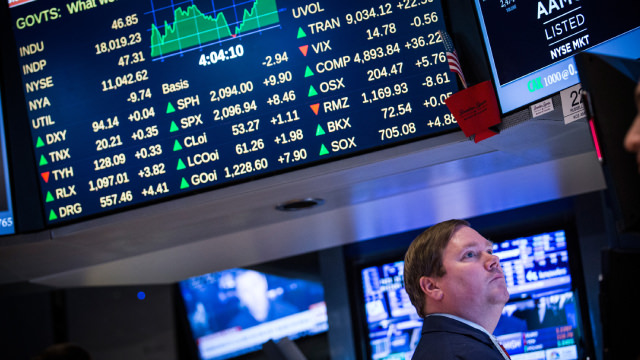
Top Performing Leveraged/Inverse ETFs: 11/16/2025
Etftrends· 2025-11-19 18:45
Core Insights - The article highlights the top-performing leveraged and inverse ETFs for the past week, emphasizing the volatility associated with these funds due to their leverage [1]. Performance Summary - **ProShares UltraShort Bitcoin ETF (SBIT)**: Achieved a weekly return of 19.93%, driven by a decline in Bitcoin's price amid fears of a tech bubble and reduced expectations for a US rate cut [2]. - **ProShares UltraShort Ether ETF (ETHD)**: Recorded a 19.41% weekly gain, influenced by similar market conditions affecting Ethereum, including a drop in price due to interest rate cut expectations [3]. - **Direxion Daily Pharmaceutical & Medical Bull 3X Shares (PILL)**: Returned 15.80%, boosted by news of a proposed US government rule change expanding healthcare coverage for weight-loss drugs [3]. - **MicroSectors Gold Miners 3X Leveraged ETN (GDXU)**: Gained 14.30% as gold prices rebounded, supported by soft US employment figures and speculation about a Federal Reserve interest rate cut [4]. - **Direxion Daily S&P Biotech Bull 3x Shares (LABU)**: Increased by 13.70%, driven by strong revenue reports from companies like Nutex Health and positive trends in the biotech sector [5]. - **MicroSectors U.S. Big Oil 3X Leveraged ETN (NRGU)**: Achieved a return of 11.90%, influenced by sanctions on Russian oil and updates regarding the Fed Chair search [6]. - **Direxion Daily Healthcare Bull 3x Shares (CURE)**: Gained approximately 11.70%, reflecting the healthcare sector's overall performance [6]. - **MicroSectors Energy 3X Leveraged ETNs (WTIU)**: Returned 11.39%, with oil prices climbing due to geopolitical factors [6]. - **AXS TSLA Bear Daily ETF (TSLQ)**: Provided inverse exposure with nearly 11% weekly returns, as Tesla's stock faced challenges from CEO compensation concerns and declining sales [7]. - **GraniteShares 2x Long AMD Daily ETF (AMDL)**: Achieved over 10% weekly gains, following AMD's announcement of a $100 billion annual data-center revenue target [7].



Vanguard Canada Cuts ETF Fees: What Investors Should Know
Etftrends· 2025-11-19 14:42
Core Insights - Vanguard Canada has announced the largest fee cut in its history, reducing costs on 12 products in its ETF and mutual fund lineup, affecting approximately one-quarter of its Canadian offerings [1][2]. Fee Cuts Scope - Management fees for Vanguard's asset allocation ETFs and mutual funds will decrease by 5 basis points to 0.17%, with three fixed income ETFs also seeing reductions. This brings Vanguard's average Canadian ETF management expense ratio (MER) down to 0.16%, which is about half the industry average. Since entering Canada in 2011, cumulative fee reductions have saved investors over $200 million [2]. Industry Context - The fee cuts align with a broader trend of fee compression in Canada's ETF market, particularly in asset allocation ETFs, which are increasingly popular among investors seeking diversified portfolios. Fixed income ETFs have also seen cost declines due to increased lineup depth and trading volumes, enhancing investor options [3]. Market Implications - While the U.S. fee reductions do not directly affect Canadian ETFs, they highlight Vanguard's global fee-compression strategy and the industry's shift towards lower-cost solutions. For Canadian investors, these cuts enhance the attractiveness of low-cost allocation and core fixed income ETFs, potentially influencing product comparisons and investor choices [5]. Competitive Landscape - The response from other providers to Vanguard's fee cuts remains uncertain, but significant reductions by a major issuer often lead to competitive adjustments in the market. Given the strong inflows into allocation ETFs, these cuts may modestly impact product selection and investor flows through 2025 [6]. Considerations for Advisors - Lower management fees can improve net returns but are only one aspect of evaluating ETF suitability. Advisors may need to reassess whether single-ticket allocation ETFs or custom-built portfolios provide better value for clients. Additionally, lower fees in fixed income may enhance the appeal of core bond ETFs amid changing yield dynamics [7].

Options Trading Now Available on Tradr's BEX, CSEX, NNEX & SNPXcsex
Prnewswire· 2025-11-18 22:15
Core Insights - Tradr ETFs has launched options trading on four newly listed leveraged ETFs, allowing traders to express their views on companies heavily involved in AI infrastructure [1][11][12] - The ETFs include Tradr 2X Long BE Daily ETF (Cboe: BEX), Tradr 2X Long CLS Daily ETF (Cboe: CSEX), Tradr 2X Long NNE Daily ETF (Cboe: NNEX), and Tradr 2X Long SNPS Daily ETF (Cboe: SNPX), which track Bloom Energy Corp., Celestica Inc., NANO Nuclear Energy Inc., and Synopsys Inc. respectively [8][11] Company Overview - Tradr ETFs is focused on sophisticated investors and professional traders, offering leveraged and inverse ETFs that provide short or long exposure to actively traded stocks and ETFs [3][11] - The company has launched a total of 46 ETFs since April, with BEX showing a strong first-day trading volume of nearly 600,000 shares, indicating high trader interest in AI infrastructure [2][11] Investment Strategy - The newly launched ETFs are designed to allow investors to take high conviction views on transformative investment themes, particularly in AI infrastructure [2][11] - Options trading on these ETFs provides an additional tool for investors to express their market outlook [1][2]

Stay Ahead of Market Turmoil With These ETFs
ZACKS· 2025-11-18 15:02
Market Performance - The S&P 500 has lost approximately 2.6% since the beginning of November and around 2.5% over the past week as of November 17, indicating increasing volatility and investor nervousness [1] - The CBOE Volatility Index has surged nearly 35% since November 11, reflecting heightened concerns about valuations and a potential AI bubble [1] Interest Rate Outlook - Markets are currently pricing in a 46.6% likelihood of another interest rate cut in December, a significant decrease from previous expectations [2] - Retail investors are showing reduced confidence in a U.S. market rebound, with dip-buying activity slowing as stocks retreat from recent highs [2] AI Bubble Concerns - Fears regarding inflated AI valuations are contributing to broader market pressures, with the tech-heavy Nasdaq Composite dropping about 4.8% since the beginning of November and 3.2% over the past week [3] - Concerns over the sustainability of the AI boom highlight sector concentration risks and potential systemic vulnerabilities, which can lead to negative market reactions and investor panic [4] Investment Strategies - Investors are advised to adopt a defensive and conservative investment approach to navigate potential market volatility [6] - Increasing allocations toward defensive funds may provide a balance between participating in potential upside and protecting against volatility [7] ETF Recommendations - Value ETFs, such as Vanguard Value ETF (VTV), iShares Russell 1000 Value ETF (IWD), and iShares S&P 500 Value ETF (IVE), are characterized by solid fundamentals and represent undervaluation [8] - Consumer staple ETFs, including Consumer Staples Select Sector SPDR Fund (XLP), Vanguard Consumer Staples ETF (VDC), and iShares U.S. Consumer Staples ETF (IYK), can provide stability and balance to portfolios [10] - Quality ETFs, such as iShares MSCI USA Quality Factor ETF (QUAL), Invesco S&P 500 Quality ETF (SPHQ), and JPMorgan U.S. Quality Factor ETF (JQUA), offer a strategic response to market uncertainty [11] Investment Strategies for Stability - Investors may consider passive, long-term strategies like buy-and-hold or dollar-cost averaging to navigate potential near-term pullbacks while positioning for sustainable returns [12][13]

US ETF Market Splits Into Distinct Price Segments
Wealth Management· 2025-11-17 21:36
Core Insights - The U.S. ETF industry is experiencing rapid growth, with net inflows in 2025 surpassing the previous record of $1.2 trillion set in 2024, indicating a shift towards price-based segments with distinct product offerings and market leaders [1] Low-Cost Segment - The low-cost segment, defined as ETFs with net expense ratios of 0.25% and below, accounted for 79% of the U.S. ETF market by assets as of November 7, 2025, with the "Big 3" (Vanguard, BlackRock, State Street) holding an 82% combined market share [2] - Traditional beta ETFs, which provide market-cap weighted indexed exposure, make up 88% of the low-cost segment, with an asset-weighted fee of only 0.09% [3] - State Street announced a ticker change and fee cut for the SPDR Portfolio S&P 500 ETF (SPYM) on October 31, 2025, while Vanguard reduced expense ratios for 53 ETFs in February 2025 [3] Medium-Cost Segment - Active ETFs are increasingly displacing smart beta ETFs in the medium-cost segment (net expense ratios between 0.26% and 0.75%), highlighting a growing demand for active strategies [4] - BlackRock and State Street dominate this segment, but firms like Capital Group and JP Morgan are rapidly gaining market share with their active management strategies [5] - Actively managed dividend ETFs have seen significant inflows, contrasting with outflows from indexed dividend ETFs like SPDR S&P Dividend ETF (SDY) and iShares Select Dividend ETF (DVY) [6] High-Cost Segment - The high-cost segment is led by leveraged and buffer ETFs, with major players including ProShares, Direxion, and Innovator Management [7] - Leveraged and inverse ETFs account for nearly one-third of all high-cost ETFs by assets, while buffer ETFs have consistently attracted over $10 billion in net inflows annually since 2022 [9] Future Outlook - Over 40% of new ETFs launched in the U.S. in 2025 were in the high-price segment, including single-stock ETFs, although their success rate is generally low [11] - Vanguard and BlackRock may expand their presence in active ETFs, which could lead to fee compression in the medium-cost segment, benefiting investors with lower costs and more product options [10]