Oil

Search documents
U.S. Energy Secretary Wright Says Oil Price Rise Hasn't Destroyed Demand
WSJ· 2026-03-23 15:16
Core Insights - The increase in prices is prompting capable producers to boost output, indicating a response to market signals [1] - However, the current price levels have not reached a point that would lead to significant demand destruction [1] Industry Analysis - The rise in prices serves as a motivation for producers to enhance their production capabilities [1] - Despite the price increase, demand remains stable, suggesting that consumers are not yet deterred by higher costs [1]

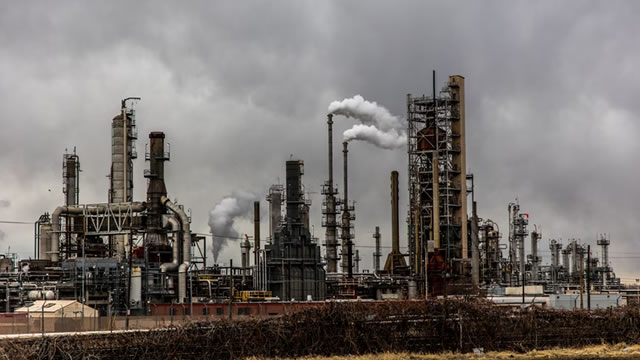
High Oil Prices Could Force Fed To Raise Rates
Yahoo Finance· 2026-03-23 14:30
Core Viewpoint - The ongoing oil-driven inflation shock is prompting a significant reassessment of U.S. monetary policy, with traders shifting from expectations of rate cuts to potential rate hikes due to surging crude prices influenced by Middle East supply disruptions [1][2]. Group 1: Market Reactions - Fed funds futures now indicate a 50% probability of benchmark rates increasing by at least 25 basis points after the September FOMC meeting, a notable shift from previous expectations of multiple rate cuts [2]. - The U.S. 2-year Treasury yield has risen above 4%, reversing months of declines and indicating that markets are pricing in a more hawkish stance from the Federal Reserve [4]. Group 2: Oil Price Impact - Brent crude prices have surged due to the U.S.-Israel conflict with Iran and disruptions in the Strait of Hormuz, which handles approximately 20% of global oil and LNG trade, leading to a supply shock that is directly affecting inflation expectations [3]. - Federal Reserve Chair Jerome Powell acknowledged that the Middle East conflict is influencing inflation expectations, with rising oil prices being a key near-term driver [5]. Group 3: Geopolitical and Economic Context - The speed of the market shift has surprised many, as just a month ago, there was a significant probability of rate cuts by year-end, which has now been largely reversed due to tightening energy markets and escalating geopolitical risks [6]. - The International Energy Agency (IEA) reported that 40 Middle East energy assets have been "severely or very severely" damaged in the Iran conflict, which is expected to prolong recovery times for supply chains post-war [7].
Energy Shock: How the Strait of Hormuz Crisis Could Reshape Bitcoin Mining Economics
Yahoo Finance· 2026-03-23 13:10
Core Insights - Bitcoin miners are facing significant challenges due to rising energy costs, with average production costs at $88,000 per BTC while the spot price is around $69,200, indicating a dire financial situation for miners [1] - The surge in oil prices, particularly Brent crude surpassing $113 per barrel, is exacerbating the situation, as electricity costs, which account for 60-80% of mining operating costs, are expected to rise [2][3] Group 1: Financial Impact on Miners - The average loss for the mining sector was already at 21% before the recent escalation in energy prices, indicating a pre-existing financial strain [4] - A 1.5 cent per kWh increase in electricity costs can render older mining hardware, such as the Antminer S19j Pro, unprofitable without fixed-rate power agreements [4] - Miners are now facing not just profitability issues but also solvency problems, leading them to sell BTC reserves in a volatile market to cover utility bills, which further depresses market prices [5] Group 2: Market Dynamics and Structural Changes - The mining sector is becoming increasingly polarized, with grid-dependent miners in deregulated markets facing the most immediate pressure, potentially leading to operational shutdowns to avoid losses [6] - Miners with access to stranded energy or hydro-dominant grids in regions like Iceland and Quebec are at a structural advantage, while analysts predict that sustained Brent crude prices above $120 could force 10-15% of the global hash rate offline [7] - The current crisis is shifting the competitive landscape, moving away from hardware efficiency as the primary advantage to energy security becoming the new competitive moat [8]
X @Bloomberg
Bloomberg· 2026-03-23 11:43
Trump said strikes against Iranian energy sites would be postponed for five days following the start of ceasefire talks with Iran.Oil plunged more than 11% after the comments, which came as fears were growing of an escalating conflict. Read more: https://t.co/kmJVZX4K6O📷: Shawn Thew/EPA/Bloomberg ...
X @TylerD 🧙♂️
TylerD 🧙♂️· 2026-03-23 11:15
Appears the large Oil short from yesterday may have known something https://t.co/f6zjkbgDj2 ...
X @The Economist
The Economist· 2026-03-23 11:00
Donald Trump’s war on Iran is proving unpopular with American voters, who are facing surging oil prices. This could become a big problem for the Republicans in the upcoming midterms.Read about the battle to flip Texas: https://t.co/HHfmZoIhFJ https://t.co/P3TeTztm52 ...
Goldman Boosts Oil Price Forecast by $8 for Brent and $7 for WTI
Yahoo Finance· 2026-03-23 09:10
Price Outlook - Brent crude is projected to average $85 per barrel and West Texas Intermediate (WTI) at $79 per barrel this year, an increase from previous estimates of $77 and $72 respectively [1] - Current trading prices are $112.69 per barrel for Brent and $99.60 per barrel for WTI, reflecting a rise as geopolitical tensions escalate [2] Geopolitical Tensions - President Trump issued an ultimatum to Iran, demanding the reopening of the Strait of Hormuz within 48 hours or face severe military consequences [3] - Iran has threatened to target the energy and water infrastructure of U.S. allies in the region in response to the ultimatum [3] Supply Disruption - Goldman Sachs anticipates that the disruption in tanker traffic through the Strait of Hormuz will last for six weeks, followed by a gradual recovery of crude shipments [4] - The closure of the Strait has resulted in a significant impact, cutting off 20% of global oil flows [4] Market Implications - The current oil supply shock is expected to highlight structural risks associated with the concentration of oil production and spare capacity in the Middle East [5] - Analysts express concerns that the disruption could extend for months, even if military actions cease [4]

Goldman Lifts Oil Price Forecast on Longer Hormuz Disruption
WSJ· 2026-03-23 08:38
Core Viewpoint - Brent crude oil prices are projected to average $85 per barrel this year, an increase from the previous forecast of $77 per barrel [1] - The U.S. oil benchmark, West Texas Intermediate, is now expected to average $79 per barrel, up from an earlier estimate of $72 per barrel [1] Summary by Category - **Brent Crude Oil Forecast** - The average price is revised to $85 per barrel for the current year, reflecting a significant upward adjustment from $77 [1] - **West Texas Intermediate Forecast** - The average price is now anticipated to be $79 per barrel, an increase from the prior forecast of $72 [1]

India Holds Fuel Prices Steady Even as Oil Basket Soars Above $155
Yahoo Finance· 2026-03-23 06:30
Core Insights - Indian retail fuel prices remain stable despite a significant increase in the oil basket price, which has surpassed $155 per barrel due to supply disruptions in the Middle East [1][2]. Group 1: Oil Price Surge - The Indian oil basket reached $156.29 per barrel on March 19, marking a 120% increase due to supply disruptions [2]. - The Dubai/Oman benchmark contract ended last week at over $160 per barrel, while Brent was trading at $113 per barrel [4]. Group 2: Refinery Operations and Supply - Refiners, both state-owned and private, are currently absorbing the price surge, and there is no immediate supply crunch anticipated [3]. - The Indian oil ministry confirmed that all refineries are operating at high capacity with adequate crude inventories and sufficient stocks of petrol and diesel [4]. Group 3: Import Dependency and Supplier Diversity - India is the third-largest crude oil importer globally, relying on imports for over 80% of its demand, with a diversified supplier base from around 40 oil-rich countries [4].
Asian stocks today: Markets trade in red amid Middle East standoff; Kospi down 6%, Nikkei sheds 1,800 points
The Times Of India· 2026-03-23 06:03
Market Overview - The South Korean benchmark Kospi experienced a significant decline, opening down over 6% at 5,409 and trading at 5,444.44, down 5.8% or 336 points by 11:10 am IST [2][4] - Broader indices reflected similar pressures, with the KRX TMI falling 5.79% to 3,415 and the KRX 300 dropping 5.95% to 3,633.50 [2][4] - The sell-off extended across various segments, including a 6.05% decline in the Kospi 200 to 810 and a drop of over 4% in the tech-heavy KOSDAQ to 1,106 [2][4] Geopolitical Impact - Market experts attributed the sharp market fall to geopolitical developments and uncertainty surrounding energy supply chains, particularly a 48-hour ultimatum issued by U.S. President Donald Trump to Iran regarding the Strait of Hormuz [3][4] - The ultimatum stated that Iran must fully reopen the Strait of Hormuz, which is currently operating at just 5% of its pre-war volume, or face severe consequences [3][4] Regional Market Reactions - Chinese and Hong Kong equities also faced pressure, with the Shanghai Composite Index falling over 3% and the Hang Seng Index dipping 3.44% or 869 points to 24,407 [2][4] - Japan's Nikkei 225 dropped more than 3% to 51,533, while Singapore's Straits Times declined 2.20% to 4,839 [2][4] Sector Performance - Investors withdrew from sectors such as technology, travel, agriculture, and consumption due to fears of rising oil prices and weaker demand [5] - Conversely, energy-linked segments, including coal, oil, and electric vehicles, saw inflows as markets anticipated a stronger push towards energy security [5] Future Outlook - Goldman Sachs indicated that the outlook for oil prices and global growth will heavily depend on the duration of the closure of the Strait of Hormuz, emphasizing the high level of uncertainty surrounding the situation [5]