Mortgage

Search documents
Why UWM Holdings Stock Was Getting Mashed This Week
Yahoo Finance· 2025-12-19 17:15
Group 1 - UWM Holdings Corporation announced its first major acquisition, acquiring Two Harbors Investment for $1.3 billion, entirely in stock [2][4] - The acquisition is expected to significantly enhance UWM's mortgage servicing rights portfolio, nearly doubling it to around $400 billion [3] - Investors reacted negatively to the acquisition, with UWM's stock trading down nearly 9% week-to-date as of mid-session trading [1][4] Group 2 - The deal is seen as a strategic move to align two complementary organizations, potentially leading to accelerated growth and improved outcomes for stakeholders [3] - Despite the high acquisition cost relative to UWM's market cap of under $8 billion and annual revenue of under $2.5 billion, there is potential for positive synergies [4][5] - Successful integration of Two Harbors could validate the acquisition and enhance UWM's market position [5]

Credit Review, HELOC, 2nd Products; Freddie and Fannie News; Cap. Markets
Mortgage News Daily· 2025-12-19 16:45
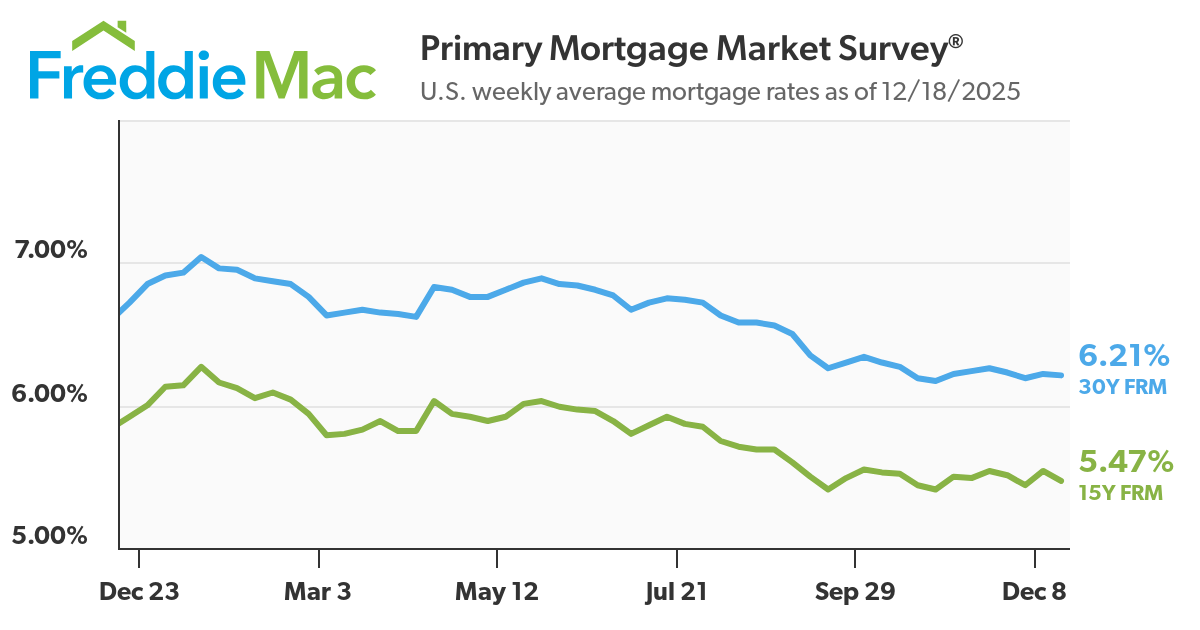
Group 1: Company Updates - Newrez Wholesale has enhanced its partner protection program, offering 18 months of solicitation protection for approved broker partners starting January 1, 2026, and 30-month protection for RezClub members [1] - Arc Home's Closed End Second product offers strong execution with pricing up to 107.5 on eligible scenarios, with loan amounts up to 500,000 and CLTVs up to 80% [2] - Spring EQ is maintaining momentum into 2026 by offering premium pricing on all products, allowing customers to lower closing costs and choose higher rates [2] Group 2: Freddie and Fannie Updates - The future of Fannie Mae and Freddie Mac remains uncertain, with potential privatization seen as inevitable but the timeline unclear [4][5] - Freddie Mac has introduced a new API to streamline the loan delivery process within Loan Selling Advisor [7] - Fannie Mae's December Selling Guide includes updates such as expanded financing options for HomeStyle® Refresh and removal of renovation caps for manufactured homes [8] Group 3: Market Insights - U.S. Treasuries rebounded sharply, supported by global and domestic signals, with inflation cooling in November, indicating potential Fed rate cuts in March and June [10] - Mortgage rates fell slightly in the latest survey, with the 30-year and 15-year rates at 6.21% and 5.47%, respectively, showing significant year-over-year decreases [11] - Ginnie Mae is channeling a large share of mortgage credit to first-time home buyers, with nearly 70% of its 30-year issuance this year going to this demographic [12]


Will Mortgage Rates Really Fall After The Fed's Interest Rate Cut?
Yahoo Finance· 2025-12-18 23:30
Core Viewpoint - Mortgage rates are expected to experience a slow and uneven decline rather than a significant drop following the upcoming Federal Reserve meeting, according to economists and housing forecasters Group 1: Federal Reserve Actions - The Federal Reserve is anticipated to implement a quarter-point rate cut at its December 9-10 meeting, with futures markets indicating a nearly 90% probability, which would adjust the federal funds rate to approximately 3.5%–3.75% [2] - Fed Chair Jerome Powell's guidance will significantly influence the direction of mortgage rates, with expectations of cautious messaging regarding future rate cuts beyond the immediate meeting [4] Group 2: Current Mortgage Rates - The average 30-year fixed mortgage rate has decreased to around 6.2%, down from approximately 6.7% a year ago, reflecting a trend of falling rates since late July due to expectations of a Fed rate cut [3] - Mortgage rates typically respond to investor expectations and the 10-year Treasury yield rather than the Fed's short-term rate, suggesting that the recent decline may have already been factored into current rates [5] Group 3: Future Projections - Major forecasters, including Fannie Mae's Economic and Strategic Research group, predict that 30-year mortgage rates will end 2025 at about 6.3% and only decrease to around 5.9% by the end of 2026, indicating a prolonged period of elevated rates [7] - Bank of America’s Aditya Bhave suggests that a mortgage rate closer to 5% is necessary to stimulate home sales, which are currently stagnant near post-2008 lows, implying that any immediate post-meeting rate drops will be minimal [8]
Mortgage rates slip, sticking near 2025 lows
Fox Business· 2025-12-18 21:30
Mortgage Rates - The average rate on the benchmark 30-year fixed mortgage decreased to 6.21% from 6.22% last week, down from 6.72% a year ago [1][3] - The average rate on a 15-year fixed mortgage fell to 5.47% from 5.54% last week [3] Market Trends - Mortgage rates have remained within a narrow 10-basis point range over the last two months, with a decrease of half a percent compared to last year [3] - Purchase applications are 10% above the same time last year, indicating increased buyer activity [3] Economic Context - The Federal Reserve recently lowered the benchmark interest rate by 25 basis points to a range of 3.5% to 3.75%, which indirectly influences mortgage rates [4] - The 10-year Treasury yield was around 4.12% as of Thursday afternoon, which closely tracks mortgage rates [4] Buyer Conditions - Homebuyers are in a more favorable position now than a year ago, with mortgage rates easing into the low-6% range and inventory levels well above last year's [6] - Renters have also seen improved affordability, with rents falling for the 28th consecutive month in November [6]

Long-term mortgage rate hits 6.22%, hovering near its low for the year
Fastcompany· 2025-12-18 19:00
Group 1 - The average long-term mortgage rate increased to 6.22% from 6.19% last week, compared to 6.6% a year ago [1] - The average rate for 15-year fixed-rate mortgages rose to 5.54% from 5.44% last week, while it was 5.84% a year ago [1] Group 2 - Mortgage rates are influenced by the Federal Reserve's interest rate policy, bond market investors' expectations for the economy, and inflation [2] - Mortgage rates generally follow the trajectory of the 10-year Treasury yield, which is used by lenders to price home loans [2]

X @Bloomberg
Bloomberg· 2025-12-18 17:15
Mortgage rates in the US ticked lower this week https://t.co/B7Fye9VuHI ...
Mortgage Rates Drop Slightly
Globenewswire· 2025-12-18 17:00
Core Insights - Freddie Mac's Primary Mortgage Market Survey indicates that the average 30-year fixed-rate mortgage (FRM) is at 6.21% as of December 18, 2025, showing a slight decrease from the previous week when it was 6.22% [1][5] - The current 30-year FRM is down by half a percent compared to the same time last year, when it averaged 6.72% [1][5] - Purchase applications have increased by 10% compared to the same period last year, reflecting a positive trend in the housing market [1] Mortgage Rate Details - The 15-year FRM averaged 5.47% as of December 18, 2025, down from 5.54% the previous week and lower than the 5.92% average a year ago [5] - The PMMS focuses on conventional, conforming, fully amortizing home purchase loans for borrowers with excellent credit who put 20% down [2]
Jumbo, Hedging, HELOC, Custom Newsletter Products; STRATMOR the UWM
Mortgage News Daily· 2025-12-18 16:51
Group 1: UWM and TWO Merger - United Wholesale Mortgage (UWM) has entered into a definitive merger agreement to acquire Two Harbors Investment Corp. (TWO) in an all-stock transaction valued at $1.3 billion in equity [5] - This acquisition will enhance UWM's servicing book from $216 billion to $422 billion, moving it from a 18 ranking to 8 in the industry [9] - The merger is part of a broader trend of consolidation in the mortgage industry, with UWM aiming to strengthen its position in both origination and servicing [10][11] Group 2: Industry Trends and Insights - The mortgage industry is experiencing a multi-dimensional restructuring focused on technology-enabled scale and lifecycle monetization, which is essential for resilience across economic cycles [10] - Recent legislative changes, specifically credit trigger legislation, will restrict third-party marketing to borrowers, allowing only originators and servicers to contact them [12] - Major players like UWM and Rocket are strategically acquiring servicing capabilities to maintain direct contact with borrowers, especially during refinancing opportunities [13][14] Group 3: Market Dynamics and Economic Indicators - The capital markets are currently in a wait-and-see mode, with interest rates remaining stable and mortgage bonds trading mixed [17] - Recent economic reports showed lower-than-expected inflation rates, with the November CPI indicating a core increase of 2.6% year-over-year [18] - Upcoming economic data releases, including jobless claims and manufacturing reports, are anticipated to influence market sentiment and investor behavior [18]


President Trump’s portable mortgage push could let you keep your 3% rate, but experts warn it may backfire
Yahoo Finance· 2025-12-18 15:30
Core Viewpoint - The Trump administration is exploring the introduction of portable mortgages to encourage homeowners to sell their homes, which may help alleviate the current stagnation in the housing market due to high interest rates [1][4]. Group 1: Portable Mortgages - A portable mortgage allows homeowners to transfer their existing mortgage and interest rate to a new home, avoiding the need for a new loan when moving [2]. - If the new home costs more than the current one, homeowners would need to pay the difference in cash or secure an additional loan [2]. Group 2: Current Market Conditions - A significant portion of American homeowners, approximately 52.5%, have mortgage rates below 4%, while the average 30-year fixed mortgage rate has remained above 6% since 2022 [3]. - High interest rates are discouraging homeowners from moving, which is contributing to a stagnant housing market [4]. Group 3: Potential Impact and Criticism - The introduction of portable mortgages could incentivize homeowners to sell, potentially opening opportunities for new buyers in the market [4]. - Critics express concerns that portable mortgages could disrupt the U.S. housing market, particularly as U.S. mortgages are bundled into mortgage-backed securities, which are crucial for bank liquidity and new loan issuance [5].
W, CRM, Agency CEO Pay Cap; UAD 3.6 Update; Economic Jitters
Mortgage News Daily· 2025-12-17 16:47
Group 1: AI Automation and Technology in Lending - OptiFunder has introduced a fully connected warehouse ecosystem that automates the warehouse lifecycle, enhancing collaboration between originators and warehouse lenders, resulting in lower risk and faster strategies [1] - Usherpa is positioning itself as a Relationship Engagement Platform to meet lenders' needs for automation, open integrations, and personalized support, aiming to improve engagement and relationships for loan officers and marketing teams [2] - Laminr Technologies' automated bank statement income analysis is now accepted by multiple investors, significantly improving underwriting efficiency by over 50% and simplifying the non-QM underwriting process [3] Group 2: UAD 3.6 Implementation and Impact - UAD 3.6 has been successfully implemented, modernizing the appraisal process and enabling faster, more accurate appraisals through a single dynamic report driven by property characteristics [7][8] - The adoption of UAD 3.6 is expected to lead to cleaner appraisal data, supporting faster reviews and greater confidence in collateral risk assessment, which can result in lower costs and shorter cycle times for mortgage originators [9] - Lenders are encouraged to prepare for UAD 3.6 adoption to avoid hidden costs associated with delays, such as manual reviews and vendor misalignment, positioning themselves for efficiency and scale [10][11] Group 3: Economic Indicators and Labor Market - The U.S. labor market has shown signs of stagnation, with November payrolls rising by only 64,000, leading to an increase in the unemployment rate to 4.6%, the highest since the post-pandemic period [11] - Despite the labor market's deterioration, markets reacted calmly, reflecting skepticism about data quality and the expectation of further rate cuts by the Federal Reserve in 2026 [12] - Retail sales in October were flat, indicating modest holiday spending expectations, while higher-frequency indicators suggest a potential slip in consumer momentum as the year ends [13][14]