个体经营

Search documents
个体工商户登记新规让“毛细血管”更加通畅
Nan Fang Du Shi Bao· 2025-06-15 15:34
Core Viewpoint - The newly released "Regulations on the Registration Management of Individual Industrial and Commercial Households" aims to streamline the registration process for individual businesses, enhancing their operational flexibility and supporting their growth [1][2]. Group 1: Regulatory Improvements - The regulations address long-standing issues in the registration management of individual businesses, such as inconsistent standards and cumbersome procedures, by integrating various legal requirements into a comprehensive framework [1][2]. - The regulations allow individual businesses to transition to corporate status through a change of registration, preserving key information like establishment date and social credit code, thus reducing the cost of transformation [2]. Group 2: Operational Flexibility - The new rules facilitate cross-regional migration for individual businesses by mandating that registration authorities ensure proper information transfer and file migration, thus breaking down geographical barriers [2]. - The regulations provide clear guidelines for the inheritance of business rights, supporting the continuity of established brands and traditional crafts, which is crucial for long-term development [3]. Group 3: Economic Impact - The World Bank's report indicates a positive correlation between the ease of starting a business and investment growth, suggesting that the standardization of individual business registration will enhance the vitality of small and micro enterprises in China [3]. - The implementation of these regulations is expected to improve China's international competitiveness in business environment evaluations, as evidenced by increased growth rates in regions that have already adopted similar reforms [3].
个体户经营必知:4个易被罚款的雷区,第3个很多人忽略!
Sou Hu Cai Jing· 2025-06-02 08:22
Core Viewpoint - The article highlights four common pitfalls that individual business owners should be aware of to avoid penalties and ensure compliance with tax regulations [1]. Group 1: Common Pitfalls - Pitfall One: Improper Document Management Individual business owners must maintain proper accounting records if they meet the bookkeeping threshold. Failure to retain purchase documents can lead to significant tax liabilities, as demonstrated by a case where a business lost over 200,000 due to three years of missing invoices [2]. - Pitfall Two: Zero Reporting Does Not Mean No Reporting Many individual business owners mistakenly believe that having no income exempts them from tax reporting. However, even without taxable income, they are required to complete the reporting process. Failure to do so can result in penalties and affect credit ratings, as seen with a clothing store owner who faced tax recovery and fines after six months of non-reporting [2][3]. - Pitfall Three: Tax Exemption Does Not Mean No Oversight Individual business owners with monthly sales under 100,000 and quarterly sales under 300,000 can enjoy VAT exemptions, but this is contingent on timely reporting. In 2024, over 2,000 individual businesses lost their tax-exempt status due to non-reporting and had to pay back taxes [4]. - Pitfall Four: Late Annual Business Reporting Failing to submit annual business reports can lead to being listed in the "operating anomaly directory," which can impact loan eligibility and business opportunities. A hardware store missed out on a 3 million annual order due to not submitting its annual report [5]. Group 2: Additional Considerations - Individual business owners should ensure that their reported data aligns with invoicing data and that they submit reports on time to avoid penalties [5]. - There are various local support policies available for individual businesses, such as exemptions from VAT and personal income tax, but compliance with the aforementioned pitfalls is crucial to benefit from these policies [5].


宁夏个体工商户有了“专属身份” 可获得相应扶持
Zhong Guo Xin Wen Wang· 2025-05-08 03:44
Core Viewpoint - Ningxia's market regulatory authority has implemented a classification and support system for individual businesses, categorizing them into three types: "survival," "growth," and "development" to enhance their operational quality and provide tailored assistance [1][2]. Group 1: Classification and Support Measures - Individual businesses are classified based on multiple indicators such as operational duration, business status, tax situation, and number of employees [1]. - "Survival" type businesses will receive support focused on market access optimization and regulatory guidance to help them sustain operations [1]. - "Growth" type businesses will benefit from improved recruitment channels, vocational training, social insurance guidance, and increased financial support to ensure stability and long-term success [1]. - "Development" type businesses will receive enhanced quality and technical services, compliance guidance, and support for transformation into enterprises, as well as improved intellectual property management [1]. Group 2: Specialized Cultivation - Individual businesses with distinct characteristics and strong development potential are categorized into four types: "famous," "special," "quality," and "emerging," with targeted cultivation measures [2]. - "Famous" businesses will receive increased brand development support and optimized intellectual property services [2]. - "Special" businesses will be provided with resources for local industry development, including support in technology research, product design, and marketing [2]. - "Quality" businesses will have their traditional skills promoted and documented, while "emerging" businesses will be guided in online business skills and compliance [2]. Group 3: Current Statistics - As of April 2025, Ningxia has 851,300 various business entities, with individual businesses accounting for 598,100, representing 70.25% of the total [3]. - Individual businesses in Ningxia have created employment for over 1.3 million people [3].
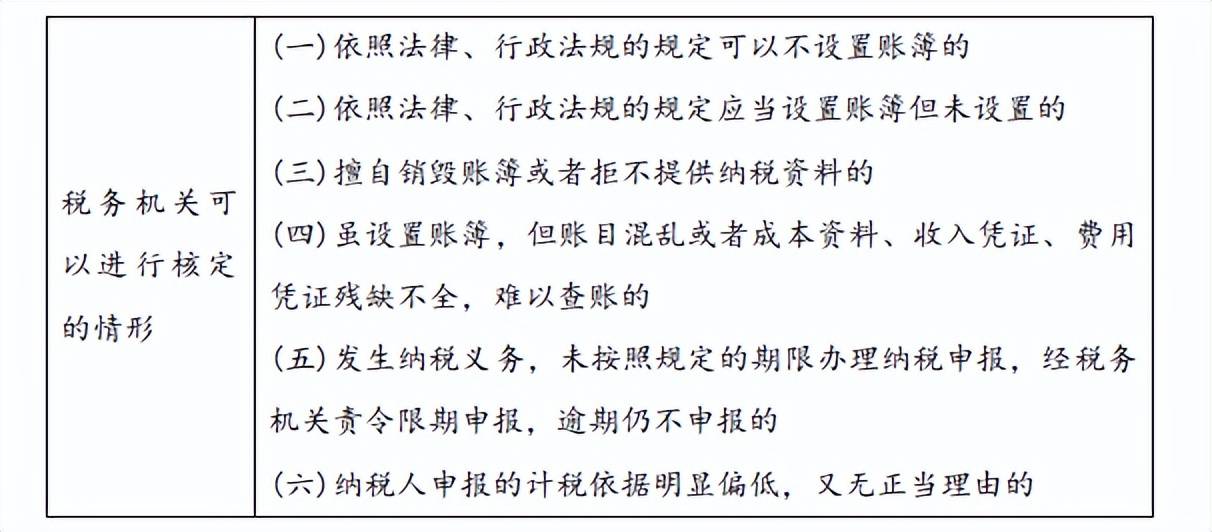
核定征收全面收紧,个体户应当何去何从?
Sou Hu Cai Jing· 2025-04-23 09:12
Group 1 - The core viewpoint of the article highlights the misuse of the fixed assessment tax collection method by individual businesses, leading to tax evasion, prompting regulatory changes to shift towards accounting-based assessments [1][2] - The fixed assessment method, which simplifies tax reporting for individual businesses with poor financial records, has been exploited, resulting in significant tax underreporting and penalties [2][3] - Recent regulatory changes have led to the cancellation of fixed assessment qualifications for many individual businesses, transitioning them to accounting-based assessments to enhance tax compliance [4][5] Group 2 - Individual businesses transitioning to accounting-based assessments face several tax-related risks, including the potential for tax evasion if income is not reported accurately or timely [6][7] - The inability to obtain valid invoices or the use of non-compliant invoices can lead to tax adjustments, as discrepancies between reported costs and those calculated by tax systems may trigger warnings from tax authorities [7][9] - The risk of being classified as engaging in fraudulent invoicing or tax evasion increases if businesses fail to ensure the authenticity of their transactions and invoices [10][11] Group 3 - The article emphasizes the importance of maintaining proper accounting records and supporting documentation to avoid tax adjustments and penalties under the new accounting-based assessment regime [11]