
商用厨具

Search documents
4万人小镇,何以占据中国商厨40%市场
Qi Lu Wan Bao Wang· 2025-07-28 10:03
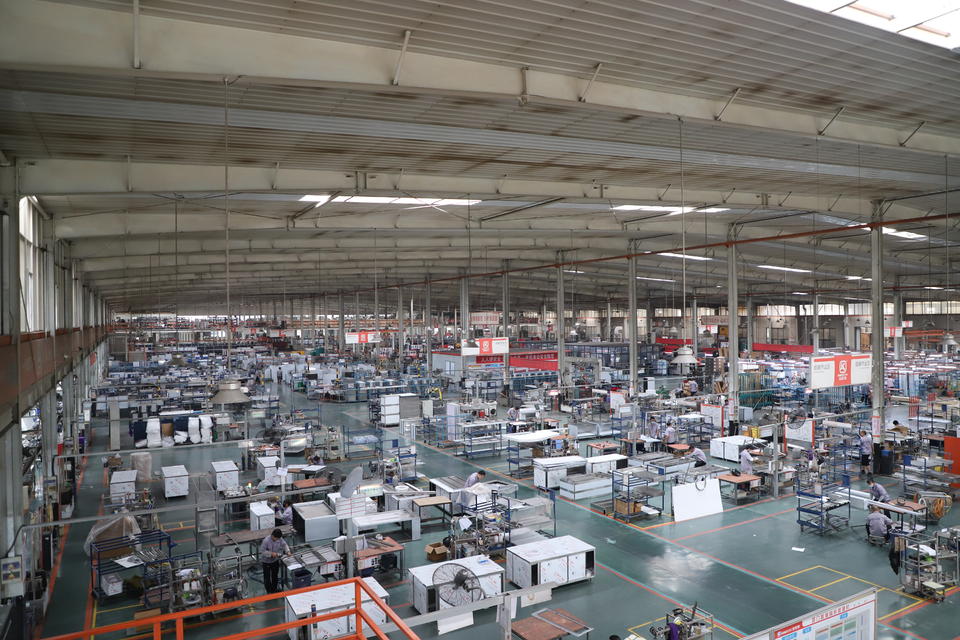
Core Viewpoint - The article highlights the transformation of Xingfu Town in Shandong Province into a major hub for commercial kitchen equipment, known as "China's Kitchen Capital," with over 2,800 companies producing more than 40% of the country's commercial kitchen equipment market share, generating an annual output value exceeding 30 billion yuan [1][2]. Group 1: Industry Development - The commercial kitchen equipment industry in Xingfu Town began in the early 1980s, evolving from a poverty-stricken area with no resources to a thriving manufacturing base through the efforts of local entrepreneurs [2]. - Over the past 40 years, the industry has transitioned from small-scale production to modern enterprises, achieving significant advancements in technology and production methods [2][4]. - The annual China (Boxing) International Kitchenware Festival has become a key platform for the industry, attracting thousands of merchants and generating over 10 billion yuan in transactions [3][12]. Group 2: Technological Innovation - The integration of artificial intelligence, IoT, and big data into traditional cooking processes has led to the development of smart kitchen solutions, enhancing efficiency and customization in commercial kitchens [4][6]. - Companies like Jinbai Te and Kyoto Kitchen are focusing on smart and digital production, with innovations such as remote-controlled cooking appliances and automated production lines [6][7][9]. - The establishment of a "City Life Digital Kitchen" by Jinbai Te aims to provide comprehensive smart cafeteria management solutions, showcasing the industry's shift towards high-tech applications [6]. Group 3: Global Expansion - Xingfu Town's commercial kitchen equipment is exported to over 50 countries, including the USA, UK, and France, and has been utilized in major international events like the Beijing Winter Olympics and Qatar World Cup [12]. - The local government is actively promoting infrastructure development and international outreach, including the establishment of overseas warehouses in several countries to facilitate exports [13]. Group 4: Talent and Innovation - The town attracts over 300 professionals annually, focusing on digitalization and green technology, which has resulted in more than 100 patents related to commercial kitchen equipment each year [14]. - Young entrepreneurs are revitalizing the industry, with initiatives aimed at integrating modern management practices and enhancing supply chain efficiency [15][17]. Group 5: Industry Structure - The "chain master system" implemented in Xingfu Town promotes collaboration among large and small enterprises, enhancing the overall competitiveness of the industry [18]. - This system allows for coordinated efforts in fulfilling large orders, thereby fostering a supportive ecosystem for small businesses [18].

山东滨州:实施助推特色产业发展专项行动 擦亮“滨周到”营商环境品牌
Zhong Guo Jin Rong Xin Xi Wang· 2025-07-04 08:21
Core Viewpoint - Shandong Province's Binzhou City is focusing on enhancing market vitality by adopting a service philosophy that prioritizes the comfort of enterprises and entrepreneurs, while innovatively optimizing the business environment to promote the development of characteristic industries [1] Group 1: Industry Development Strategy - The city has identified seven characteristic industries, including Bincheng grain, Zhanhua winter jujube, and high-end aluminum in Zouping, and has launched an implementation plan to optimize the business environment for these industries [2] - A collaborative approach is being adopted, with the establishment of seven specialized teams to promote the development of these industries, emphasizing inter-departmental cooperation and localized strategies [2][3] - Expert analysis is being utilized to guide the development of these industries, ensuring that planning is based on current market conditions and future prospects [2] Group 2: Resource Integration and Service Improvement - The city is addressing issues of information asymmetry and resource aggregation by creating industry chain maps and comprehensive resource pools, which include over 3,000 pieces of information to facilitate better resource allocation [3] - A service checklist for key industry matters has been established to streamline processes for businesses, making it easier for them to navigate administrative requirements [3][4] - Localized service initiatives, such as the establishment of administrative approval centers, are being implemented to enhance convenience for businesses [3] Group 3: Policy Effectiveness and Support Mechanisms - A comprehensive review and integration of various business support policies are being conducted to improve awareness and accessibility for enterprises, benefiting over 100,000 market entities [4] - A three-tier evaluation mechanism for business support policies is being established to ensure effective implementation and satisfaction among businesses [4] - The city is creating specialized service zones for characteristic industries to provide integrated services, thereby reducing operational costs for enterprises [5] Group 4: Digital Empowerment and Quality Control - The integration of digital technology is being emphasized, with the development of platforms to enhance data collection and service efficiency for industries [5] - Regular meetings and experience-sharing sessions are being organized to ensure the effective implementation of development tasks and continuous improvement of service quality [5]