粮食

Search documents
霍启刚:今年拟提交8条两会建议,涉及提升居民收入等方面
Bei Jing Ri Bao Ke Hu Duan· 2026-02-26 06:19
Core Viewpoint - The representative from Hong Kong, Huo Qigang, plans to submit eight proposals during the Two Sessions, focusing on integrating Hong Kong International Airport into the national civil aviation system and ensuring food security through the utilization of both domestic and international markets, as well as enhancing residents' income and building an olive-shaped society [1][5]. Group 1: Civil Aviation Proposals - The 2024 guidance from the Civil Aviation Administration of China and the National Development and Reform Commission introduces a "3+7+N" international aviation hub system, which has shown effectiveness in integrating domestic international routes, but some airports and routes are experiencing resource constraints [3][7]. - Huo Qigang suggests incorporating Hong Kong International Airport into a new strategic framework of "1+3+7+N" to leverage Hong Kong's unique position as an international aviation "super connector" [3][7]. - Recommendations include differentiating the functional roles of Hong Kong and the three major hubs (Beijing, Shanghai, Guangzhou) and establishing a national-level collaborative development mechanism for aviation hubs to optimize the allocation of core resources such as air rights and slots [3][7]. Group 2: Food Security and Economic Development - Huo Qigang emphasizes the importance of utilizing both domestic and international markets to ensure national food security, reflecting his concern as an external director of COFCO Group [4][7]. - The proposals also focus on enhancing residents' income, promoting "expanding the middle class and reducing the lower class," and building an olive-shaped society as key areas of interest [4][7]. Group 3: Additional Proposals - Other proposals include accelerating the expansion of long-haul routes from Hong Kong International Airport using the capacity of mainland airlines, establishing Hong Kong as an international aircraft parts processing and trading center, and promoting high-quality sports development to advance the Greater Bay Area into a world-class bay area [4][8]. - The creation of a comprehensive consumption ecosystem for the ice and snow economy and the sustainable development system, as well as promoting the large-scale application of technology to assist the disabled, are also highlighted as part of the proposals aimed at achieving common prosperity and supporting the "14th Five-Year Plan" for social development [4][8].


假期外盘暴涨传导,马年A股黄金能源开门红!广发大宗五虎把握轮动机遇,能源ETF广发(159945)盘中涨超5%
Xin Lang Cai Jing· 2026-02-24 03:55
Group 1: Market Overview - On the first trading day of the Year of the Horse (February 24), the three major indices in A-shares opened higher, with the Shanghai Composite Index up 1.15%, the Shenzhen Component Index up 1.52%, and the ChiNext Index up 1.70 [1] - The market saw strong performance in the gold and oil sectors, with active trading in energy metals, CPO, ultra-high voltage, consumer electronics, and semiconductor concept stocks [1] Group 2: Oil and Gas Sector - The recent strength in oil prices and the oil and gas sector is driven by a tight supply-demand balance, escalating regional conflicts, and insufficient long-term capital expenditure [1] - OPEC+ continues to maintain large-scale voluntary production cuts, strictly controlling crude oil exports, while the U.S. tightens restrictions on oil-producing countries like Iran and Venezuela, leading to a significant decrease in global crude oil supply elasticity [1] - International agencies like EIA have raised global crude oil demand forecasts for 2026, with steady recovery in industrial and transportation fuel demand, and global crude oil inventories at historically low levels [1] Group 3: Precious Metals - The precious metals market experienced heightened risk aversion due to new tariff policies announced by the Trump administration and recent U.S. economic data, with international gold prices significantly rising to $5,200 per ounce [2] - During the Spring Festival holiday (February 16-23), spot gold saw a cumulative increase of 3.64% [2] Group 4: Coal Market - The overseas coal market remained strong during the Spring Festival, with ICE Rotterdam coal futures closing at $113.0 per ton, up 5% from before the holiday and up 16% year-on-year [2] - Factors such as cold weather in Europe and the U.S. increasing electricity demand, along with Trump's proposals to revitalize the coal industry, have catalyzed this trend [2] - Domestic coal prices are expected to rise as the supply from Indonesia, the world's largest coal exporter, decreases, potentially leading to a significant tightening in the global coal market [2] Group 5: ETF Performance - The Shanghai Gold ETF (518600) saw a maximum intraday increase of over 4%, with a cumulative increase of 19.65% over the past three months as of February 13, 2026 [3] - The Energy ETF managed by Guangfa (159945) also saw a maximum intraday increase of over 5%, with significant gains in component stocks such as China National Offshore Oil Corporation and Guanghui Energy [3] - Analysts predict that the A-share market will continue its upward trend post-holiday, with a focus on policy-driven industry themes and rapid style switching [3][4] Group 6: Investment Strategies - Citic Securities emphasizes a dual focus on "technology and resource products," with key sectors including AI, humanoid robots, new energy, and innovative pharmaceuticals for technology, and precious metals, oil and petrochemicals, and basic chemicals for resources [4] - The current surge in global commodity prices is prompting a comprehensive investment strategy across various ETFs, including energy, gold, rare metals, materials, and grain [4]
2025年俄罗斯卢布升值的原因及影响分析
Sou Hu Cai Jing· 2026-02-24 03:19
Group 1 - The Russian ruble has appreciated significantly against the US dollar since 2025, despite low oil prices and weak economic growth, due to improved current and capital account balances, monetary tightening, and foreign exchange market interventions [1][2][3] - The correlation between the ruble and oil prices has weakened, with the ruble appreciating over 20% while Urals oil prices fell by 16%, indicating a breakdown of the previous "oil currency" logic [2][3] - The Russian government has shifted its economic strategy towards import substitution and developing non-oil industries, which has contributed to the ruble's strength [3] Group 2 - The trade surplus has been maintained through increased non-oil exports, which grew by 6% in the first three quarters of 2025, compensating for a 21% decline in oil and gas export revenues [4] - The "de-dollarization" of international trade has been significant, with 57% of exports and 53% of imports settled in rubles by Q3 2025, reducing reliance on US dollars and euros [4] - Russia's external debt has decreased from 3.9% of GDP in 2020 to 2.6% in 2024, leading to lower demand for foreign currency for debt repayment [5] Group 3 - The Central Bank of Russia has maintained high interest rates, with the benchmark rate reaching 21% in October 2024, which has attracted domestic investments in ruble-denominated debt [6] - The government has increased foreign exchange sales to support the ruble, with daily sales rising from 4.7 billion rubles in January 2025 to 14.8 billion rubles by December [6] - Tax adjustments have also impacted the economy, with a significant increase in the fiscal deficit leading to higher taxes on imports, particularly affecting the automotive sector [7] Group 4 - The appreciation of the ruble has negatively impacted federal revenue, with estimates suggesting a reduction of 1 trillion to 1.3 trillion rubles for each unit of ruble appreciation against the dollar [8] - Export-oriented companies are facing increased costs and reduced profit margins due to the ruble's strength, leading to cutbacks in investment plans [9] - Domestic companies are struggling against the influx of cheaper imported goods, with significant increases in imports of various consumer products, impacting local market competitiveness [9] Group 5 - The strong ruble is expected to maintain its position in the short term, but it poses risks for investments in Russia, particularly under sanctions [10] - Neighboring countries like Kazakhstan and Kyrgyzstan are experiencing inflationary pressures due to the strong ruble, prompting them to raise interest rates [10] - Investors in emerging markets should be cautious of similar currency fluctuations caused by government interventions [10]

记者手记|日本高价大米背后的民生难题
Xin Hua She· 2026-02-22 08:01
Core Viewpoint - The rising prices of rice in Japan highlight the broader issue of inflation affecting the cost of living, with nearly half of the respondents in a recent poll indicating that the government should prioritize addressing inflation as a key issue [1][2]. Group 1: Economic Indicators - Japan's real GDP showed a slight increase of 0.1% quarter-on-quarter in the fourth quarter of last year, translating to an annualized growth rate of 0.2%, which is significantly below market expectations [1]. - Personal consumption, which accounts for over half of Japan's economy, also increased by 0.1% quarter-on-quarter, indicating stagnation at low levels [1]. Group 2: Consumer Behavior - The continuous rise in food prices, particularly rice, has led consumers to adopt more frugal spending habits, with many opting for cheaper alternatives or reducing their purchase quantities [2]. - The price of rice has surged by 67.5% last year, marking the highest increase since 1971, with the average price of a 5-kilogram bag exceeding 4000 yen [2]. Group 3: Government Policies and Public Sentiment - Government measures such as issuing rice vouchers have had limited long-term impact on consumer behavior, as individuals return to comparing prices and choosing cheaper options once the vouchers are used up [3]. - Experts suggest that the government's fiscal policies aimed at stimulating the economy may inadvertently exacerbate inflation, leading to a cycle where rising prices necessitate further subsidies, which in turn increase the money supply and fuel inflation [3].
日本高价大米背后的民生难题
Sou Hu Cai Jing· 2026-02-22 03:41
Core Viewpoint - The rising prices of rice in Japan highlight the broader issue of inflation affecting the cost of living, with nearly 50% of respondents in a recent poll indicating that the government should prioritize addressing inflation as a key issue [1][2]. Group 1: Economic Indicators - Japan's real GDP showed a slight increase of 0.1% quarter-on-quarter in Q4 of last year, with an annualized growth rate of only 0.2%, significantly below market expectations [1]. - Personal consumption, which accounts for over half of Japan's economy, also increased by 0.1% quarter-on-quarter, indicating stagnation at low levels [1]. Group 2: Consumer Behavior - The continuous rise in food prices has led consumers to adopt more frugal spending habits, with many opting for cheaper alternatives or reducing their purchase quantities [2]. - A significant increase in rice prices has been noted, with a 67.5% rise in rice product prices last year, the highest since 1971, and the average price for a 5-kilogram bag exceeding 4,000 yen [2]. Group 3: Government Response and Policy Implications - The government has previously issued rice vouchers, but their effectiveness was limited, as consumers returned to comparing prices and choosing cheaper options once the vouchers were used up [3]. - Experts suggest that the government's fiscal policies aimed at stimulating the economy may inadvertently exacerbate inflation, leading to a cycle where rising prices necessitate further subsidies, which in turn increase the money supply and fuel inflation [3].
加纳粮食不安全率高达38.1%
Shang Wu Bu Wang Zhan· 2026-02-14 15:50
Core Insights - The latest quarterly food insecurity report from the Ghana Statistical Service indicates a worsening trend in food insecurity in Ghana, despite some recent improvements [1] Group 1: Food Insecurity Trends - The national food insecurity rate increased from 35.3% in Q1 2024 to 38.1% by Q3 2025, showing a fluctuating upward trend [1] - The peak food insecurity rate is projected to reach 41.1% in Q2 2025, followed by a slight decline in the most recent quarter [1]
(新春走基层)广州边检见闻:在煤堆与粮船间守护万家“烟火气”
Zhong Guo Xin Wen Wang· 2026-02-12 08:01
Core Viewpoint - The article highlights the critical role of the Huangpu Border Inspection Station in ensuring the smooth operation of coal and grain transportation during the Chinese New Year, emphasizing the dedication of border police in maintaining supply chains for energy and food in the Guangdong-Hong Kong-Macao Greater Bay Area [1][2]. Group 1: Coal Operations - Guangzhou's Xinsha Port is the largest coal import port in South China, with a projected coal throughput of nearly 15 million tons by 2025 [2]. - The coal yard at Xinsha Port resembles black mountains, with constant vehicle traffic and large vessels docking, indicating high operational activity [2]. - The average coal handling efficiency at Xinsha Port reached 46,000 tons per day last year, attributed to the extensive efforts of border police in inspections and coordination [2][4]. Group 2: Grain Operations - The grain terminal at COFCO is characterized by rapid turnover, with a focus on speed to maintain the freshness of the grain [3]. - The implementation of "24-hour on-demand inspections" by border inspection has achieved "zero waiting" for grain vessels, enhancing operational efficiency [3]. Group 3: Ship Repair Services - The East River shipyard is expected to handle over 100 repair vessel entries and exits in 2025, with foreign vessels accounting for 80% of the output value and a year-on-year revenue growth of 41% [4]. - A "one ship, one file" management system has been established for foreign vessels, ensuring safety and efficiency throughout the entire process from entry to exit [4]. Group 4: Overall Impact - The border police's work during the New Year period is crucial for ensuring the safe docking of large vessels and the efficient clearance of goods, contributing to the warmth and vibrancy of the city [5]. - The dedication of the border police, who sacrifice traditional celebrations to maintain operational continuity, reflects their commitment to safeguarding the livelihoods of countless families [5].

从制裁之下大毛的经济韧性,看逐渐跑偏的经济目标
Sou Hu Cai Jing· 2026-02-11 05:45
Group 1 - The core argument is that despite severe economic sanctions imposed by the West, Russia has demonstrated remarkable economic resilience and adaptability, even outperforming many Western nations in certain aspects [1][3][5] - Russia's economy, which was previously underestimated, showed a surprising GDP growth of 3.5% in the first quarter following the sanctions, highlighting its unexpected strength [3][5] - The economic structure of Russia, which includes essential resources like oil, gas, and food, has proven to be more resilient compared to the luxury and high-end products offered by Western economies, which are more vulnerable in times of crisis [5][10] Group 2 - The sanctions have led to a shift in ownership of Western brands operating in Russia, allowing these businesses to continue functioning under new management, thus minimizing the impact of sanctions on the Russian economy [5][8] - The economic confrontation is characterized by mutual costs, where the industries of the sanctioning countries also suffer, indicating that the impact of sanctions is not one-sided [5][12] - The focus should not solely be on GDP growth but rather on the effective allocation of limited resources to achieve maximum economic output and resilience against risks, which is a fundamental aspect of economic theory [10][12]

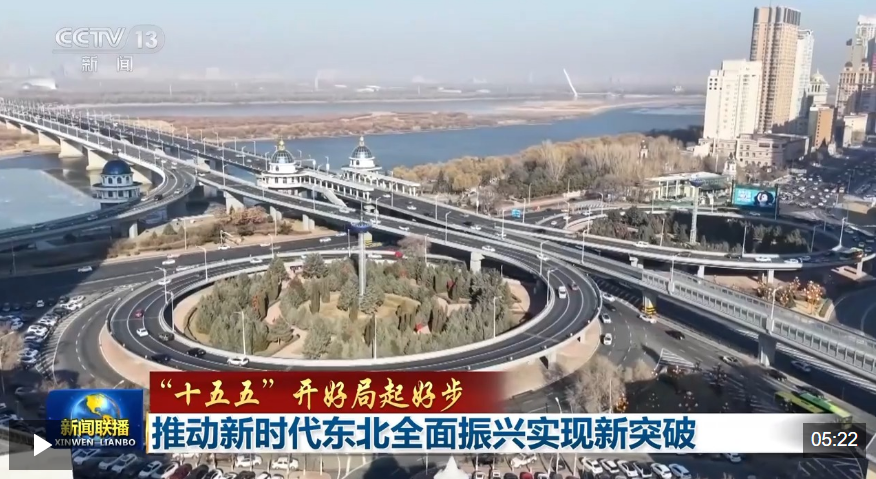
“十五五”开好局起好步丨推动新时代东北全面振兴实现新突破
Yang Shi Xin Wen Ke Hu Duan· 2026-02-09 07:15
Group 1 - The core viewpoint emphasizes the importance of revitalizing Northeast China through the development of the real economy, technological innovation, and industrial upgrading as guided by General Secretary Xi Jinping [2][6] - The Northeast region is focusing on high-quality development by leveraging its resource endowments, with significant achievements such as Jilin Chemical Fiber becoming the global leader in carbon fiber production [4] - The region's strategic advantages include strong industrial foundations and unique geographical positions, which are being harnessed to support China's modernization efforts [6] Group 2 - Jilin Province is accelerating the transition of its traditional automotive industry towards new energy and intelligent connected vehicles, with an expected 15% increase in new energy vehicle production [9] - Liaoning Province is implementing advanced manufacturing cluster initiatives, aiming to enhance four trillion-level industrial bases and establish 80 new advanced smart factories [11] - The third cold-rolled steel plant of Benxi Steel has improved production efficiency by 25% and increased the proportion of high-end products to 44.21% through smart manufacturing [12] Group 3 - Technological innovation is being prioritized to foster new productive forces, with a focus on transforming scientific research into practical applications [14][15] - Heilongjiang is building an innovation ecosystem around universities to accelerate the commercialization of scientific achievements, targeting over 700 major technology transformations this year [15][17] - The agricultural sector in Northeast China is being modernized through technological advancements, with initiatives to enhance grain production and agricultural mechanization rates [19][20] Group 4 - Jilin plans to establish 10 million acres of high-standard farmland and aims for a total agricultural product processing value of 560 billion yuan [22] - The agricultural strategy includes a focus on modernizing the entire production chain, from breeding to processing, to enhance agricultural productivity [24]
梅新育:经济民生危机动摇伊朗基础
Di Yi Cai Jing· 2026-02-08 12:45
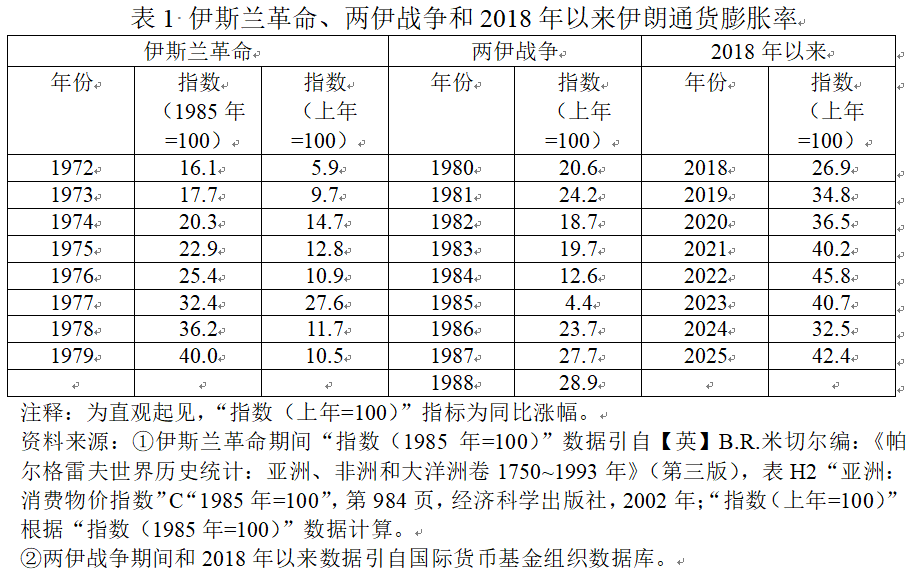
Core Viewpoint - Iran is facing a severe economic and social crisis exacerbated by inflation, drought, and external sanctions, leading to systemic risks for the regime [1][2]. Economic Conditions - Current inflation in Iran exceeds levels seen during the Islamic Revolution and the Iran-Iraq War, with inflation rates reaching 45.8% in 2022 and projected at 42.4% for 2025 [2][5]. - The inflation rate has been consistently high since 2018, with three years exceeding 30% and four years surpassing 40% [5]. - The inflation management performance of the current regime is worse than that of the previous Pahlavi dynasty, with historical inflation rates showing a significant increase since the establishment of the Islamic Republic [5][6]. Inflation Impact - The inflation is highly asymmetric, with food prices rising significantly more than the overall inflation rate, leading to a 72% increase in food prices in 2025 [7]. - Urbanization has increased the population's reliance on market purchases for food, intensifying the impact of inflation on living standards [7]. Currency Devaluation - The Iranian currency has experienced dramatic devaluation, with the exchange rate dropping from 1 USD to 43,000 rials in 2022 to 1 USD to 145,000 rials by the end of 2025 [8]. - This devaluation is unprecedented compared to historical periods, with the rial losing 1/906 of its value against the dollar since 1993 [8]. Agricultural Challenges - Iran's agricultural sector is under severe stress due to ongoing drought conditions, with rainfall in 2025 down by approximately 89% from long-term averages [10]. - Despite a theoretical self-sufficiency in food production, Iran still imports millions of tons of wheat annually, exacerbating the economic burden [10]. Government Response - The Iranian government lacks sufficient fiscal and foreign exchange resources to mitigate the pressures of high inflation on the population [11]. - Recent adjustments to subsidies have led to public discontent, and the government has shifted from providing direct subsidies to cash payments, which have not alleviated the situation [11][12].