
Autonomous Vehicles

Search documents
Uber Has Big Plans for Lots More Robotaxis and EV Charging Stations
CNET· 2026-02-18 22:20
Core Insights - The robotaxi industry is expected to experience significant growth, with Uber investing over $100 million to establish autonomous vehicle charging stations in major US cities [1][4] - The robotaxi market is projected to grow from an estimated $610 million last year to $147.25 billion by 2033, indicating rapid industry expansion [2] - Uber aims to operate autonomous vehicle fleets in at least 10 cities by the end of 2026, expanding its global presence [3] Investment and Infrastructure - Uber's charging stations will be located at new autonomous vehicle depots, which will also handle cleaning, maintenance, and inspections [3] - The company plans to develop DC fast charging (DCFC) stations in priority cities, which can provide a full charge in under an hour [4] - Partnerships with charge point operators will lead to the addition of over 1,000 chargers in cities like New York, Los Angeles, and London, enhancing infrastructure for both autonomous and human-driven EVs [5][6] Community and Environmental Impact - The addition of charging stations in low-income areas is expected to benefit ride-hail drivers by reducing operational costs and improving community health [7]


Waymo defends use of remote assistance workers in robotaxi operations
Reuters· 2026-02-17 21:58
Alphabet self-driving unit Waymo on Tuesday defended its use of remote assistance personnel in the face of questions from Congress and said they have never been used to move robotaxis in on-road opera... ...


CaoCao Inc. Robotaxi Fleet Reaches 100 Vehicles as the Company Steadily Advances Robotaxi Operations Testing
Globenewswire· 2026-02-15 13:45
Core Insights - CaoCao Inc. has launched a 100-vehicle Robotaxi fleet in Hangzhou, marking a significant milestone in its Robotaxi 2.0 phase [1][4] - The company has a three-phase roadmap for its Robotaxi operations, transitioning from safety-driver-based services to fully driverless operations [3] - CaoCao is expanding its international collaboration, including a partnership with the Abu Dhabi Investment Office to pilot autonomous driving technologies [6] Group 1: Robotaxi Operations - The current phase of CaoCao's Robotaxi operations focuses on transitioning to fully driverless services while testing mixed fleets of human-driven and autonomous vehicles [3] - The deployment of the Robotaxi fleet aims to validate service reliability and enhance passenger experience through operational refinements [4] - Future plans include extending daily service hours and expanding service coverage, supported by the implementation of an intelligent asset management system [5] Group 2: Technological Development - CaoCao is collaborating with Geely to develop a purpose-built Robotaxi model equipped with dedicated autonomous driving hardware and software, with a target of deploying 100,000 vehicles by 2030 [7] - The company has introduced the world's first Green Intelligent Mobility Hub, which supports fleet operations with features like automated battery swapping and intelligent dispatching [4][7] - The integrated model combines intelligent vehicles, driving technology, and operations to promote greener and smarter urban transportation [8]

Oppenheimer Remains a Buy on Aurora Innovation (AUR)
Yahoo Finance· 2026-02-15 09:08
Core Insights - Aurora Innovation, Inc. is recognized as a promising penny stock with potential for significant growth, supported by recent buy ratings from Oppenheimer and Cantor Fitzgerald, with price targets of $15 and $12 respectively [1][2] Financial Performance - The company announced its fiscal Q4 and full-year 2025 earnings on February 11, revealing substantial software updates and an expansion of its driverless network to 10 routes across the US Sun Belt [2] - Despite missing revenue estimates by $473,000, Oppenheimer maintains a positive outlook, citing the company's goal of having 200 driverless vehicles operational by the end of 2026 as a key indicator of "full commercialization" of the Aurora platform [4] Strategic Developments - Aurora is projected to achieve positive free cash flow by 2028, with plans to have over 200 driverless trucks on the road by the end of the year [2] - The company is making significant advancements, with expectations for next-generation hardware to be available by fiscal Q3 2026 [4] Product Overview - Aurora Innovation develops the Aurora Driver, a scalable platform that integrates self-driving hardware, software, and data services for various vehicle types, including trucks and passenger cars [5]

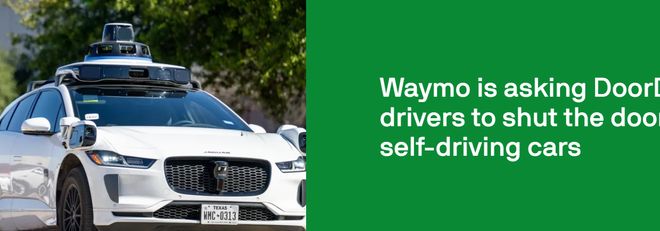
离谱!Waymo无人车遇关门难题,花重金请外卖员上门救急
Huan Qiu Wang Zi Xun· 2026-02-13 07:53
Core Insights - Waymo, a subsidiary of Alphabet, has faced operational challenges with its autonomous vehicles due to a door issue that causes the vehicles to stop functioning if a passenger does not close the door properly [1][3] - To address this problem, Waymo has partnered with DoorDash to employ delivery drivers to close the doors of its vehicles, highlighting the operational inefficiencies in its current system [3] Group 1: Operational Challenges - Waymo's autonomous vehicles have been deployed in six cities for passenger operations but are experiencing a significant issue where the vehicles become inoperable if the doors are not securely closed [1][3] - The company has confirmed that it is paying DoorDash drivers $6.25 for a short trip to close the doors of Waymo vehicles, with an additional $5 bonus for confirmation of the task [3] Group 2: Partnership and Solutions - The collaboration with DoorDash is part of a pilot project in Atlanta aimed at improving the operational efficiency of Waymo's autonomous fleet [3] - Waymo previously partnered with a roadside assistance platform in Los Angeles, paying up to $24 for similar door-closing services, indicating the extent of the issue [3] - Future models of Waymo vehicles are planned to include an automatic door-closing feature to fundamentally resolve the door issue [3]
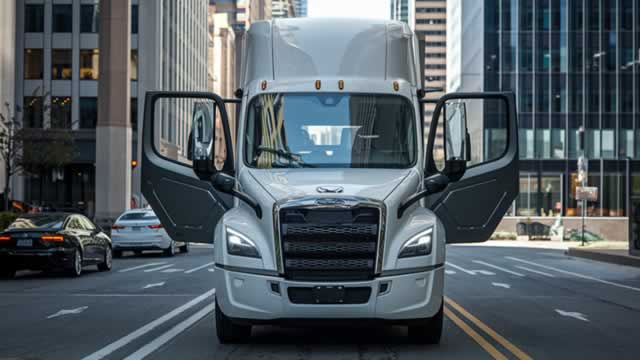
Aurora's driverless trucks can now travel farther distances faster than human drivers
TechCrunch· 2026-02-12 17:58
Core Insights - Aurora's self-driving trucks can now operate on a 1,000-mile route between Fort Worth and Phoenix, which is a significant advancement over human drivers due to legal driving limits [1][2] - The company claims that its technology can reduce transit times by nearly half, providing economic benefits to clients such as Uber Freight and FedEx [3] Company Operations - Aurora has transitioned from a developer to a commercial operator, currently running driverless trucks on multiple routes in Texas and beyond, generating revenue since April 2025 [4][7] - The company reported $1 million in revenue for Q4 2025 and $3 million for the entire year, with total adjusted revenue reaching $4 million [7] Financial Performance - Despite generating revenue, Aurora reported a net income loss of $816 million in 2025, a 9% increase from the previous year, as it focuses on scaling operations [8] - The company has a fleet of 30 trucks, with plans to expand to over 200 trucks by the end of the year, having already accumulated 250,000 driverless miles with a perfect safety record [9] Future Prospects - Aurora plans to deploy a fleet of driverless trucks without human observers in the second quarter, indicating a move towards full autonomy [10] - The company is optimistic about its future, driven by advancements in self-driving software and hardware, and expects 2026 to be a pivotal year for the self-driving truck market [11][13]
WeRide and Uber Begin First Commercial Robotaxi Service in Downtown Abu Dhabi
Globenewswire· 2026-02-12 06:00
Core Insights - WeRide and Uber have launched the first commercial Robotaxi service in downtown Abu Dhabi, marking the Emirate's first deployment of autonomous vehicles in its city center [1][4] - The service now covers approximately 70% of Abu Dhabi's core areas, with the fleet size quadrupling since its inception in December 2024 [1][4] Service Expansion - The newly expanded service operates in Khalifa City, Masdar City, Rabdan, and routes between Corniche Road and the Sheikh Zayed Grand Mosque, covering major landmarks and popular hotels [2][6] - The service previously covered about half of Abu Dhabi's core areas, including Al Reem, Al Maryah, Yas, and Saadiyat, as well as highway routes to Zayed International Airport [4] Operational Details - Riders can now be matched with a WeRide Robotaxi GXR through the Uber platform, and can also book directly via a dedicated "Autonomous" option on the app [3] - Public commercial operations have commenced with a vehicle specialist on board, as part of a phased approach towards fully driverless operations [3] Urban Connectivity and Tourism - The expanded service enhances urban connectivity and supports the UAE's smart mobility vision, connecting high-demand hotel and tourism corridors with other parts of Abu Dhabi [4][7] - Hotels across the Emirate received 4.8 million guests as of 2024, reflecting a 27% year-on-year increase in international visitors [7] Future Plans - WeRide and Uber aim to scale their operations to thousands of Robotaxis in the Middle East, with a commitment to deploy at least 1,200 Robotaxis across the region by 2027 [8] - In November 2025, the companies launched the Middle East's first Level 4 fully driverless Robotaxi commercial operations in Abu Dhabi [9] Company Background - WeRide has maintained a four-year first mover advantage in autonomous vehicle deployment in Abu Dhabi, having operated Robotaxis since 2021 [11] - The company became the first in the UAE to receive a national license for all types of self-driving vehicles, allowing for autonomous testing and operation on public roads [11]


WeRide Using AI to Cut Costs as It Grows Robotaxi Fleet
WSJ· 2026-02-12 01:56
Core Insights - The company has successfully reduced its data collection and training costs by 75% [1] - The company aims to at least double its fleet size within the current year [1]
Aurora Innovation Q4 Earnings Call Highlights
Yahoo Finance· 2026-02-11 23:39
Core Insights - Aurora Innovation highlighted 2025 as a defining year, marking the launch of its first driverless commercial trucking operations on U.S. public roads and significant advancements in its operational domain and commercialization plans [4] Operational Developments - The company initiated supervised autonomous operations on bidirectional lanes between Dallas and Laredo, aiming for driverless validation within the current quarter [1] - Aurora's latest software release expanded driverless operations to handle inclement weather, addressing a limitation that affected operations in Texas about 40% of the time during 2025 [2] - The Aurora Driver surpassed 250,000 driverless miles in January, nearly tripling cumulative miles since early October, maintaining 100% on-time performance and a perfect safety record with zero collisions attributed to the Aurora Driver [3][7] Financial Performance - Aurora reported fourth-quarter 2025 revenue of $1 million, a 25% sequential increase from the third quarter, with total revenue for fiscal 2025 reaching $3 million [18] - The company ended 2025 with nearly $1.5 billion in liquidity and expects average quarterly cash use of $190–220 million in 2026, targeting break-even gross margin by year-end and positive free cash flow by 2028 [5][20][22] Future Projections - For 2026, Aurora guided revenue of $14–16 million, with expectations of more than 200 driverless trucks in operation by year-end, translating to an $80 million run-rate into 2027 [6][21] - The company plans to deploy a new fleet with second-generation "Harbor" hardware, enabling operations without partner-requested observers, and aims to transition to a driver-as-a-service model starting in 2027 [11][13] Partnerships and Technology - Aurora emphasized its vehicle-agnostic approach and multi-OEM strategy, with partnerships including Volvo and PACCAR, and noted progress in integrating its second-generation commercial hardware kit into Volvo trucks [15][16] - The company is advancing a third-generation commercial hardware kit with AUMOVIO, targeting the supply of tens of thousands of trucks [17]
Aurora Innovation(AUR) - 2025 Q4 - Earnings Call Transcript
2026-02-11 23:00
Financial Data and Key Metrics Changes - In Q4 2025, revenue totaled $1 million, reflecting a 25% sequential increase from Q3 2025, driven by a record number of commercial miles driven [18] - Total year-adjusted revenue for fiscal year 2025 was $4 million, including pilot revenue from Q1 2025 [18] - The operating loss for Q4 2025 was $238 million, with R&D expenses at $155 million and SG&A at $30 million [18] - The company ended the year with approximately $1.5 billion in cash and short-term investments, indicating a strong balance sheet [19] - For 2026, the company expects revenue between $14 million and $16 million, representing a 400% year-over-year increase at the midpoint [19][20] Business Line Data and Key Metrics Changes - The Aurora Driver achieved 250,000 driverless miles, nearly tripling the cumulative miles from early October 2025 [5] - The company plans to exit 2026 with over 200 driverless trucks in operation, translating to approximately $80 million in revenue on a run-rate basis [21] - The second-generation commercial kit is expected to drive a 50% reduction in hardware costs, contributing to a target of break-even gross margin by the end of 2026 [21] Market Data and Key Metrics Changes - The company is expanding its operational domain across the Sunbelt, with new routes including Dallas to Laredo and El Paso to Fort Worth [9][11] - The expansion of driverless capabilities in inclement weather is expected to significantly increase operational availability, which was constrained 40% of the time in Texas during 2025 [8] Company Strategy and Development Direction - The company aims to fundamentally improve safety and restructure the economics of the logistics industry through its driverless technology [7] - The transition to a driver-as-a-service (DAS) model is planned for 2027, with a strong pipeline of customer interest supporting this strategy [12][21] - Partnerships with OEMs like Volvo and PACCAR are crucial for scaling production and enhancing the supply chain for autonomous trucks [14][49] Management's Comments on Operating Environment and Future Outlook - Management expressed confidence in achieving positive free cash flow by 2028, supported by a strong liquidity position [22] - The company anticipates significant growth in 2026, with a focus on executing strategic investments necessary for scaling operations [22] - Management highlighted the importance of customer demand in driving lane expansions and operational decisions [35] Other Important Information - The company has begun supervised autonomous operations to support multiple customer facilities, indicating a shift towards broader commercial applications [11] - The latest software release has expanded the operational capabilities of the Aurora Driver, allowing for driverless operations in various weather conditions [8] Q&A Session Summary Question: Clarification on end-of-year truck guidance and revenue expectations - Management indicated that revenue is expected to be back-end loaded, with significant growth anticipated in the second half of 2026 as the fleet launches in Q2 [24] Question: Timeline for serial commercial production in 2027 - Management described serial production as a gradual increase in driverless miles and revenue, with expectations for incremental volume from new platforms in 2027 [25][26] Question: Details on the target for more than 200 trucks by year-end - The target of over 200 trucks refers to fully driverless operations without an observer, with expectations for sequential growth starting in Q2 2026 [27][28] Question: Insights on customer interest and demand for autonomy - Management noted strong customer interest and contracted demand, emphasizing the importance of delivering value through increased asset utilization [40][41] Question: Impact of observerless launch on OEM partners - Management expressed confidence that continued demonstrations of the product will enhance engagement with OEM partners [43] Question: Performance of Aurora Trucks in winter weather conditions - Development operations were conducted under adverse conditions, but current driverless capabilities were not tested in those scenarios [46]