
Trucking

Search documents
Yellow’s Chapter 11 Bankruptcy Plan Clears Court, Top Shareholder Appeals Ruling
Yahoo Finance· 2025-11-19 20:34
Yellow Corp.’s long-running bankruptcy saga may finally be turning a corner after a federal judge approved the former trucking giant’s Chapter 11 liquidation plan—an essential step toward wrapping up one of the transportation industry’s most sprawling collapses. In a Delaware bankruptcy court Monday, Judge Craig Goldblatt issued an oral decision confirming Yellow’s plan, which is the fourth iteration put forward since the carrier filed in August 2023. More from Sourcing Journal Goldblatt determined that ...
Einride Sues Maersk Over U.S. Rollout of Battery-Electric Big Rigs
WSJ· 2025-11-19 19:20
Core Points - The Swedish startup claims that the Danish logistics company failed to honor an agreement to deploy 300 trucks in California, Illinois, and New Jersey [1] Company Summary - The Swedish startup is involved in logistics and has made a significant agreement with the Danish logistics company regarding truck deployment [1] - The Danish logistics company is accused of reneging on the agreement, which could impact its operational commitments in the specified states [1]



Why Demand — Not Truck Attrition — May Decide the Fate of Small Carriers in 2026
Yahoo Finance· 2025-11-18 19:36
Core Insights - The freight market's recovery is fundamentally driven by structural demand rather than temporary capacity exits [4][21][25] - Demand is influenced by various factors including retail inventory investment, manufacturing output, consumer spending, and government infrastructure cycles [2][21] - Capacity exits may provide short-term relief but do not create sustainable demand or long-term recovery [11][25][26] Group 1: Demand Dynamics - Demand is structural and rooted in deeper economic forces, not emotional reactions [2][24] - Key drivers of freight demand include retail restocking, housing starts, manufacturing output, and import/export volumes [2][22][23] - The freight market only strengthens when there is an actual increase in freight volume, not merely from a reduction in truck capacity [21][24] Group 2: Capacity Exits and Market Reactions - Capacity exits can lead to temporary rate increases, but these are often followed by a return of trucks to the market, negating any benefits [17][19] - Large carriers tend to absorb volumes quickly when small carriers exit, limiting the potential benefits for the spot market [18] - The influx of non-domiciled CDL holders has added to the capacity pool, and potential regulatory changes could lead to sudden capacity exits [12][13] Group 3: Historical Context and Lessons - The COVID-19 pandemic illustrated that demand, not capacity exits, drives market dynamics; when demand normalized, oversupply crushed rates [11][10] - Historical patterns show that rate spikes driven by demand are sustainable, while those driven by capacity are not [11][21] - The industry has experienced cycles where temporary capacity tightening does not lead to lasting improvements in market conditions [17][19][20] Group 4: Future Outlook - The future of small carriers depends on their ability to adapt and position themselves for when demand returns, rather than relying on the failure of competitors [26] - Monitoring underlying demand drivers is crucial for small carriers to gauge market recovery [22][23] - Sustainable recovery in the freight market will only occur when there is an increase in freight to haul, not just a decrease in available trucks [25][26]
FedEx Fuels Harbinger’s $160M Raise While Einride Goes Public in New Wave of Electric Trucking Bets
Yahoo Finance· 2025-11-18 16:09
Core Insights - The electric trucking industry is experiencing increased investment despite ongoing challenges in freight demand and slow EV adoption [1][2] - FedEx is co-leading a $160 million funding round for Harbinger, a medium-duty electric and hybrid vehicle manufacturer, and has placed an initial order for 53 EVs [1][2] Investment and Market Dynamics - Einride, a Swedish autonomous trucking technology company, is preparing to go public via a SPAC at a valuation of $1.8 billion, following Kodiak AI's recent public offering [2] - FedEx's investment in Harbinger aligns with its network transformation and the need for larger-capacity vehicles to optimize operations [2] Company Operations and Production - Harbinger has produced approximately 400 vehicles since starting manufacturing in January and expects to increase production to about 3,000 vehicles next year [4] - The company specializes in designing and manufacturing stripped chassis, which are then completed by other truck manufacturers [3] Market Challenges - The freight market is contracting, with a projected exit of more trucking capacity in 2025, and medium-duty truck sales have declined by roughly 10% through September compared to the previous year [4] - The commercial electric truck segment has faced difficulties, exemplified by General Motors ending production of its BrightDrop electric vans, which FedEx had been a customer of [5]

Marten Transport: One Of The Top Candidates In Trucking
Seeking Alpha· 2025-11-15 09:51
Core Viewpoint - Marten Transport (MRTN) is experiencing a significant decline in share price, influenced by broader sector trends and specific company challenges [1] Company Overview - Marten Transport specializes in temperature-controlled transportation, indicating a niche focus within the trucking industry [1] Investment Perspective - The investment strategy emphasizes companies that offer healthy dividends and have clear potential for capital appreciation, suggesting that Marten Transport may be undervalued relative to its fundamentals and peers [1] - The analysis seeks to identify businesses that reward shareholders through both dividends and capital appreciation, highlighting the importance of technical and fundamental indicators for investment decisions [1]

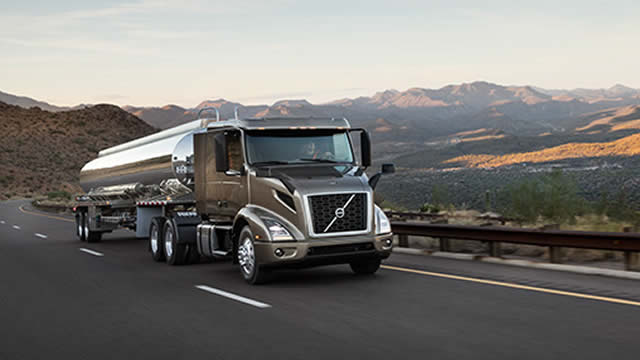
Trucking’s Two-Front War: Capacity Contracts And Costs Explode
Yahoo Finance· 2025-11-13 20:57
Core Insights - The trucking industry is currently facing significant challenges, primarily due to shrinking truckload capacity and rising operational costs [1] - Rising costs in tolls and insurance premiums are major contributors to the financial pressures on fleets, with tolling costs nearly doubling and insurance premiums increasing by up to 43% over five years [2] - Partnerships with technology providers like Fleetworthy are essential for fleets to manage costs effectively and enhance operational efficiency [3] Cost Challenges - The trucking industry is experiencing unavoidable expenses, particularly in tolling and insurance, which reflect broader financial pressures [2] - The cost of tolling has nearly doubled in recent years, while insurance premiums have surged significantly, forcing fleets to seek cost-effective solutions [2] Technological Solutions - Fleetworthy offers a comprehensive suite of solutions that includes toll management, weigh station bypass, and compliance management, which are crucial for fleet readiness [3] - The integration of Drivewyze with major ELD providers allows for efficient weigh station bypass notifications, reducing the need for lane changes and enhancing safety [5] - Leveraging technology not only aids in cost reduction but also improves safety and compliance within the trucking industry [4][5] Partnership Benefits - Bestpass, under Fleetworthy, provides access to the largest tolling network in the U.S., helping fleets avoid costly toll violations [4] - Collaborating with technology partners enables fleets to streamline operations and reduce unnecessary costs, which is increasingly important as operational costs rise [4][5]
Werner Enterprises (NasdaqGS:WERN) FY Conference Transcript
2025-11-11 14:22
Summary of Werner Enterprises FY Conference Call (November 11, 2025) Industry Overview - The freight industry has experienced significant volatility in 2025, with challenges including inventory front-loading, government shutdowns, and regulatory developments [2][3][4] - The current economic environment for freight is described as benign, but there are signs of improvement as the year progresses [3][4] - The peak season for freight is expected to resemble pre-COVID levels, indicating a potential upside compared to the previous year [3][4][6] Company Performance and Strategy - Werner Enterprises has maintained a long-term investment strategy despite the challenging market conditions, focusing on enhancing its portfolio across various service areas [9][10] - The company is well-positioned with a robust fleet setup, which is crucial given the anticipated constrained OEM market in 2026 [10][11] - The tax rebate expected in 2026 is seen as a significant stimulus for the consumer base that Werner serves, potentially benefiting the company's operations [12] Regulatory Environment - Increased enforcement of regulations, particularly regarding English language proficiency (ELP) and non-domicile CDLs, is viewed positively by Werner, as it addresses safety and capacity issues in the industry [14][15][19] - The company has been proactive in maintaining ELP standards during driver onboarding, positioning itself favorably amidst regulatory changes [15][18] Freight Rates and Inflation - The company has experienced five consecutive quarters of modest rate increases, but acknowledges the need for more substantial rate recovery to offset inflationary pressures [22][23] - Inflation has impacted financial returns across the industry, and Werner emphasizes the importance of pursuing higher rates as demand improves [21][22][23] Dedicated Market Insights - Demand in the dedicated market remains strong, and Werner is focused on maintaining fleet size while selectively expanding into true dedicated services [28][29] - The company aims to avoid irregular route freight being misclassified as dedicated, ensuring stability in its dedicated operations [29][30] Used Equipment Market - The used equipment market has shown signs of recovery, with resale values improving significantly from two-year lows to two-year highs [35] - Factors such as tariffs and OEM manufacturing constraints are expected to support used equipment values in the long term [36] Conclusion - Werner Enterprises is optimistic about the future, with a strong portfolio and strategic focus on regulatory compliance, dedicated services, and rate recovery amidst a challenging freight environment [10][12][21][28]

Rush Enterprises: Searching For A Bottom, Time To Be A Contrarian (NASDAQ:RUSHB)
Seeking Alpha· 2025-11-10 12:48
Core Viewpoint - Rush Enterprises is facing challenges due to a downturn in the trucking market, influenced by a difficult macroeconomic environment, with ongoing pressures on US employment and manufacturing [1] Company Summary - Rush Enterprises (RUSHB, RUSHA) is experiencing significant pressure from the trucking market downturn [1] - The macroeconomic environment remains challenging, which may continue to affect the market in the near future [1] Industry Summary - The trucking market is currently under pressure, which is exacerbated by broader economic challenges [1] - There are growing concerns regarding US employment and manufacturing, indicating potential ongoing difficulties for the industry [1]

Rush Enterprises: Searching For A Bottom, Time To Be A Contrarian
Seeking Alpha· 2025-11-10 12:48
Core Viewpoint - Rush Enterprises is facing challenges due to a downturn in the trucking market, influenced by a difficult macroeconomic environment, with ongoing pressures on US employment and manufacturing [1]. Company Summary - Rush Enterprises (RUSHB, RUSHA) is experiencing significant pressure from the trucking market downturn [1]. - The current macroeconomic conditions are expected to continue affecting the market negatively in the near future [1]. Industry Summary - The trucking market is under strain due to broader economic challenges, including employment and manufacturing pressures in the US [1].


Tighter inventories could boost trucking demand
Yahoo Finance· 2025-11-09 01:30
Core Insights - The October Logistics Managers' Index (LMI) indicates a shift as shippers have reduced inventories for the first time since July 2024, with inventory costs remaining high, prompting a move towards leaner supply chains [1][4] - The LMI, a diffusion index, shows values above 50 indicate expansion, while below 50 indicates contraction, reflecting a trend of over-ordering by shippers over the past year [2] - A potential long-term shift towards a "just-in-time" inventory management strategy is suggested, which may benefit the truckload sector [3] Inventory Management Trends - Shippers have been maintaining higher inventory levels but are now looking to reduce these buffers, indicating that demand is not the primary driver for the recent inventory decline [4] - The Inbound Ocean TEUs Index (IOTI) has underperformed compared to the previous two years, with no significant uptick in bookings despite declining inventory levels, suggesting companies are comfortable with lower stock [5] - Rising warehouse prices and holding costs are pushing companies to minimize inventory, which poses risks in an unpredictable economic environment [6] Implications for Transportation Markets - Companies with lean inventories risk losing long-term customers if they cannot meet demand, as even small increases in demand can lead to rapid replenishment orders [8] - Rail and intermodal carriers have benefited from the previous "just-in-case" inventory strategy, while trucking is expected to gain from the emerging "just-in-time" strategy, which emphasizes faster shipping with fewer handoffs [9]