Solar Energy

Search documents
Elon Musk Boosts Solar Stocks—Here's What He Said
Benzinga· 2026-01-23 19:31
Core Insights - Elon Musk's endorsement of solar energy as the "linchpin" of the global power transition has led to a rally in the solar energy sector, with stocks like Canadian Solar, First Solar, and Sunrun experiencing significant gains [1] - Musk highlighted the electrical bottleneck created by the rapid growth of AI, advocating for solar energy as the primary power source for AI data centers, which could drive substantial demand for solar infrastructure [2] - Musk criticized U.S. solar tariffs as "artificial barriers" that increase deployment costs, suggesting that their removal could enhance market dynamics [3] - Musk proposed that small areas in the U.S. Southwest and regions like Sicily and Spain could provide energy for entire continents, and he predicted that space-based solar satellites could become a viable energy source within two to three years [4] Company Implications - First Solar, as a domestic manufacturing leader, may benefit from protectionism, but Musk's call for a competitive global market indicates a shift towards technological competition [5] - SunRun and SolarEdge, focusing on residential and inverter markets, are likely to gain from reduced hardware costs, which would promote consumer adoption of solar technologies [5]


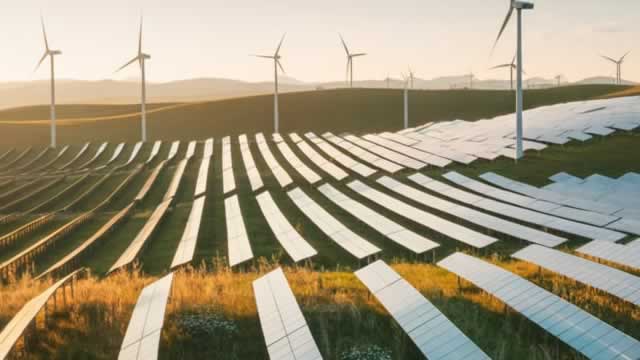
Solar Energy Outshines The Competition, But Silver Might Spoil The Party - Invesco WilderHill Clean Energy ETF (ARCA:PBW), iShares Silver Trust (ARCA:SLV)
Benzinga· 2026-01-23 12:39
Core Insights - Solar power was the primary contributor to the growth in U.S. electricity demand in 2025, meeting 61% of the new demand [2][3] Group 1: Electricity Demand and Solar Growth - U.S. electricity demand increased by 135 terawatt-hours (TWh) in 2025, marking a 3.1% rise, the fourth-largest increase in the past decade [2] - Solar generation expanded by 83 TWh, a 27% increase from 2024, significantly contributing to the overall demand growth [2][3] Group 2: Regional Contributions - The U.S. South, particularly Texas, played a significant role in solar output growth, with Texas accounting for the largest absolute increase [4] - Solar met 81% of electricity demand growth in Texas and the Midwest, while covering about one-third of demand growth in the Mid-Atlantic region [4] Group 3: New Solar Projects - Several large solar facilities were commissioned, including the 153-megawatt Felina Project in Texas, the 150-MW Ratts 1 Solar Project in Indiana, and the 145-MW Axial Basin Solar Project in Colorado [5] Group 4: Timing and Storage - Solar generation effectively met the rise in electricity demand during daytime hours, with battery storage enabling coverage of some evening demand [6] Group 5: Future Projections - The U.S. Energy Information Administration projects continued growth in electricity generation, with solar expected to remain the fastest-growing source, potentially increasing from 290 billion kilowatt-hours in 2025 to 424 billion kilowatt-hours by 2027 [7] Group 6: Silver Price Impact - A surge in silver prices poses a potential risk to solar expansion, with spot prices reaching an all-time high of $99.36 [8] - The cost of silver in solar cells has increased to over 29% of a panel's total cost, up from 3.4% in 2023 and about 14% in 2025 [9] Group 7: Manufacturer Challenges - Manufacturers have reduced silver use in solar panels from around 11 milligrams per watt in 2024 to about 9 milligrams per watt in 2025, but this reduction carries technical and financial risks [10]
US solar manufacturing momentum affected by shifting tax credits
Yahoo Finance· 2026-01-23 09:58
Core Insights - The U.S. solar manufacturing sector has historically received bipartisan support, but recent political conflicts are creating uncertainty and challenges for the industry [1][2][10] - The One Big Beautiful Bill Act (OBBBA) introduces changes that could negatively impact solar manufacturing, including an accelerated phase-out of the Investment Tax Credit (ITC) and increased content requirements [3][10] - Despite significant growth in solar manufacturing, the industry still struggles to meet domestic demand, with experts indicating that imports will still be necessary to supplement production [6][15] Industry Growth and Investment - The U.S. solar manufacturing sector has seen a 300% increase in solar cell production and a 37% increase in solar module production, with capacity exceeding 60 gigawatts by late 2025 [6] - Companies like Qcells have made substantial investments, such as a $200 million solar panel manufacturing facility in Georgia, driven by favorable market conditions and tax credits [8][9] - The Inflation Reduction Act under President Biden has provided a 30% tax credit for solar projects through 2032, contributing to market growth [8] Challenges and Uncertainties - The accelerated phase-out of the ITC and modifications to the 45X tax credit under OBBBA are seen as threats to the momentum of solar manufacturing efforts [10][12] - The current policy landscape is described as precarious, with business leaders expressing concerns over the reversal of tax credits and the impact of tariffs on long-term investments [11][12] - Experts emphasize the need for policy stability to justify major investments, as the solar market requires time to develop and scale [16][17] Supply Chain Dynamics - While the U.S. can produce every major component of the solar supply chain, it is still not sufficient to meet current domestic demand [6][14] - Companies like Corning are expanding their manufacturing capabilities, but the market will still rely on imports to fulfill production needs [15] - A three-legged stool approach is suggested for reshoring U.S. solar manufacturing, which includes tariffs, supply-side policies, and domestic content incentives [13]

Why Silver Will Outperform Gold in 2026
Yahoo Finance· 2026-01-22 15:25
Core Insights - Silver's performance has significantly outpaced gold, with a return of 145% in 2025 compared to gold's 64% rise, and it has continued this trend into 2026 with a 25% return in the first two weeks while gold rose 6% [1] Group 1: Interest Rates - The U.S. Federal Reserve cut interest rates three times in 2025, with a forecasted over 60% likelihood of another rate cut by June 2026 [2] - Lower interest rates enhance the attractiveness of precious metals like gold and silver, as they are non-yielding assets compared to dividend stocks or bonds [3] Group 2: Industrial Demand for Silver - Industrial demand for silver is increasing, driven by its applications in electric vehicles, solar panels, and semiconductors, among other technologies [4][5] - The rise of solar panels, which require significant amounts of silver, is a major catalyst for increasing silver demand, especially as major economies focus on decarbonization [5] Group 3: Supply Constraints - Silver's supply cannot be easily increased, which may lead to further price momentum as demand continues to rise [6] - U.S. solar capacity is projected to grow by 70 gigawatts in 2026 and 2027, translating to a 49% increase from late 2025 levels, potentially consuming an additional 143 million ounces of silver [7] - The global energy transition, particularly in countries like China, is expected to drive hundreds of millions of ounces in new silver demand in 2026 [8]
Ascent Solar Technologies Reflects On 2025 Achievements and Milestones; Outlines 2026 Strategy and Goals
Globenewswire· 2026-01-22 13:00
Core Insights - Ascent Solar Technologies has made significant commercial progress and formed industry partnerships in 2025, positioning itself for continued growth in 2026 [1][2] Company Achievements - The company has established new strategic partnerships with various organizations, including NovaSpark and Emtel Energy, to achieve commercial goals in the defense industry [6] - Ascent Solar has closed a private placement of up to $5.5 million to support its initiatives [6] - The company is advancing its thin-film photovoltaic (PV) product capabilities, including enhancements for space-based applications and marine durability [6] Market Positioning - Ascent Solar's thin-film solar products are designed to meet the increasing demand from the defense industry for efficient and readily available technologies [2] - The company aims to maintain momentum by engaging with potential partners and achieving greater efficiency milestones throughout 2026 [2] Production and Development - The company has initiated an aggressive production schedule to fulfill existing orders for array deployments planned for Q1 2026 [6] - Ascent Solar is developing UAV arrays for European partners in the first half of the year, showcasing its commitment to international collaboration [6] Research and Innovation - The company is conducting advanced environmental testing to quantify the performance of its products in extreme conditions, including radiation and atomic oxygen resilience [6] - Ascent Solar is partnering with the Georgia Institute of Technology to apply thin-film technology to UAV wings, aiming for continuous flight capabilities for ocean monitoring [6]

N2OFF: MitoCareX Bio Announces Positive In Vitro Results from Its Mitochondrial Carrier Small Molecule Platform
Globenewswire· 2026-01-22 12:32
Company Overview - N2OFF, Inc. is a drug discovery company that owns 100% of MitoCareX Bio Ltd., which focuses on developing small-molecule drugs targeting human mitochondrial carriers for inflammatory metabolic diseases [6] - N2OFF is also investing in solar energy assets through a Ready to Build (RTB) business model, currently leading four solar projects across three EU countries [6] MitoCareX Bio Developments - MitoCareX Bio has demonstrated preliminary in vitro data showing inhibition of pro-inflammatory responses in human immune cells using its proprietary MITOLINE discovery platform [1][2] - The company is advancing its most promising mitochondrial-targeted anti-inflammatory candidates toward pre-clinical studies while expanding the MITOLINE-powered discovery engine across additional mitochondrial carrier targets [5] Market Potential - The global market for anti-inflammatory drugs is projected to grow from approximately $122 billion in 2024 to nearly $275 billion by 2034, with a compound annual growth rate (CAGR) of about 8.4% [3] - Small-molecule immunomodulators are expected to expand from around $188 billion in 2025 to over $350 billion by 2035, indicating strong demand for targeted anti-inflammatory therapies [3] - Therapeutics for metabolic disorders, including key inflammatory metabolic diseases, are estimated to be around $77 billion in 2024 and forecasted to exceed $120 billion by 2030 [3] MITOLINE Algorithm - The MITOLINE algorithm addresses a critical bottleneck in mitochondrial drug discovery by providing reliable 3D comparative models of mitochondrial carrier proteins, facilitating the identification of novel small-molecule scaffolds [4] - This platform enables MitoCareX to characterize substrate translocation binding sites for virtual screening campaigns, supporting drug discovery in oncology, autoimmune, and metabolic-inflammatory diseases [4]


PowerBank Corporation Highlights Real-Time Space Satellite Tracking Dashboard
Prnewswire· 2026-01-22 12:07
Core Viewpoint - PowerBank Corporation emphasizes the importance of continuous uptime visibility and public verification for scalable space-based energy infrastructure, particularly in supporting orbit-to-ground AI workflows, as terrestrial data center capacity faces increasing constraints [1][4]. Company Overview - PowerBank Corporation is a North American renewable energy company focused on solar energy infrastructure, battery energy storage systems (BESS), and advanced data center solutions [2][7]. - The company has developed renewable and clean energy projects with a combined capacity exceeding 100 megawatts and has a potential development pipeline of over one gigawatt [8]. Collaboration with Orbit AI - PowerBank is collaborating with Orbit AI, which has developed a real-time satellite tracking dashboard for monitoring the operational status of its Genesis-1 satellite [2][3]. - The Genesis-1 satellite operates using space infrastructure to support AI workloads and telemetry operations, marking a significant step in the evolution of AI infrastructure [4][5]. Technological Innovations - The use of AI workloads directly in orbit, as opposed to relying solely on ground-based processing, is seen as a potential evolution of future AI infrastructure under physical constraints [4]. - PowerBank views the Genesis-1 satellite as an initial operational node within a broader space-enabled compute architecture, where repeatable uptime and observable execution are essential for scalability [4][5]. Market Context - As global demand for AI intensifies, ground-based infrastructure is increasingly limited by power availability, cooling requirements, and land constraints [5]. - PowerBank believes that space-based infrastructure powered by solar energy will complement terrestrial systems, with observable execution and energy efficiency becoming critical differentiators in the market [5].


中国能源 - 2025 年中国逆变器出口额增长、光伏组件出口额下降;偏好逆变器、储能系统-China Renewable Energy PRC Inverter Export Value Up But Solar Module Export Value Down in 2025 Prefer Inverter ESS
2026-01-22 02:44
Summary of China Renewable Energy Conference Call Industry Overview - The conference call focused on the **China Renewable Energy** sector, specifically the solar module and inverter markets. Key Points on Solar Modules - **Export Value Decline**: China's solar module export value decreased by **15.3% year-over-year (yoy)** to **US$23,698 million** in 2025, despite a **13.7% yoy** increase in export volume to **268.3 GW** [1][2] - **December Performance**: In December 2025, the export value was **US$1,825 million**, reflecting a **6.5% yoy** increase but a **1.7% month-over-month (mom)** decline [2] - **Regional Demand**: The increase in export volume in December was primarily driven by: - **Europe**: **45.2% yoy** increase to **7.9 GW**, with significant contributions from Italy, the Netherlands, and Poland - **Asia (excluding China)**: **20.8% yoy** increase to **7.6 GW**, mainly from the UAE, South Korea, and the Philippines - **Africa**: **47.5% yoy** increase to **2.0 GW** [2] Key Points on Inverters - **Export Value Growth**: China's inverter export value rose by **9.3% yoy** to **US$9,042 million** in 2025, with a notable **26.1% yoy** increase to **US$839 million** in December [1][4] - **Regional Demand**: The demand for inverters in December was significantly boosted by: - **Europe**: **36.5% yoy** increase to **US$306 million**, driven by demand from Ukraine and Eastern European countries supporting residential energy storage systems (ESS) - **Africa**: **97.8% yoy** increase to **US$100 million**, with Egypt, South Africa, and Nigeria being key contributors - **Oceania**: **149.3% yoy** increase to **US$62 million**, supported by subsidy policies for residential ESS projects in Australia [4][6] Production and Installation Trends - **Module Production Decline**: China's module production volume decreased by **1.2% yoy** to **563.2 GW** in the first 20 months of 2025, with a projected further decline of **14.8% yoy** to **32.5 GW** in January 2026 due to seasonal factors [3] - **Solar Installation Growth**: Solar installations in China increased by **33.2% yoy** to **274.9 GW** in the first 11 months of 2025, although November saw a **11.9% yoy** decline to **22.0 GW** [3] Investment Preferences - The report suggests a preference for inverter companies such as **Sungrow** and **Deye**, which are expected to benefit from the growth in ESS demand [1] Risks - Potential risks affecting the inverter market include: - Lower-than-expected demand for residential and commercial energy storage in emerging markets - Increased price competition among inverter manufacturers - Higher trade tariffs on Chinese inverter products in international markets [15][17] Valuation Insights - **Deye Technology**: Target price set at **Rmb102.0/share**, based on a DCF model, anticipating sustainable growth in energy storage demand [14] - **Sungrow Power Supply**: Target price set at **Rmb240.00/share**, also based on a DCF valuation, reflecting long-term growth potential [16] This summary encapsulates the essential insights from the conference call regarding the current state and future outlook of the China Renewable Energy sector, particularly focusing on solar modules and inverters.


Solar Alliance Announces CAD $1.5 Million in New Project Contracts
Globenewswire· 2026-01-21 12:00
Core Insights - Solar Alliance Energy Inc. has secured CAD $1.5 million in new project contracts, marking a strong start to 2026 [1] Project Summaries - The company is engaged in multiple projects across various sectors, including municipal, private, and community initiatives, with a total capital value of approximately CAD $1.5 million [1] - At a municipal recreation center, Solar Alliance is implementing a rooftop photovoltaic system integrated with battery energy storage, supported by a US Department of Energy Efficiency and Conservation Block Grant [2] - For a private event venue, the company is designing a canopy solar photovoltaic structure to enhance the site's natural features and offset energy consumption [3] - The Appalachian Harvest Community Food Hub project involves designing a renewable energy system to support sustainable agriculture and food access, in collaboration with several partners [4] Company Overview - Solar Alliance Energy Inc. operates through its subsidiary, Solar Alliance Southeast, LLC, which is based in Knoxville and serves as the core of its design and construction workforce [5] - The company focuses on providing energy solutions in the commercial, utility, and community solar sectors, aiming to reduce customers' vulnerability to rising energy costs while promoting environmentally friendly electricity generation [6]

JinkoSolar's Subsidiary, Jinko Solar Co., Ltd., Announces Estimates of Certain Preliminary Unaudited Financial Results for Full Year 2025
Prnewswire· 2026-01-21 10:32
Core Viewpoint - JinkoSolar's majority-owned subsidiary, Jiangxi Jinko, has reported preliminary unaudited financial results for the year ended December 31, 2025, indicating significant net losses attributable to shareholders. Financial Results - For the year ended December 31, 2025, the preliminary unaudited net loss attributable to shareholders of Jiangxi Jinko is estimated to be between RMB5,900 million and RMB6,900 million [2] - The preliminary unaudited net loss attributable to shareholders of Jiangxi Jinko, excluding extraordinary gains and losses, is estimated to be between RMB6,700 million and RMB7,800 million [2] Accounting and Reporting Differences - The preliminary unaudited financial results for Jiangxi Jinko differ from JinkoSolar's consolidated financial results due to differences in consolidation scope and accounting standards, with Jiangxi Jinko's results prepared in accordance with PRC GAAP and the consolidated results prepared under U.S. GAAP [3] - Investors are advised to exercise caution when reviewing the preliminary unaudited financial results of Jiangxi Jinko and not to base investment decisions solely on these results [3] Company Ownership - JinkoSolar currently holds approximately 55.59% equity interest in Jiangxi Jinko [4] Company Overview - JinkoSolar is recognized as one of the largest and most innovative solar module manufacturers globally, distributing products and services to a diverse international customer base across multiple countries [5] - As of September 30, 2025, JinkoSolar operates over 10 production facilities and has more than 20 overseas subsidiaries in various countries, supported by a global sales network [6]