Electric Utilities

Search documents
Utility Stocks To Follow Now – March 19th
Defense World· 2026-03-21 07:03
Group 1: Utility Stocks Overview - Utility stocks are shares of companies providing essential public services like electricity, natural gas, and water, often operating as regulated monopolies [2] - These stocks typically offer steady, dividend-oriented income with lower growth and volatility compared to the broader market, but are sensitive to interest rate changes and regulatory decisions [2] - The highlighted companies had the highest dollar trading volume among utility stocks in recent days [2] Group 2: Company Profiles - Ford Motor Company develops and services a range of vehicles including trucks, commercial cars, and luxury vehicles, operating through multiple segments such as Ford Blue and Ford Credit [3] - American Electric Power Company engages in the generation, transmission, and distribution of electricity for retail and wholesale customers in the U.S., operating through various segments [4] - Berkshire Hathaway operates in insurance, freight rail transportation, and utility businesses, generating and distributing electricity from diverse sources including natural gas and renewable energy [5] - Quanta Services provides infrastructure solutions for electric and gas utilities, renewable energy, and communications, focusing on the design and maintenance of electric power infrastructure [6] - AutoZone retails automotive replacement parts and accessories across the U.S., Mexico, and Brazil, offering a wide range of products for various vehicle types [7]


SoftBank and AEP plan massive Ohio gas-fired AI data center campus
The Economic Times· 2026-03-21 01:33
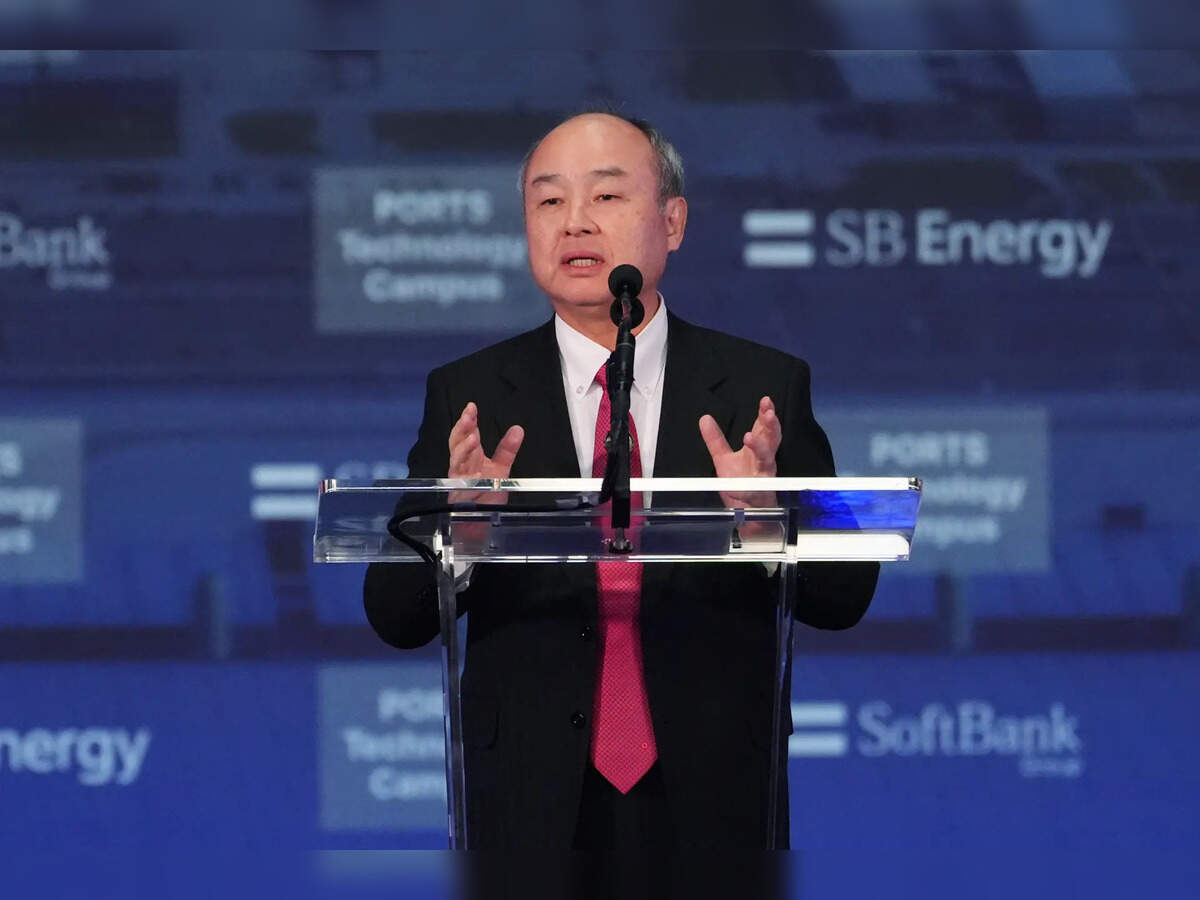
Core Viewpoint - The partnership between SoftBank Group and AEP Ohio aims to construct a significant gas-fired power plant and a 10-gigawatt artificial intelligence server warehouse in Ohio, as part of a broader trade deal between the U.S. and Japan, which seeks to enhance energy capacity and reduce reliance on China in technology sectors [1][3][8]. Investment and Funding - The public-private partnership includes $33.3 billion in funding from Japan, contributing to a total investment commitment of $550 billion across various sectors in the U.S. [3][9]. - SB Energy, a unit of SoftBank, is also investing $4.2 billion to upgrade and build transmission lines in southern Ohio [4][9]. Energy Capacity and Infrastructure - The proposed gas plant will have a capacity of 9.2 gigawatts, which, along with the data center, would rank among the largest globally, with one gigawatt capable of powering nearly 1 million homes [2][8]. - The U.S. government is leveraging federal lands to enhance power generation and create jobs, aiming to secure a competitive edge in the artificial intelligence sector [5][9]. Environmental Concerns - Environmental advocates express concerns that the new power plant will lead to significant local pollution and contribute to global warming emissions, indicating a potential conflict between energy development and environmental sustainability [7][9]. Economic Implications - The arrangement may provide a solution to the financial burden on the public for data center power expenses, suggesting a shift towards charging data centers directly rather than passing costs onto ratepayers [6][9].


Korea Electric Power Corporation (KEP): Smart Electric Life Launch and Robust FY2025 Earnings
Yahoo Finance· 2026-03-20 19:27
Group 1 - Korea Electric Power Corporation (KEPCO) launched the Smart Electric Life platform on March 18, consolidating 39 energy services into one accessible location for consumers [1][3] - The platform integrates services from seven organizations, including KEPCO, the Korea Energy Agency, and the Korea Power Exchange, providing tools like "Find My Benefits" and bill simulations to help households optimize their energy usage [3][4] - KEPCO aims to promote rational energy use and convenience through this platform, encouraging citizens to adopt it for cost savings and to support renewable energy initiatives [4] Group 2 - KEPCO is South Korea's national electric utility company, responsible for generating, transmitting, and distributing electricity through various subsidiaries that operate nuclear, thermal, hydro, and renewable power plants [5]

2 Defensive Stocks That Wall Street Loves for the Oil Shock Playbook
Yahoo Finance· 2026-03-20 16:52
Industry Overview - The ongoing oil price shock due to the Middle East conflict is prompting investors to seek defensive stocks, particularly in the utility sector, which has historically performed well during such crises [1] - Utility stocks are expected to benefit from increasing electricity demand and rising electricity prices, driven by the growth of data centers [1] Company Analysis: Vistra (VST) - Vistra is one of the largest competitive power generators in the U.S., with a capacity of approximately 44,000 megawatts, sufficient to power 22 million homes [3] - In Q4 2025, Vistra's adjusted EBITDA from ongoing operations decreased to $1.74 billion from $1.98 billion year-over-year, but the company projects adjusted EBITDA for 2026 to be between $6.8 billion and $7.6 billion, significantly higher than the $5.9 billion reported in fiscal 2025 [3] - VST stock has a trailing P/E ratio of 31.5 and a forward P/E ratio of 19.3, with a 4% decline over the last three months but a 19% increase over the past 52 weeks [4] Company Analysis: Xcel Energy (XEL) - Xcel Energy serves 3.9 million electricity customers and 2.2 million natural gas customers, totaling 6.1 million customers [6] - In 2025, 53% of the energy provided by Xcel Energy was carbon-free, with a target of 83% carbon-free energy by 2030 based on its projected energy mix [6] - Xcel Energy's operating income for Q4 2025 rose to $580 million, up from $347 million in Q4 2024, while the full-year operating income increased to $2.58 billion from $2.38 billion in 2024 [7]


FirstEnergy Execs Face Corruption Trial in Bribery Scheme
Insurance Journal· 2026-03-20 16:15
Core Viewpoint - The trial of two former FirstEnergy Corp. executives revolves around their alleged involvement in a $60 million bribery scheme linked to a bailout of nuclear plants, with significant implications for corporate governance and regulatory integrity [1][10]. Group 1: Charges and Allegations - Former CEO Chuck Jones and ex-senior vice president Michael Dowling are charged with corruption, bribery, conspiracy, and aggravated theft for allegedly paying $4.3 million to a future utility regulator in Ohio [2]. - Prosecutors argue that the executives corrupted the future chair of the Public Utilities Commission of Ohio, Sam Randazzo, to secure legislative and regulatory favors that benefited FirstEnergy's financial performance [3][4]. Group 2: Defense Arguments - The defense contends that the payment to Randazzo was a legitimate business decision and not a bribe, asserting that it was part of a legal settlement for Randazzo's clients [5]. - Dowling's attorney claims the prosecution failed to prove its case beyond a reasonable doubt, arguing that the evidence does not support the assertion that Dowling intended for the $4.3 million to go to Randazzo [7][8]. Group 3: Broader Context and Consequences - FirstEnergy admitted to underwriting the $60 million bribery scheme as part of a nonprosecution agreement in 2021, which involved former Ohio House Speaker Larry Householder and others [9]. - Householder was convicted of racketeering and sentenced to 20 years, highlighting the serious legal repercussions stemming from the bribery scheme [10].


CEMIG(CIG) - 2025 Q4 - Earnings Call Transcript
2026-03-20 15:02
Financial Data and Key Metrics Changes - Recurring EBITDA for 2025 was BRL 7.3 billion, while total EBITDA including non-recurring items reached BRL 8.3 billion, indicating a strong cash generation to support a record investment program [4][14] - The company reported a recurring net profit of BRL 4.2 billion and a non-recurring net profit of BRL 4.9 billion, with a notable impact from adjustments related to post-employment liabilities [15][24] - The company achieved a dividend payment of BRL 3.5 billion, reflecting a dividend yield of 14.9% [8][23] Business Line Data and Key Metrics Changes - In 2025, the company invested BRL 6.6 billion, with significant contributions in distribution, generation, and transmission sectors [4][12] - Distribution investments included 23 new substations and over 12,000 km of low and medium voltage networks, enhancing service capacity [12] - Generation investments involved BRL 199 million in the GSF auction and BRL 411 million for expansion and maintenance [12] Market Data and Key Metrics Changes - The company faced a 1.4% reduction in market share due to some clients migrating to the basic network [25][30] - The hydrological risk management led to increased energy purchases at higher prices, impacting financial results [24][26] Company Strategy and Development Direction - The company is focused on a significant investment program aimed at enhancing regulated sectors, with a clear objective to extend concessions [5][9] - The strategy includes a commitment to sustainable practices, as evidenced by multiple awards for sustainability and a focus on renewable energy [32][33] Management's Comments on Operating Environment and Future Outlook - Management expressed confidence in the company's resilience and ability to generate stable cash flows, supported by a strong credit rating upgrade to triple A by Moody's [6][9] - The company anticipates no actuarial risk from post-employment liabilities moving forward, transitioning to a financial debt model [7][17] Other Important Information - The company has a robust operational efficiency, with total losses at 0.63% of energy supply revenue, and a high receivables collection index of 99.51% [20] - The average tenure of the company's debt is 6.9 years, with a nominal cost of 13%, which is favorable for a utilities company [22][41] Q&A Session Summary Question: About the trading result in the fourth quarter - The trading result was positive at BRL 97 million, with plans to close positions for 2026 and 2027, aiming for future price increases starting in 2029 [36][37] Question: What is the ideal level of leverage for the company? - The current leverage is at 2.3, expected to increase during the investment cycle, with a target to remain within a range that supports a triple A rating [38][39][40] Question: Any plans to pay bonuses to shareholders in 2026? - Bonuses will be considered if profit reserves exceed capital stock, with evaluations ongoing throughout the year [42][43]

Hedge Fund Adds 1.9 Million Shares of Utility Stock, According to Latest SEC Filing
Yahoo Finance· 2026-03-20 14:25
Company Overview - Hawaiian Electric Industries, Inc. is a diversified utility holding company with operations in electric utilities, banking, and renewable energy investments in Hawaii [6] - The company operates in both regulated markets (electric utilities, banking) and non-regulated renewable energy and sustainable infrastructure investments [6] - It generates revenue primarily through regulated electricity sales, banking services including loans and deposits, and investments in non-regulated renewable energy projects [8] Financial Metrics - The company's revenue for the trailing twelve months (TTM) is $3.087 billion [4] - The net income for the TTM is $126.28 million [4] - As of February 13, 2026, the stock price was $14.25, reflecting a one-year price change of 29.9% [4][3] Recent Investment Activity - On February 17, 2026, 12 West Capital Management LP disclosed a new position in Hawaiian Electric Industries, acquiring 1,850,000 shares valued at approximately $22.75 million [1][2] - This acquisition represents 2.71% of the 13F reportable assets under management for 12 West Capital Management [3]
CEMIG(CIG) - 2025 Q4 - Earnings Call Presentation
2026-03-20 14:00
These expectations are based on the present assumptions and analyses from the point of view of our management, in accordance with their experience and other factors such as the macroeconomic environment, market conditions in the electricity sector, and expected future results, many of which are not under our control. Important factors that could lead to significant differences between actual results and the projections about future events or results include: Cemig's business strategy, Brazilian and internat ...
一种更智能的成本跟踪方法,以支持可负担性
落基山研究所· 2026-03-20 00:25
Investment Rating - The report does not explicitly provide an investment rating for the industry Core Insights - The report emphasizes the need for regulatory actions to control utility costs amidst an affordability crisis, suggesting that cost trackers are currently overutilized and should be revisited to ensure they do not exacerbate financial burdens on consumers [15][40]. Summary by Sections Introduction - Utility expenditures are rising due to factors like load growth and infrastructure replacement, coinciding with an affordability crisis where many US households struggle to pay energy bills [13]. What Is a Cost Tracker? - A cost tracker is a mechanism allowing utilities to recover specific costs outside of general rate cases, designed to reduce regulatory lag and financial risk for utilities [20][21]. To Tracker or Not to Tracker? - The report argues that while cost trackers can provide revenue certainty, their widespread use can shift financial risk from utilities to ratepayers and lead to increased costs due to reduced oversight [33][34]. Better Managing Cost Tracker Recovery - The report recommends that regulators reassess the use of cost trackers, consolidate unnecessary ones into base rates, and support cost control measures for those that remain [40][41]. Four Regulatory Strategies to Contain Costs Under Cost Trackers - The report outlines four strategies: understanding the size of the problem, reintroducing the risk of disallowance for tracked costs, incentivizing efficient spending, and strengthening the burden of proof for new cost trackers [44]. Understand the Size of the Problem - Regulators should assess the impact of cost trackers on customer bills and establish reporting requirements to monitor their use [45][46]. Reintroduce the Risk of Disallowance for Tracked Costs - By reintroducing elements like spending caps and performance-based recovery, regulators can encourage cost discipline and mitigate excessive spending [51][52]. Incentivize Efficient Spending Under Cost Trackers - Implementing shared savings mechanisms can reward utilities for cost-effective spending, aligning their incentives with cost containment [63].
Investment Manager Sheds 2.4 Million Shares of Utility Stock, According to Recent SEC Filing
Yahoo Finance· 2026-03-19 22:57
Company Overview - Portland General Electric (PGE) is a vertically integrated regulated utility serving nearly one million customers in Oregon, providing regulated power and steady dividends [6][7] - The company operates a diverse energy mix, including thermal, wind, and hydroelectric facilities, and engages in wholesale natural gas transactions [7] - PGE's revenue is primarily generated through regulated electric utility operations, selling power to residential, commercial, and industrial customers under long-term rate structures [7] Financial Metrics - For the trailing twelve months (TTM), Portland General Electric reported revenue of $3.37 billion and a net income of $306 million [4] - The company's dividend yield stands at 4.02% as of March 19, 2026 [4] - As of the same date, shares were priced at $52.25, reflecting a 23.38% increase over the past year, outperforming the S&P 500 by 3.90 percentage points [3] Recent Developments - On February 17, 2026, ATLAS Infrastructure Partners (UK) Ltd. sold 2,444,158 shares of Portland General Electric, with an estimated transaction value of $115.43 million [1][2] - Following this sale, Portland General Electric's representation in ATLAS's 13F AUM decreased from 10.36% to 4.66% [2][3] - The fund's quarter-end position value decreased by $99.81 million due to the share sales and price fluctuations [2]