医疗诊断与检测

Search documents
中邮证券:病理价格精细化政策落地 利好数字化医疗新基建
智通财经网· 2026-01-05 09:25
Core Insights - The National Healthcare Security Administration has officially issued the "Guidelines for the Project Establishment of Pathology Medical Service Pricing (Trial)" which marks a new phase of standardized, regulated, and digital collaborative development in China's pathology medical services [1][2] Group 1: Policy Overview - The guidelines consolidate existing pathology medical service pricing projects into 28 core items, 3 additional charge items, and 2 expansion items, creating a clearer pricing framework [2] - The National Healthcare Security Administration will guide provinces to establish a unified price benchmark, allowing regions to adjust actual execution prices based on this benchmark [2] Group 2: Digital Transformation - The policy emphasizes the application value of digital technology in pathology diagnosis, supporting the promotion of new service models such as digital slides, remote diagnosis, and intelligent analysis [3] - This shift is expected to accelerate the transition of pathology from traditional manual operations to a fully digital process, making pathology data an important "data asset" in medical services [3] Group 3: Beneficiary Companies - Companies like Anbiping, which has automated workstations for specimen processing and supports digital slide applications, are well-positioned to benefit from this policy [4] - Aide Biology focuses on precision medical conditions and has developed an automated reporting and data management system, enhancing its capabilities in pathology services [4] - Zhongyuan Qihua provides comprehensive solutions for major diseases, integrating equipment, reagents, and services to support clinical medical institutions [4] - Maike Biology specializes in providing reagents, equipment, and technical support for pathology diagnosis, aiming for automation and intelligence in laboratory processes [4] - Other companies in the ICL category include Jinyu Medical, Dean Diagnostics, Lanwei Medical, and Aide Kang, which are also expected to benefit from the policy [4]
ASH 2025 圆满收官 | 康圣环球携前沿成果亮相奥兰多,共绘血液学新蓝图
Xin Lang Cai Jing· 2025-12-24 09:46
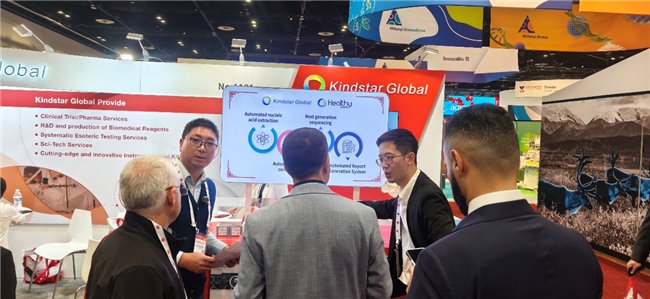
Core Insights - The 67th American Society of Hematology Annual Meeting (ASH 2025) took place from December 6 to 9 in Orlando, showcasing advancements in hematology and attracting global experts [1][15] - Kangsheng Global Group, a leading Chinese diagnostic company specializing in hematology, presented its capabilities in precision diagnosis, companion diagnostics, and laboratory services at booth 1181 [1][15] Group 1: Event Highlights - The Kangsheng booth attracted numerous international visitors, facilitating discussions on CAR-T therapy optimization, CRISPR gene editing applications, minimal residual disease (MRD) monitoring, and standardization of molecular diagnostics in hematology [1][14] - The atmosphere at the conference was vibrant, with deep dialogues among top experts, pharmaceutical R&D leaders, and representatives from biotech companies and CROs [1][14] Group 2: Business Focus - Haixi Bio, a specialized platform under Kangsheng, showcased its comprehensive product system in fusion gene testing, targeted gene panels, and automated bioinformatics analysis, gaining significant attention from international peers [3][17] - Kangsheng established direct communication channels with several globally renowned pharmaceutical and biotech companies during the conference, aiming to build an efficient international collaboration network [5][19] Group 3: Research Contributions - Multiple research findings from Kangsheng were selected for poster presentations at ASH 2025, highlighting the company's depth in research and clinical value in precision medicine for hematological malignancies [7][21] - Research 4972 analyzed immune gene rearrangements in 79 Chinese multiple myeloma patients, revealing a strong correlation between Ig clone proportions and treatment efficacy, with a new prognostic model showing high discrimination (AUC=0.988) [21][22] - Research 1929 proposed a novel strategy to reverse CAR-T cell exhaustion in PD-L1 high large B-cell lymphoma, demonstrating enhanced proliferation and anti-tumor function through a combination of IL-7/CCL19 armored CAR-T cells and timed PD-1 blockade [22][10] - Research 5778 utilized targeted capture sequencing to identify driver mutations in 101 newly diagnosed multiple myeloma patients, constructing an accurate prognostic model that outperformed traditional staging systems [24][12] Group 4: Future Directions - Despite the conclusion of ASH 2025, the pursuit of innovation in hematology continues, with Kangsheng committed to leveraging its technological expertise and network to enhance international cooperation and align precision diagnostic technologies with clinical needs [15][28]

偷走记忆的贼
Di Yi Cai Jing· 2025-09-21 13:42
Core Viewpoint - Alzheimer's disease is transitioning from being perceived as an "incurable disease" to a manageable chronic condition, thanks to advancements in early screening and treatment methods [1][10]. Group 1: Disease Understanding and Statistics - Alzheimer's disease is characterized by the accumulation of beta-amyloid (Aβ) and tau protein abnormalities, leading to memory decline and other cognitive impairments [3]. - In China, approximately 22% of the population aged 50 and above exhibit pathological changes associated with Alzheimer's disease, with 9.83 million diagnosed cases [3][4]. - The number of dementia patients is projected to increase significantly, with estimates suggesting that by 2030, the elderly population over 60 will reach 250 million, further raising the number of dementia cases [3]. Group 2: Diagnostic Advances - Recent breakthroughs in blood screening and low-abundance protein detection have made early diagnosis of Alzheimer's disease feasible, particularly through the use of the biomarker p-tau217 [6][7]. - The p-tau217 test has shown a high consistency of 96% with Aβ-PET, the gold standard for pathological diagnosis, and is expected to facilitate large-scale early screening [7][10]. Group 3: Treatment Developments - The treatment landscape for Alzheimer's disease is evolving into a dual system of pharmacological and non-pharmacological interventions, allowing for early intervention to maintain patients' independence [8][10]. - Two targeted Aβ drugs are expected to be available by 2024, with additional interventions for earlier pathological changes already in clinical trials [8][10]. Group 4: Societal Impact and Care Models - The burden of Alzheimer's disease extends beyond patients to families and society, necessitating a shift towards community-based care models that respect patients' dignity and promote social integration [5][12][13]. - Innovative care approaches are being adopted in some communities, emphasizing the importance of social engagement and normalcy in the lives of patients [13]. Group 5: Future Outlook - The management of Alzheimer's disease is anticipated to evolve into a chronic disease model similar to diabetes and hypertension, with early screening and affordable treatment options becoming more accessible [10][11]. - Ongoing research into new biomarkers and treatment methods, combined with advancements in brain science and artificial intelligence, is expected to further enhance early diagnosis and personalized treatment [10].