地下空间开发

Search documents
专家:城市地下空间将呈现“开发集约化、技术智能化、功能复合化”特征
Xin Hua Cai Jing· 2025-09-25 15:10
Core Insights - The orderly development and efficient utilization of underground space is crucial for optimizing urban spatial structure and enhancing comprehensive urban carrying capacity [1][2] - Future urban underground spaces are expected to exhibit characteristics of "intensive development, intelligent technology, and multifunctional integration" [1][2] Group 1: Urban Development and Infrastructure - Shanghai, with a population of nearly 25 million, prioritizes underground space development as a key component of urban growth, focusing on urban renewal and refined management [1] - The city has completed over 43,700 underground projects, covering a total construction area of nearly 165 million square meters, indicating a clearer underground space layout [1][2] Group 2: Technological Advancements - Significant projects such as the west extension of Metro Line 2 and the second phase of Line 18 are set to open this year, enhancing the planning and design of underground spaces [2] - The integration of advanced technologies in construction, environmental quality assurance, disaster prevention, and digital management is being emphasized to improve the efficiency of underground space utilization [2] Group 3: Forums and Discussions - The conference featured three major thematic forums focusing on various aspects of underground space development, including ventilation purification, complex environment construction, and new material applications [3] - Experts shared innovative solutions for challenges in urban renewal and infrastructure construction, particularly in historical building preservation and existing building rehabilitation [3]
深圳官宣:要挖48座“地下城”
21世纪经济报道· 2025-06-25 11:50
Core Viewpoint - Shenzhen is accelerating its development of underground spaces to create a vibrant three-dimensional city, as outlined in the "Shenzhen Underground Space Resource Utilization Plan (2025-2035)" [1][10]. Group 1: Overview of the Plan - The plan includes 48 key development areas for underground space across various districts, with the most in Nanshan District (10 areas) and the least in Dapeng New District (1 area) [3][4][5][6][7]. - By the end of 2020, Shenzhen's total underground space was approximately 104 million square meters, with a per capita underground space of about 5.9 square meters [1]. Group 2: Development Requirements - The development of these 48 "underground cities" will focus on integrating above-ground and underground spaces, particularly around urban function centers and transit hubs [7][8]. - The plan emphasizes the importance of underground transportation facilities, municipal utilities, and commercial services, aiming to create a "10-minute walk" connectivity between underground transit stations and nearby facilities [8]. Group 3: Economic Justification - The direct costs of underground space development are estimated to be 2-3 times that of above-ground construction, making it essential for cities with high population density and land prices, like Shenzhen, to utilize underground space [10]. - Shenzhen's land area is about 1,997 square kilometers, supporting a population of approximately 21 million and generating a GDP of 3.68 trillion yuan in 2024, highlighting the necessity of "digging down" for space [10]. Group 4: Achievements and Future Goals - Shenzhen has achieved several national firsts in underground space development, including the first commercially operated underground space and the largest underground train station in Asia [10]. - The city plans to enhance its underground space utilization with more diverse functions, efficient integration of stations and cities, improved regulatory frameworks, and advanced research in underground space [11].


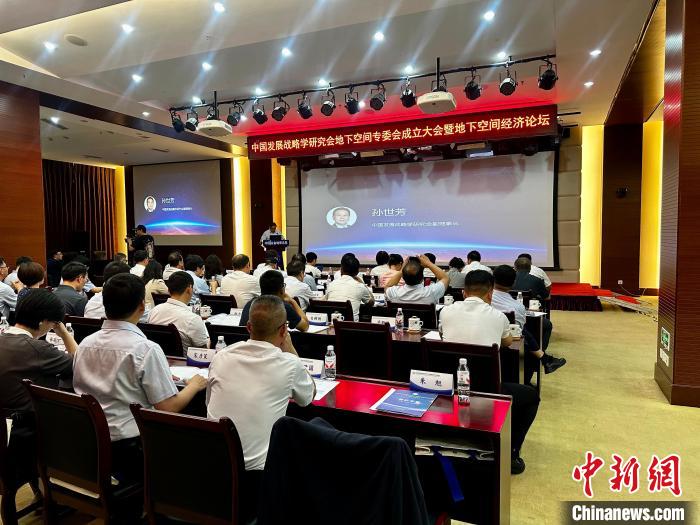
“地下空间经济”论坛在北京举行 聚焦新兴经济场域开发
Zhong Guo Xin Wen Wang· 2025-06-22 11:19
Core Insights - The establishment of the Underground Space Professional Committee aims to promote the underground space economy as a new engine for economic growth [1][4] Group 1: Committee Formation and Objectives - The newly formed committee integrates resources from academicians, government agencies, state-owned enterprises, and universities to advance the underground space industry [3] - The committee's mission includes "gathering resources, building platforms, and establishing mechanisms" to facilitate progress in the underground space sector [3] - Key leadership positions and expert advisors have been appointed to guide the committee's initiatives [3] Group 2: Strategic Importance of Underground Space - Underground space is recognized as a strategic resource, essential for alleviating resource constraints and reshaping urban development paradigms [3] - The committee aims to develop six major systems, including strategic planning and legal standards, to create an underground space economic ecosystem [3] - Experts emphasize the role of underground space in optimizing land use and enhancing economic vitality [3] Group 3: Legislative and Policy Framework - The committee will promote the drafting of regulations and legislation related to underground space development [4] - There is a call for the inclusion of underground space economy in the "14th Five-Year Plan" to ensure its strategic development [3]