
植物研究

Search documents
有花植物缘何雌雄异熟?“花柱卷曲”揭示百年谜题
Ke Ji Ri Bao· 2025-10-14 00:08
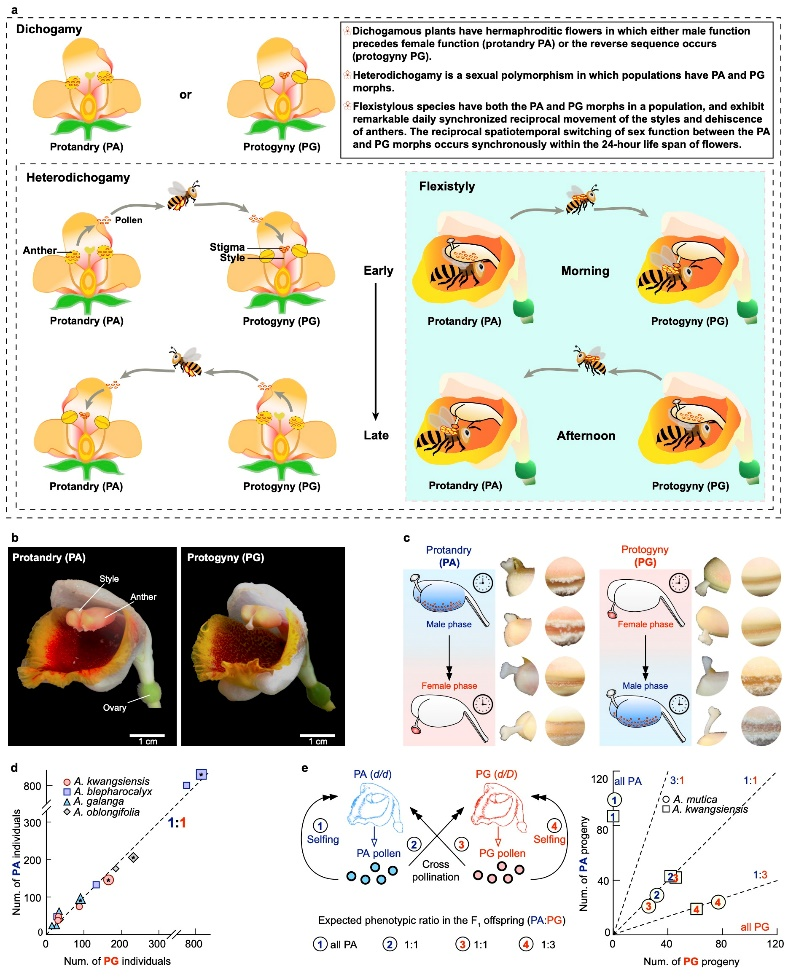
Core Insights - The research identifies a key gene controlling the "style curling" trait in flowering plants, elucidating the molecular mechanism behind the phenomenon of dichogamy, which helps avoid self-pollination and promotes cross-pollination, thereby maintaining genetic diversity [1][8] Group 1: Research Findings - The study reveals that the "style curling" trait in the Zingiberaceae family follows Mendelian inheritance, with two flower types coexisting in a 1:1 ratio: one with the pistil maturing first and the other with the stamen maturing first [3][5] - The research team confirmed that the "style curling" trait is controlled by a single gene locus, with the pistil-maturing trait being dominant and the stamen-maturing trait being recessive [5][7] - The gene responsible for regulating the rhythmic development of sexual organs was identified as SMPED1, which is highly conserved across flowering plants and plays a crucial role in synchronizing flower movement and anther dehiscence [7][8] Group 2: Implications for Agriculture - The findings provide new insights into the evolutionary origins and maintenance mechanisms of dichogamy in angiosperms, highlighting the role of transposons in genomic structural variation and regulatory remodeling [8] - This research offers potential targets for crop breeding improvements, as understanding the genetic basis of flowering traits can lead to enhanced agricultural practices [1][8]

【科技日报】大属植物分类难题解决 全球蒿属植物族谱绘制成功
Ke Ji Ri Bao· 2025-10-10 01:24
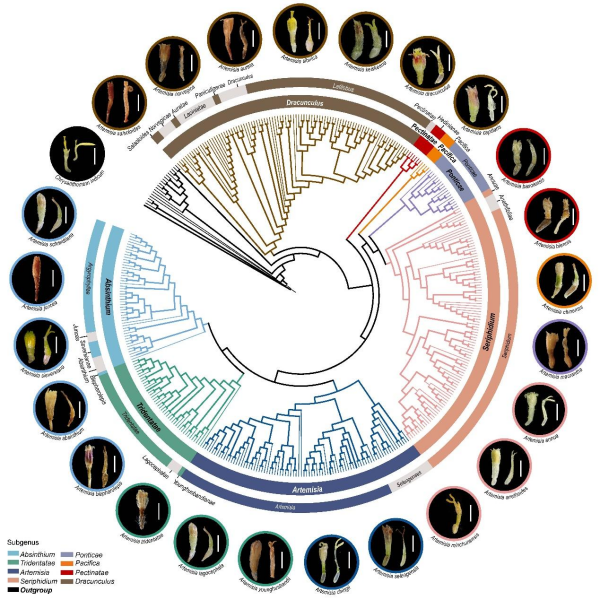
Core Viewpoint - The research team from the Chinese Academy of Sciences has successfully constructed the most comprehensive phylogenetic framework for the Artemisia genus, addressing long-standing classification challenges and proposing a new global classification system for these plants [1][2]. Group 1: Research Significance - The Artemisia genus, which includes over 500 species, plays a crucial role in global biodiversity and has significant ecological, medicinal, and chemical applications [1][2]. - Despite its importance, the classification of the Artemisia genus has been historically underdeveloped, with a lack of a robust phylogenetic framework hindering research and utilization [1][2]. Group 2: Research Methodology - The research team conducted extensive field surveys and sample collections over several years to establish the new phylogenetic framework [2]. - The study analyzed 20 key morphological traits to understand their evolutionary patterns and classification value on a global scale [2]. Group 3: New Classification System - The new classification system divides the Artemisia genus into 8 subgenera and 24 groups, providing clear classification for over 99.6% of the species [2]. - This system clarifies the phylogenetic relationships among various groups and offers a practical identification framework based on morphological traits for researchers unable to conduct molecular experiments [2]. Group 4: Future Developments - To promote global sharing of the research findings, the team plans to release a multilingual second edition of the Artemisia phylogenetic and classification diagram (APT II) for use by researchers and industry developers [4]. - The team has also initiated research for a third edition (APT III) to continue advancing the systematic study of global Artemisia plants [4].
中国多个科研团队开展联合科考 发现极危新物种“化州漏斗苣苔”
Zhong Guo Xin Wen Wang· 2025-10-04 02:32
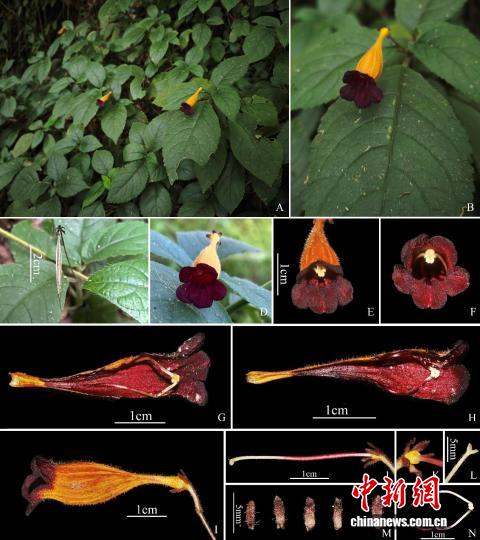
Core Viewpoint - A new species of the funnel herb, named Huazhou funnel herb, has been discovered in Huazhou, Guangdong Province, by a collaborative research team from Guangxi Institute of Botany, Zhejiang Institute of Ecological Environment Science Design, and Guizhou University. The findings were published in the international botanical journal PhytoKeys [1][3]. Group 1 - The new species, Huazhou funnel herb, primarily grows at the edges of subtropical evergreen broadleaf forests [3]. - The species was identified as a new addition to the funnel herb genus after morphological comparisons and literature reviews [3]. - The species is currently known from only one population, consisting of approximately 100 mature individuals [3]. Group 2 - The flower crown of the new species is characterized by an external yellow to brownish-yellow color with distinct brownish-yellow stripes, while the interior is purple-red to purplish-brown, distinguishing it from other species in the funnel herb genus [3]. - According to the International Union for Conservation of Nature (IUCN) classification, this species is categorized as a critically endangered species [3].
高温胁迫下花粉和花粉管微丝骨架调控机制揭示
Ke Ji Ri Bao· 2025-07-09 01:02
Core Insights - The research team at Lanzhou University has made significant progress in understanding the mechanisms by which plants respond to high-temperature stress, particularly focusing on the role of a novel protein, PGSL1, in pollen and pollen tube microfilament regulation [1][2] - The findings highlight the potential of PGSL1 in enhancing crop tolerance to high temperatures, which is crucial for agricultural productivity under climate change conditions [1][2] Group 1: Research Findings - The study identified PGSL1 as a heat-stable microfilament-binding protein that plays a critical role in maintaining pollen viability and normal growth of pollen tubes under high-temperature conditions [2] - PGSL1 stabilizes the dynamic microfilament structure of pollen tubes at elevated temperatures and regulates the distribution and transport of vesicles at the pollen tube tip [2] Group 2: Methodology and Implications - The research utilized a forward genetic screening approach, employing a compound called red sea sponge B, which effectively inhibits actin polymerization, to identify new or unique actin-binding proteins in plants [1][2] - This study not only reveals the regulatory mechanisms of pollen tube microfilament under high-temperature stress but also provides new methods and perspectives for identifying and discovering new microfilament-binding proteins in plants [2]