Autonomous Trucking

Search documents
Aurora Innovation (AUR) Presented at 2nd Annual CG Virtual Sustainability Summit, Here’s What You Should Know
Yahoo Finance· 2026-03-27 21:20
Core Insights - Aurora Innovation, Inc. is focusing on the autonomous trucking sector, which presents a $1 trillion market opportunity, compared to the $60 to $70 billion ride-hailing industry [2][4] Group 1: Market Opportunity - The company is prioritizing autonomous trucking over ride-hailing due to the significant market potential [2] - Management highlighted that the trucks are achieving a 15% fuel efficiency gain, and drivers earn approximately three times more than gig workers, indicating substantial cost-saving potential [2] Group 2: Strategic Partnerships - Aurora has partnered with PACCAR and Volvo, which together control around 50% of the market, positioning the company to capture a significant share in the autonomous trucking sector [4] Group 3: Operational Developments - The company has initiated lineside installation of its Driver kit on Volvo's pre-production line and is building a second fleet using International stock trucks, with a production rate of 20 units weekly by partner Roush [5] - Management targets a serviceable addressable market of 50 billion vehicle miles traveled by early 2028 [5] Group 4: Technology Overview - Aurora Innovation develops and operates the Aurora Driver, an integrated self-driving platform for freight trucks and commercial vehicles, combining various self-driving hardware, software, and data solutions [6]

Kodiak AI launches second driverless route with Martin Brower
Yahoo Finance· 2026-03-18 09:47
Core Insights - Kodiak AI is focusing on driving growth through existing customers as part of its strategy for a widespread commercial rollout of autonomous driving technology, reporting Q4 revenue of $1.1 million, which is a 37% increase quarter-over-quarter [3][4] Group 1: Operational Developments - The launch of a new route between Dallas and El Paso increases Kodiak's weekly operational lanes to eight, expanding its service capabilities beyond current hour limitations [3][4] - Kodiak's long-time partner, Atlas Energy Solutions, now operates 20 trucks equipped with Kodiak's technology, marking a 100% growth quarter-over-quarter, with plans to deliver 80 trucks over the next few quarters [5] - The company has initiated a new pilot program with a major Fortune 500 private fleet for freight transportation between Dallas and Houston, while also exploring international markets such as Australia, Canada, and the Middle East [6] Group 2: Performance Metrics - Trucks powered by Kodiak's technology have successfully delivered over 12,600 loads, reflecting an 87% increase compared to the end of 2024 [7] - Cumulative operational hours for tractors using Kodiak's technology have exceeded 10,700 hours without a human onboard by the end of Q4 [7] Group 3: Strategic Partnerships - The new driverless route between Dallas and El Paso, in collaboration with logistics provider Martin Brower, represents a significant step in Kodiak's strategy to deepen penetration with existing customers [8]
Is This Autonomous Trucking Stock a Buy in March?
Yahoo Finance· 2026-03-10 18:27
Industry Overview - McKinsey & Company forecasts that autonomous heavy-duty trucking in the U.S. could become a $178 billion industry by 2035 [1] - The trucking industry is currently facing challenges such as driver shortages and rising operating costs, which autonomous vehicle technology aims to address [2] Company Focus - Aurora Innovation is identified as one of the few pure-play investments in the autonomous trucking niche [1] - The company's Aurora Driver autonomous driving system is primarily focused on the trucking sector, with plans to expand its driverless operations significantly [2][5] Financial Performance - Aurora's stock experienced a significant decline from its all-time high of around $17 shortly after its public market debut via a SPAC merger in November 2021, currently trading under $5 [3] - In 2025, the company reported revenue of $3 million, with expectations to increase to between $14 million and $16 million in 2026 [6] Recent Developments - In February, Aurora's stock climbed nearly 15%, driven by positive updates in its fourth-quarter report [4] - The company plans to increase its fleet of driverless trucks from 10 in December 2025 to over 200 by the end of 2026, with improvements in navigation capabilities [5] - Potential regulatory clarity from Washington regarding autonomous vehicle operations could serve as a catalyst for stock price growth [6]
Aurora Innovation (NasdaqGS:AUR) 2026 Conference Transcript
2026-03-05 20:32
Summary of Aurora Innovation Conference Call Company Overview - **Company**: Aurora Innovation (NasdaqGS:AUR) - **Industry**: Autonomous trucking and freight transportation Key Points and Arguments Recent Milestones and Future Outlook - Aurora Innovation has achieved significant milestones in the past year, including the launch of the first driverless trucks operating daily in the U.S. in 2025, making it the only company doing so regularly [18][19] - By the end of 2026, Aurora expects to operate a couple of hundred driverless trucks, generating an estimated revenue run rate of $80 million [19][20] - The company plans to launch its second-generation hardware in Q2 2026, which will enhance its operational capabilities [19][20] Economic Impact of Autonomous Trucking - Aurora believes that autonomous trucking is a more suitable initial market compared to robotaxis due to the complexities involved in safely operating large trucks [24][25] - The company aims to double the utilization of trucks from 11 hours a day to nearly 24 hours, addressing the industry's driver shortage and high turnover rates [27][28] - Cost savings for customers are projected, with the cost of operating a truck expected to drop from approximately $0.995 per mile to $0.85+ per mile, alongside a 34%-40% improvement in fuel economy [28][29] Competitive Advantages - Aurora's unique position stems from its Verifiable AI technology, partnerships with three of the four major OEMs in the U.S., and a robust hardware supply chain [30][36] - The company has established deep relationships with customers, which are expected to create barriers for competitors [39][40] Technology and Testing - Aurora emphasizes the importance of balancing simulation and real-world testing, focusing on the quality of data collected [43][45] - The company is committed to multimodal sensing, utilizing various technologies such as lidar and cameras to enhance safety and operational efficiency [58][63] Scaling and Production - Aurora has no concerns regarding scaling its mapping technology and plans to expand its operational routes significantly in 2026 [70][79] - The partnership with Roush will facilitate the upfitting of trucks, allowing for a production rate of 20 trucks per week [79][86] Financial Health and Future Projections - Aurora reported having $1.5 billion in cash at the end of the year, positioning it well for future growth [165] - The company targets breakeven gross margins by the end of 2026 and positive free cash flow by 2028 [165][170] Regulatory Environment - Aurora does not view regulations as a barrier to its business, noting that many states allow the operation of driverless vehicles [193][194] - The company has strong relationships with regulatory bodies and anticipates continued support for automated vehicles from the current administration [194] Future Opportunities - Aurora is focused on expanding its trucking business before exploring other markets such as ride-hailing and local delivery [176][179] - The company is also considering applications in agriculture and mining, leveraging its autonomous technology [179] Additional Important Insights - Customer demand has increased significantly, with many expressing a desire for exclusivity in accessing Aurora's technology [116] - The company is actively gathering data in various weather conditions, including snow, to enhance its operational capabilities [122][125] - Aurora's approach to partnerships and customer relationships is designed to align incentives across the supply chain, ensuring mutual benefits [87][161]
Bot Auto, Ryan Transportation partner on driverless freight between Houston and Dallas
Yahoo Finance· 2026-02-25 12:00
Core Insights - Bot Auto has announced a strategic partnership with Ryan Transportation to initiate driverless autonomous freight operations between Houston and Dallas, marking a significant step in the expansion of autonomous trucking collaborations [1][2] Group 1: Partnership and Operations - The partnership aims to showcase the viability of autonomous trucking in conjunction with traditional brokerage operations, with driverless runs expected to commence in the spring [2] - The deployment will focus on an overnight lane of approximately 200 miles, which has been challenging for human drivers due to tight delivery windows [3] - The overnight runs are particularly advantageous as they mitigate issues related to driver fatigue and hours-of-service constraints that typically affect human drivers [4] Group 2: Technological Advantages - Bot Auto's autonomous technology is designed to provide consistent and precise service, making it ideal for high-demand customers who require attention to detail [5] - The technology allows for uninterrupted operation, as the autonomous trucks do not experience fatigue or require resets, ensuring reliable delivery [5] Group 3: Previous Milestones and Insurance - This partnership follows Bot Auto's previous collaborations, including a pilot program with Steves & Sons and the completion of its first driverless hub-to-hub run in Houston last September [5] - Bot Auto has also partnered with Marsh to create a custom insurance package for its autonomous truck fleet, which includes various protections such as auto liability and cyber policy [6]
Aurora Innovation(AUR) - 2025 Q4 - Earnings Call Transcript
2026-02-11 23:02
Financial Data and Key Metrics Changes - Fourth quarter 2025 revenue totaled $1 million, reflecting a 25% sequential increase from the third quarter [18] - Fiscal year 2025 adjusted revenue was $4 million, including pilot revenue earned before the commercial launch [19] - Fourth quarter operating loss was $238 million, with R&D costs at $155 million and SG&A at $30 million [19] - The company ended the year with nearly $1.5 billion in cash and short-term investments [20] - Revenue expectations for 2026 are projected to be between $14 million and $16 million, representing a 400% year-over-year increase at the midpoint [21] Business Line Data and Key Metrics Changes - The Aurora Driver achieved a record number of commercial miles driven during the fourth quarter, contributing to revenue growth [18] - The company plans to exit 2026 with over 200 driverless trucks in operation, translating to approximately $80 million in revenue on a run-rate basis [21] Market Data and Key Metrics Changes - The company has expanded its operational domain significantly, with the Aurora Driver now capable of operating in inclement weather, which previously constrained operations about 40% of the time [8][9] - The launch of supervised autonomous freight delivery supports multiple customer sites, indicating a growing market presence [11] Company Strategy and Development Direction - The company aims to fundamentally improve safety and restructure the economics of the logistics industry through its driverless technology [7] - Plans for 2026 include scaling driverless operations and transitioning to a driver-as-a-service business model in 2027 [12][13] - The company is focused on executing strategic investments necessary to scale and extend its leadership position in autonomous trucking [22] Management's Comments on Operating Environment and Future Outlook - Management expressed confidence in achieving significant revenue growth in 2026, driven by the scaling of driverless operations [21] - The company anticipates a strong demand for its services, with customer interest supporting a pipeline of thousands of trucks [13][71] - Management highlighted the importance of customer demand in driving the expansion of operational lanes and capabilities [40][74] Other Important Information - The company has made significant progress in its partnerships with OEMs, including Volvo and PACCAR, to support the production of autonomous trucks [14][15] - The second-generation commercial hardware kit is expected to reduce hardware costs by over 50% [21][36] Q&A Session Summary Question: Clarification on end-of-year truck guidance and revenue expectations - Management indicated that revenue will be back-end loaded, with significant growth expected in the second half of 2026 as the fleet launches in Q2 [24] Question: Timeline for serial commercial production - Management described serial production as a gradual increase in driverless miles and revenue, with expectations for incremental volume in 2027 [26][28] Question: Details on the target for more than 200 trucks by year-end - Management confirmed that the target refers to fully driverless trucks without an observer, emphasizing the importance of scaling operations [30][31] Question: Improvement in driver hardware costs - Management explained that cost reductions stem from design improvements, scale efficiencies, and advancements in technology [34][36] Question: Customer interest and sales process - Management highlighted strong customer interest and the ability to respond quickly to demand, exemplified by the Detmar agreement [39][40] Question: Composition of trucks and OEM partnerships - Management expressed confidence in achieving the target of 200 trucks, with a mix of vehicles from various OEM partners [64][65] Question: Visibility into 2027 plans and potential risks - Management reassured that partnerships and production plans are on track, with a focus on scaling operations effectively [66][67]
Aurora Innovation(AUR) - 2025 Q4 - Earnings Call Transcript
2026-02-11 23:02
Financial Data and Key Metrics Changes - Fourth quarter 2025 revenue totaled $1 million, reflecting a 25% sequential increase from the third quarter [18] - Total year-adjusted revenue for fiscal year 2025 was $4 million, including pilot revenue earned in the first quarter [19] - Fourth quarter operating loss was $238 million, with R&D costs at $155 million and SG&A at $30 million [19] - The company ended the year with nearly $1.5 billion in cash and short-term investments, indicating a strong balance sheet [20] - Revenue for 2026 is projected to be between $14 million and $16 million, representing a 400% year-over-year increase at the midpoint [21] Business Line Data and Key Metrics Changes - The Aurora Driver achieved a record number of commercial miles driven during the fourth quarter, contributing to revenue growth [18] - The company plans to exit 2026 with over 200 driverless trucks in operation, translating to approximately $80 million in revenue on a run-rate basis [21] Market Data and Key Metrics Changes - The company has expanded its operational domain significantly, with the Aurora Driver now capable of operating in inclement weather, which previously constrained operations about 40% of the time [8][9] - The launch of supervised autonomous freight delivery supports multiple customer sites, indicating a growing market presence [11] Company Strategy and Development Direction - The company aims to fundamentally improve safety and restructure the economics of the logistics industry through its driverless technology [7] - Plans for 2026 include scaling operations and transitioning to a driver-as-a-service business model in 2027, with a strong pipeline of customer interest [12][13] - The company is focused on executing strategic investments necessary to scale and extend its leadership position in autonomous trucking [22] Management's Comments on Operating Environment and Future Outlook - Management expressed confidence in the company's ability to scale operations and meet customer demand, emphasizing the importance of customer-driven lane expansions [40][71] - The company anticipates that 2026 will mark a significant inflection point for the market, with self-driving trucks becoming a permanent fixture in transportation [17] - Management highlighted the importance of maintaining fiscal discipline and the expectation of achieving positive free cash flow by 2028 [22][49] Other Important Information - The company has made significant advancements in its hardware technology, with expectations of a 50% reduction in hardware costs with the second-generation commercial kit [21][36] - The partnership with Volvo has entered the industrialization phase, which is crucial for scaling production [15] Q&A Session Summary Question: Clarification on end-of-year truck guidance and revenue expectations - Management indicated that revenue will be back-end loaded, with significant growth expected in the second half of 2026 as the fleet launches [24] Question: Timeline for serial commercial production in 2027 - Management described serial production as a gradual increase in driverless miles and revenue, with expectations of adding other platforms in 2027 [26][28] Question: Details on the target for more than 200 trucks by year-end - Management confirmed that the target includes fully driverless trucks without an observer, emphasizing the importance of scaling operations [30][31] Question: Insights on the 50% improvement in driver hardware costs - Management explained that cost reductions stem from design improvements and partnerships that enhance manufacturing efficiency [34][36] Question: Customer interest and sales process for new functionality - Management noted strong customer interest and the ability to respond quickly to demand, exemplified by the Detmar agreement [39] Question: Composition of trucks and supply chain readiness - Management expressed confidence in achieving the 200+ truck objective, with ongoing partnerships ensuring supply chain readiness [65] Question: Visibility into achieving the 2027 plan - Management highlighted the critical steps taken with partners to ensure readiness for the 2027 production goals [67]
Uber's new plan to deploy 25,000 robotaxis will come from an autonomous trucking company — led by an Uber alum
Business Insider· 2026-01-30 11:23
Core Insights - Uber has announced a partnership with Waabi, a Canadian self-driving trucking startup, to deploy 25,000 robotaxis, with a $250 million investment contingent on Waabi meeting certain milestones [1] - Waabi's leadership includes former Uber executives, highlighting a connection between the two companies [2] - Waabi is developing a generalizable AI system that can be applied across different vehicle platforms, which is crucial for scaling autonomous vehicle technology [5] Group 1: Partnership and Investment - Uber's partnership with Waabi includes a significant investment of $250 million, although specific milestones for the investment have not been disclosed [1] - The collaboration aims to leverage Waabi's expertise in autonomous trucking to support Uber's robotaxi initiative [1] Group 2: Leadership and Expertise - Raquel Urtasun, Waabi's founder, previously served as the chief scientist at Uber's self-driving division, indicating a strong background in autonomous vehicle technology [2] - Lior Ron, Waabi's COO, is also an Uber alum who previously led Uber Freight, showcasing a blend of experience in both ride-hailing and trucking sectors [2] Group 3: Technology and Development - Waabi is focused on creating a sophisticated AI "brain" that can adapt to various vehicle types without needing extensive redevelopment [5] - The company has developed a mixed reality testing simulator that allows for extensive scenario training, which is essential for preparing AI drivers for real-world challenges [6][7] - This simulation technology enables testing of numerous traffic scenarios that would be difficult or dangerous to replicate in real life, enhancing the safety and reliability of autonomous systems [6][7]


PlusAI shores up OEM partnership ahead of public offering
Yahoo Finance· 2026-01-30 10:16
Group 1 - PlusAI is part of a growing number of developers focused on deploying autonomous driving technology in the trucking industry, alongside companies like Kodiak AI and Aurora Innovation [3] - The global trucking market is large enough to support multiple autonomous technology developers, but PlusAI aims to differentiate itself [4] - PlusAI's merger with Churchill Capital Corp IX is expected to close in February 2024, following the SEC's declaration of effectiveness for its S-4 filing [4] Group 2 - The expected cash infusion from the IPO will support PlusAI through the commercialization phase, emphasizing the importance of partnerships with OEM truck manufacturers [5] - PlusAI believes that an OEM-led, factory-built model is crucial for safe and scalable commercial deployment, collaborating with established brands like Traton's International and Hyundai [6] - The partnership with Traton Group allows for board representation and access to manufacturing resources, facilitating the use of PlusAI's technology across Traton's truck brands [7] Group 3 - PlusAI is conducting fleet trials with a top-10 for-hire carrier in Texas and is also testing its technology in Sweden and Spain with Traton and Iveco, respectively [8] - PlusAI has secured a $25 million commitment from Traton Group to scale production of autonomous trucks, building on an existing partnership for the commercial launch of factory-built driverless trucks in 2027 [9] - Aligning with established manufacturers is a key strategy for PlusAI to rapidly deploy its technology globally as it approaches its U.S. public offering [9]
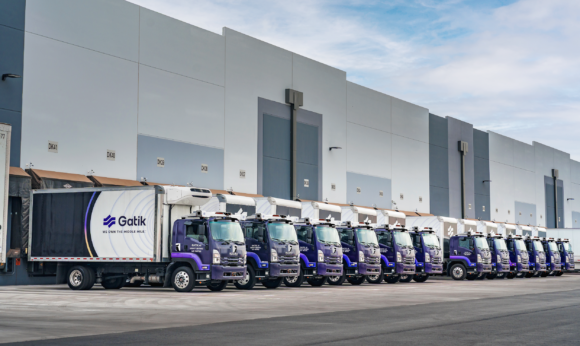
Autonomous Trucking Firm Gatik Inks Contracts Worth $600 Million
Insurance Journal· 2026-01-28 06:00
Core Insights - Gatik AI Inc. has signed a significant deal with a major consumer-goods company, doubling its contracted revenue to $600 million over five years, which will aid in expanding its autonomous trucking business in the US and Canada [1][2]. Revenue and Business Expansion - The new partnership marks a shift from pilot programs to a sustained commercial deployment at scale, with expectations to have hundreds of revenue-generating trucks by the end of the year [2]. - Gatik has secured $400 million in take-or-pay contracts in the latter half of the previous year, including the recent agreement with a shipper [3]. Fleet and Operations - Currently, Gatik operates 10 trucks on public roads without a safety driver, generating revenue, and plans to expand its fleet to 60 trucks by year-end [4]. - The company is actively transporting freight for clients such as Loblaw Cos. Ltd., Walmart Inc., Kroger Co., and Tyson Foods Inc., operating nearly 24 hours a day across various regions [5]. Industry Context - Other autonomous vehicle companies like Aurora Innovation Inc. and Kodiak AI Inc. are also engaged in freight routes but have reported minimal revenue, highlighting the competitive landscape in the autonomous trucking sector [6].