Financial Asset Trading

Search documents
金交所十五年兴衰史:从创新到异化,从狂欢到寂灭
Sou Hu Cai Jing· 2025-12-22 03:10
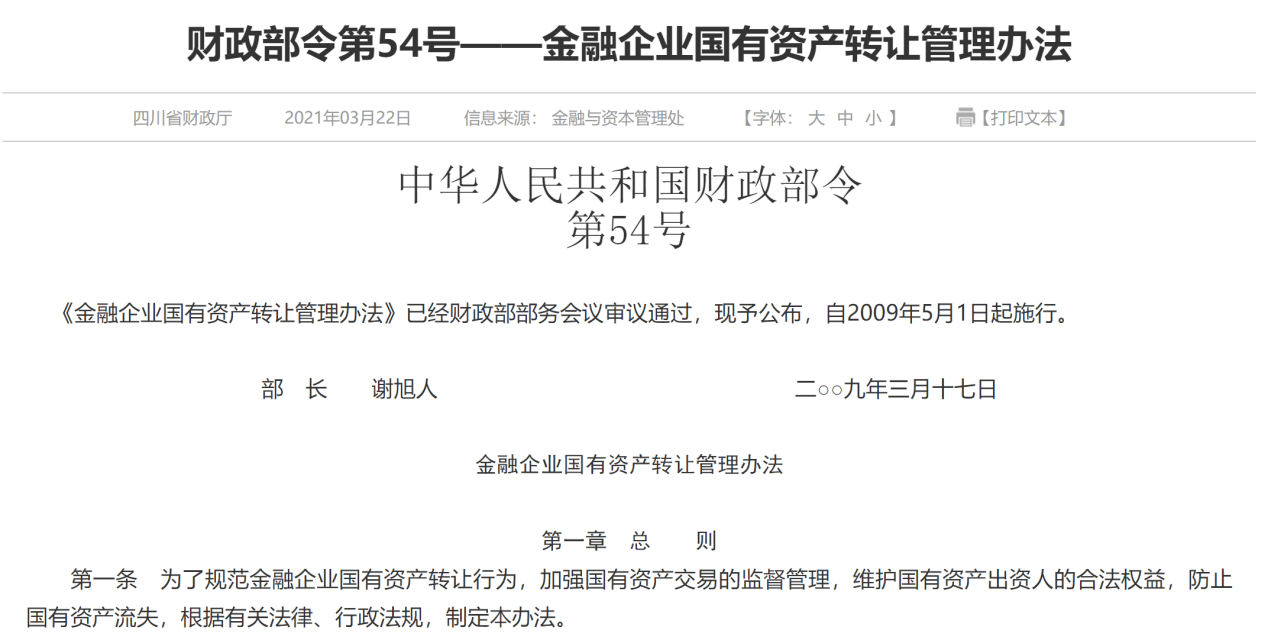
Core Viewpoint - The recent payment crisis involving thousands of investors has brought the Zhejiang Financial Assets Exchange Center (Zhejiang Financial Center) into the spotlight, highlighting the complex history of financial evolution in China and the challenges faced by financial asset exchanges [1][2]. Group 1: Background and Emergence of Financial Exchanges - The establishment of financial exchanges like the Jin Jiao Su (金交所) was driven by the need for reform in state-owned assets and to alleviate corporate financing difficulties following the 2009 global financial crisis [2][5]. - The introduction of the "Management Measures for the Transfer of State-Owned Assets of Financial Enterprises" in March 2009 mandated that the transfer of non-listed financial enterprises' state-owned property must occur through legally established provincial-level trading institutions [5][6]. - By 2015, the number of financial exchanges peaked at nearly 80 across the country, with a significant presence even in provinces with weaker financial foundations [7][8]. Group 2: Evolution and Distortion of Financial Exchanges - Initially designed to be transparent platforms for the transfer of state-owned and distressed assets, financial exchanges began to deviate from their original purpose, becoming avenues for regulatory arbitrage and risk accumulation [9][10]. - The rise of P2P platforms between 2013 and 2015 led to collaborations with financial exchanges, allowing these platforms to bypass regulatory limits and attract significant capital [11][12]. - By 2020, financial exchanges had transformed into channels for concealing and laundering assets, with many dubious projects being approved, leading to a deterioration in asset quality [13][14]. Group 3: Regulatory Response and Decline - Regulatory bodies have closely monitored financial exchanges since their inception, implementing a series of measures to curb their operations and mitigate risks [14][15]. - By 2018, the introduction of the Asset Management New Regulations significantly impacted the non-standard financing functions of financial exchanges, leading to a reduction in their numbers from 80 to around 60 [16][17]. - In 2022, several provinces began revoking the business qualifications of financial exchanges, culminating in a significant reduction in their operations and the closure of many "pseudo-financial exchanges" [17][18]. Group 4: Lessons and Reflections - The rise and fall of financial exchanges reflect deeper characteristics of the Chinese financial system, serving as a case study of "Chinese-style financial innovation" that emerged from regulatory gaps and the demand for non-standard asset expansion [18]. - The experience of financial exchanges underscores the necessity for innovation within a robust regulatory framework to prevent future financial crises [18].

Heritage Global (NasdaqCM:HGBL) Conference Transcript
2025-10-21 19:02
Heritage Global Inc. Conference Summary Company Overview - Heritage Global Inc. trades on NASDAQ with a market cap of approximately $80 million and has a history of profitability, consistently making $1 million to $2 million per quarter [1][2] Core Business Segments - The company operates in two divisions: industrial and financial [2] - The industrial division has evolved from traditional auctioneering to an e-commerce platform, serving large multinational clients such as Pfizer, Boeing, and Halliburton [3][4] Financial Performance - The company has maintained profitability, with quarterly earnings fluctuating between $1 million and $2 million, influenced by mergers and acquisitions (M&A) and larger auctions [4][5] - Current economic conditions have led to a slowdown in asset trading, with many companies in a "wait-and-see" mode regarding surplus asset sales [5][6] Market Dynamics - There is a significant buildup of inventories as companies transition to lean manufacturing and AI-driven processes, which will eventually necessitate the sale of older equipment [6][19] - The financial division, NLEX, has seen growth due to increased credit card debt and non-performing loans, with expectations for substantial growth in the coming years [14][16] Strategic Focus - The company aims to transition from making $1 million to $2 million per quarter to achieving $3 million to $5 million through strategic M&A [7][8] - Heritage Global has been preparing for M&A opportunities without incurring debt, currently holding a $10 million credit line [9][20] Competitive Landscape - The industrial auction market is competitive, with several large players, but Heritage Global believes it can outperform them in transactions due to its niche focus [24][25] - The company is also exploring expansion into Europe and diversifying into commercial real estate non-performing loans [25][26] Regulatory Environment - Changes in government policies, particularly regarding student loans and regional banks, may create new opportunities for Heritage Global [20][21] Future Outlook - The company is optimistic about future growth, particularly in the financial sector, as the market for non-performing loans is expected to expand significantly [14][21] - The management is committed to executing a growth strategy and has a young, dedicated team to support this vision [19] Key Takeaways - Heritage Global is positioned for growth through strategic M&A and a focus on evolving market conditions in both industrial and financial sectors [19][28] - The company has a solid financial foundation with zero debt and a plan for capital allocation, including stock repurchase programs [20][22]