Home Construction

Search documents
Hudson Global(HSON) - 2025 Q4 - Earnings Call Transcript
2026-03-18 15:02
Financial Data and Key Metrics Changes - In Q4 2025, revenue grew by 69% compared to Q4 2024, gross profit increased by 38%, and adjusted EBITDA surged by 156% to $2.2 million [4] - For the full year 2025, revenue increased by 23% compared to 2024, gross profit rose by 14%, and adjusted EBITDA grew from $0.9 million to $4.2 million [4] - On a pro forma basis, full year revenue reached approximately $225 million, a 7% increase, with gross profit at approximately $95 million, a 6% increase, and adjusted EBITDA nearly tripling to $12.6 million [4][5] Business Line Data and Key Metrics Changes - The business services segment saw a 3% increase in gross profit in Q4 2025 compared to Q4 2024, while full year gross profit increased by 2% [7] - The building solutions segment reported Q4 2025 revenue of $18 million, gross profit of $4.6 million, and adjusted EBITDA of $1.9 million, with full year revenue at $27.6 million [10] - The energy services division achieved Q4 2025 revenue of $3.6 million, gross profit of $1.6 million, and adjusted EBITDA of $0.9 million, with full year revenue of $4.9 million [13][14] Market Data and Key Metrics Changes - The APAC and Americas regions delivered strong performances in the business services segment, with gross profit increases of 11.7% and 4.4% respectively, while EMEA experienced an 18.7% decline [7] - The building solutions backlog as of December 31, 2025, was $9.6 million, with a trailing twelve-month book-to-bill ratio of 0.89 [10] Company Strategy and Development Direction - The company is focused on driving organic growth, improving operational efficiency, and maintaining a disciplined approach to capital allocation [16] - Strategic investments are being made to accelerate future growth while realizing cost efficiencies through operational improvements [8] - The company plans to deepen its presence in core markets while thoughtfully entering new markets with attractive long-term demand [14] Management's Comments on Operating Environment and Future Outlook - Management expressed confidence in the long-term outlook, noting that 2025 marked a transformational year and that the integration work post-merger is progressing well [15] - The company anticipates a gradual recovery in the U.S. home construction market in 2026, driven by underlying demand from a housing shortage [11] - Management acknowledged that Q1 2026 is expected to be the weakest quarter of the year, but they foresee significant improvement in the latter part of the year [32] Other Important Information - The company ended 2025 with $13.4 million in cash, including restricted cash, and $215 million of usable NOL carryforwards [5][6] - The company repurchased over $2.6 million of its stock in 2025 and plans to continue share repurchases to enhance shareholder value [15] Q&A Session Summary Question: Backlog drop from Q3 to Q4 - Management indicated that the backlog drop has some seasonality, and weather impacts were noted, particularly in the Twin Cities area [19][22] Question: Update on M&A activity - Management confirmed ongoing discussions regarding acquisition opportunities across all three divisions, with expectations to finalize one or more by the end of the year [23][24] Question: Q4 results alignment with expectations - Management stated that Q4 results were roughly in line but on the weaker side, particularly due to challenges in the EMEA region and project delays [30][32] Question: Organic growth excluding Japan acquisition - Management noted that the Japanese revenue for FY 25 was minimal and did not significantly impact the overall growth rate [66] Question: Cash taxes expectations for 2026 - Management indicated that cash taxes are difficult to predict but expect to pay modest amounts, around $1 million to $2 million, depending on results [74]

Hudson Global(HSON) - 2025 Q4 - Earnings Call Transcript
2026-03-18 15:00
Financial Data and Key Metrics Changes - In Q4 2025, revenue grew by 69% compared to Q4 2024, gross profit increased by 38%, and adjusted EBITDA surged by 156% to $2.2 million [4] - For the full year 2025, revenue increased by 23% compared to 2024, gross profit rose by 14%, and adjusted EBITDA grew from $0.9 million to $4.2 million [4] - On a pro forma basis, full year revenue reached approximately $225 million, a 7% increase, gross profit grew to approximately $95 million, a 6% increase, and adjusted EBITDA almost tripled to $12.6 million [4][5] Business Line Data and Key Metrics Changes - The business services segment achieved a 3% increase in gross profit in Q4 2025 compared to Q4 2024, while full year gross profit increased by 2% [6] - The building solutions segment reported Q4 2025 revenue of $18 million, gross profit of $4.6 million, and adjusted EBITDA of $1.9 million [9] - For the full year 2025, building solutions revenue was $27.6 million, gross profit was $6.3 million, and adjusted EBITDA was $2.5 million [9] - The energy services division reported Q4 2025 revenue of $3.6 million, gross profit of $1.6 million, and adjusted EBITDA of $0.9 million [11] Market Data and Key Metrics Changes - The APAC and Americas regions delivered strong performances in the business services segment, with gross profit increases of 11.7% and 4.4% respectively, while EMEA experienced an 18.7% decline [6] - The building solutions backlog as of December 31, 2025, was $9.6 million, with a trailing twelve-month book-to-bill ratio of 0.89 [9] Company Strategy and Development Direction - The company is focused on driving organic growth, improving operational efficiency, and maintaining a rigorous approach to capital allocation [15] - Strategic investments are being made to accelerate future growth while realizing cost efficiencies through operational improvements [7] - The company plans to deepen its presence in core markets while thoughtfully entering new markets with attractive long-term demand [12] Management's Comments on Operating Environment and Future Outlook - Management expressed confidence in the long-term outlook and believes the stock is undervalued, highlighting the strength of the business and future opportunities [14] - The company anticipates a gradual recovery in the U.S. home construction market in 2026, driven by long-term housing shortages and favorable demographics [10] - Management acknowledged that Q1 2026 is expected to be the weakest quarter of the year, but they are optimistic about significant improvements in the following quarters [29] Other Important Information - The company ended 2025 with $13.4 million in cash, including restricted cash, and $215 million of usable NOL carryforwards [5] - The company repurchased over $2.6 million of its stock in 2025 and plans to continue using share repurchases to enhance shareholder value [14] Q&A Session Summary Question: Impact of backlog drop from Q3 to Q4 - Management indicated that there is some seasonality to the backlog drop and that weather and financing issues have also played a role [18][19] Question: Update on M&A activity - Management confirmed ongoing discussions regarding acquisition opportunities across all three divisions, with expectations to finalize one or more by the end of the year [21][22] Question: Performance expectations for Q4 results - Management stated that Q4 results were roughly in line with expectations but noted weaknesses in the EMEA region and building solutions due to weather and project delays [28][29] Question: Organic growth excluding Japanese acquisition - Management indicated that the Japanese acquisition had minimal impact on FY 2025 revenue, and organic growth strategies are expected to continue [63] Question: Cash taxes expectations for 2026 - Management noted that cash taxes are difficult to predict but expect to pay modest amounts based on international operations and statutory rates [69][73]
USD/JPY: Majority Sell Bias Increases as Intervention Talk Reemerges
Investing· 2026-03-13 05:56
Market Overview - Oil prices have surged due to fears surrounding supply disruptions from the Iran conflict, with WTI reaching highs of $97 before settling around $95, marking a significant increase in energy prices [1][2] - U.S. equity indices experienced a selloff, with the S&P 500 down 1.5%, Nasdaq 100 down 1.7%, and Dow 30 down 1.6%, as rising oil prices weighed on market sentiment [1][2] - Treasury yields have increased across the curve, reflecting rising inflation concerns, with market expectations indicating a hold on interest rates at the upcoming Federal Reserve meeting [1] Company Performance - Nvidia shares fell by 1.5%, while AMD, TSM, and Intel saw larger declines of 3.5%, 5%, and 5.7% respectively, indicating a challenging session for semiconductor stocks [1] - Tesla's stock dropped 3.1% after a report indicated a shift in investment strategy, converting its xAI stake into a SpaceX investment ahead of the latter's IPO [1] - Fertilizer producers like CF Industries (+13.2%), Intrepid Potash (+10.6%), and Mosaic Company (+7.6%) saw significant gains due to fears of supply disruptions in the Gulf region [1] Commodities - Gold prices have rebounded above $5,100 amid geopolitical tensions, although they are on track for a second consecutive weekly loss [1][2] - The International Energy Agency (IEA) reported that at least 10 million barrels per day of oil supply has been curtailed due to restrictions in the Strait of Hormuz, marking a historic disruption in the global oil market [1] Economic Data - U.S. initial jobless claims were reported at 213,000, slightly better than forecasts, while continuing claims stood at 1.85 million [2] - Building permits for January fell by 5.4% to 1.38 million, while housing starts increased by 7.2% to 1.49 million, indicating mixed signals in the housing market [2] Investor Sentiment - There has been a notable shift in investor sentiment, with a majority long bias increasing in U.S. equity indices, particularly in the Nasdaq, which moved to 71% from 62% [2] - Commodities, particularly gold, have seen an extreme buy sentiment rise to 87% from 80%, reflecting increased demand amid market volatility [2]



D.R. Horton, Inc. (NYSE:DHI) Faces Market Challenges Despite UBS's "Buy" Rating
Financial Modeling Prep· 2026-03-12 20:00
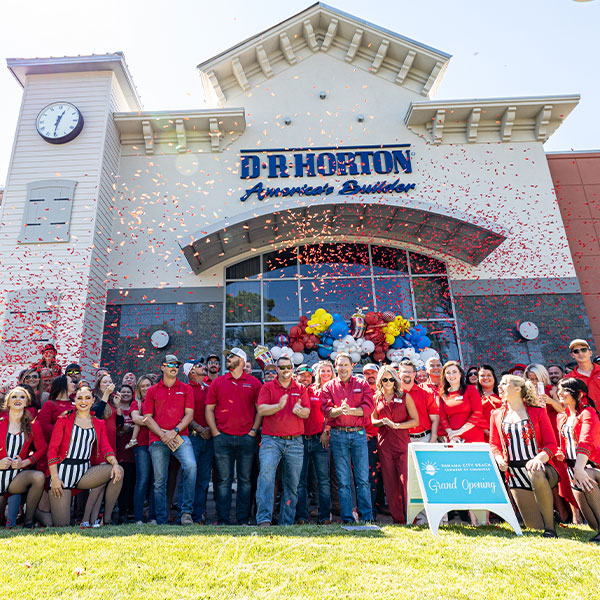
Core Viewpoint - D.R. Horton, Inc. (DHI) is facing a challenging market environment with a significant decline in builder stocks, despite a positive rating from UBS [2][6]. Company Performance - DHI's stock price recently closed at $145.28, reflecting a 1.63% decrease from the previous day, which is worse than the S&P 500's 0.21% loss [2]. - Over the past month, DHI's shares have fallen by 3.79%, outperforming the Construction sector's 6.9% loss but underperforming the S&P 500's 2.26% decline [3]. - The stock has fluctuated between $139.26 and $141.60 on the latest trading day, with a market capitalization of approximately $40.77 billion [5]. Earnings Expectations - DHI is expected to report an EPS of $2.18, a 15.5% decrease from the same quarter last year, with anticipated revenue of $7.7 billion, indicating a slight 0.47% decrease [3][6]. Strategic Moves - DHI has acquired 92 fully developed lots from Windy Hill Development in the Indian Springs community near Houston, planning to build homes starting at $235,000 [4].

How To Earn $500 A Month From Lennar Stock Ahead Of Q1 Earnings
Benzinga· 2026-03-12 11:50
Core Viewpoint - Lennar Corporation is set to release its first-quarter earnings on March 12, with investors focusing on its dividend yield of 2.07% and potential monthly income from dividends [1]. Dividend Yield and Investment Calculation - To earn $500 monthly or $6,000 annually from dividends, an investment of approximately $289,710 or around 3,000 shares is required, while a more modest $100 monthly or $1,200 annually would need $57,942 or around 600 shares [1][2]. - The dividend yield is calculated by dividing the annual dividend payment by the stock's current price, which can fluctuate based on stock price changes [2][3]. Impact of Stock Price on Dividend Yield - If a stock's price increases, the dividend yield decreases, and vice versa; for example, a stock with a $2 annual dividend priced at $50 yields 4%, but if the price rises to $60, the yield drops to 3.33% [3]. - Changes in dividend payments also affect yield; an increase in dividends raises the yield if the stock price remains constant [4]. Earnings Expectations - Analysts expect Lennar to report quarterly earnings of 95 cents per share, down from $2.14 per share in the same period last year, with a consensus revenue estimate of $6.9 billion compared to $7.63 billion last year [5]. - Ahead of the earnings report, Truist Securities initiated coverage on Lennar with a Hold rating and a price target of $10 [5]. Stock Performance - Shares of Lennar fell by 2.2% to close at $96.57 on the day prior to the earnings announcement [4].

This Homebuilders ETF Is Stuck in Cement: Here's Why
Yahoo Finance· 2026-02-27 19:53
Core Viewpoint - The iShares U.S. Home Construction ETF (ITB) is currently underperforming despite favorable conditions in the housing market, including a structural shortage of homes and declining mortgage rates [1] Group 1: Market Conditions - The U.S. faces a structural shortage of approximately 3 million to 4 million homes, which should ideally drive the housing sector upward [1] - Mortgage rates have dipped below the significant 6% threshold, yet the ETF is not reflecting this positive change [1] Group 2: Builder Economics - Homebuilders have been acting as their own central banks, using mortgage rate buydowns to maintain sales when rates were higher [2] - With market rates now decreasing, builders are not seeing new demand but rather a reduction in their incentive costs [3] - Investors are realizing that even with lower rates, builders must still offer aggressive incentives to attract buyers due to high home prices [3] Group 3: ETF Composition - The ITB ETF is top-heavy, with 10 stocks accounting for 65% of its assets, indicating a concentration risk [4] Group 4: Buyer Sentiment - Buyer traffic remains near historic lows, with the National Association of Home Builders (NAHB) sentiment index falling to 36, below the breakeven point of 50, marking four consecutive months of decline [8] - Potential homeowners are hesitant to enter the market, waiting for lower rates or price moderation [8]
US Housing and Durable Goods Beat Expectations Amid “Difficult” Ukraine-Russia Talks in Geneva
Stock Market News· 2026-02-18 14:08
Economic Data - The US housing market showed unexpected strength in December, with Housing Starts reaching 1.404 million units, exceeding the forecast of 1.304 million, marking a 6.2% month-over-month increase [2][9] - Building Permits also surpassed expectations at 1.448 million against a 1.400 million estimate, indicating robust activity in the construction sector [2] - Durable Goods Orders fell by 1.4%, but the decline was better than the anticipated 2.0%, while Durable Goods Ex-Transportation rose by 0.9%, significantly outperforming the 0.3% consensus [3][9] Geopolitical Developments - High-level diplomatic talks in Geneva between Russian negotiator Vladimir Medinsky and Ukrainian officials were described as "difficult but important," indicating ongoing communication despite challenges [5][9] - Reports of secret talks between Senator Marco Rubio and the grandson of Raul Castro suggest potential shifts in US-Cuba relations, while Russia continues to strengthen ties with Caribbean allies [6] Japan's Fiscal and Energy Outlook - Japan's Sanae Takaichi outlined a plan for a fundamental overhaul of the government budget, emphasizing sustainable fiscal policy and potential tax cuts through a refundable tax credit system [7][9] - US Energy Secretary Chris Wright projected that Venezuela's oil output could grow by 30% to 40% this year, which may impact global crude prices and strategies of major energy firms like Chevron [8][9]

D.R. Horton, Inc. (NYSE:DHI) Maintains Strong Position Amid Market Challenges
Financial Modeling Prep· 2026-01-21 05:03
Core Viewpoint - D.R. Horton, Inc. is navigating a challenging housing market characterized by declining consumer confidence and affordability pressures, yet it maintains a strong financial position and positive sales indicators [2][3][4]. Group 1: Company Performance - D.R. Horton exceeded Q1 2026 earnings and revenue estimates, although both metrics declined compared to the previous year due to softer housing demand [2][5]. - The company reported an increase in net sales orders and backlog, indicating continued buyer interest despite market challenges [2]. Group 2: Financial Position - D.R. Horton is strategically positioned with strong liquidity and low leverage, allowing it to manage market volatility effectively [3][5]. - The current stock price is $153.19, reflecting a decrease of 1.78%, with a trading volume of 4,380,164 shares on the NYSE [4]. Group 3: Market Challenges - The housing market is facing challenges from declining consumer confidence and affordability pressures, leading to fewer home closings [3]. - D.R. Horton has been offering sales incentives to address affordability issues, which have impacted its bottom line [3]. Group 4: Future Outlook - The company expects affordability constraints and cautious consumer sentiment to continue affecting housing demand in the near future [4]. - Despite these challenges, D.R. Horton's financial strategies and resilience suggest it is prepared to navigate ongoing market volatility [4].
D.R. Horton, Inc. (NYSE:DHI) Surpasses Earnings and Revenue Estimates
Financial Modeling Prep· 2026-01-20 21:06
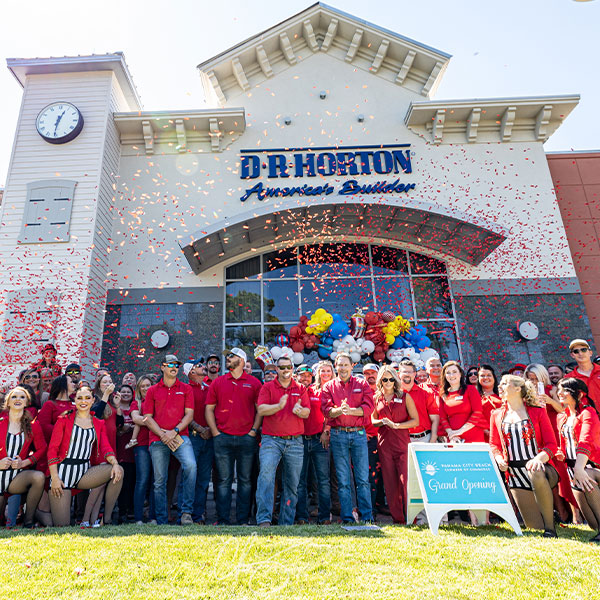
Core Insights - D.R. Horton reported earnings per share (EPS) of $2.03, exceeding estimates of $1.93, and revenue of approximately $6.89 billion, surpassing the forecast of $6.59 billion, despite a year-over-year decline due to softer housing demand [1][6] Financial Performance - The company achieved a net income of $594.8 million, with earnings per diluted share of $2.03, and declared a quarterly dividend of $0.45 per share [3] - D.R. Horton has a price-to-earnings (P/E) ratio of approximately 12.86, a price-to-sales ratio of about 1.33, an enterprise value to sales ratio of around 1.42, and an enterprise value to operating cash flow ratio of approximately 14.18 [4] Market Position and Strategy - The company saw an increase in net sales orders and backlog year over year, indicating sustained interest from buyers despite market challenges [2][6] - D.R. Horton is well-positioned to handle market volatility due to its strong liquidity, low leverage with a debt-to-equity ratio of approximately 0.25, and a strong current ratio of about 17.39 [5] - To address affordability challenges, D.R. Horton has been offering intensive sales incentives, which have pressured its bottom line [3] Market Outlook - The overall housing market remains cautious due to declining consumer confidence and affordability concerns, which have led to a decrease in home closings [2][5] - Looking ahead, D.R. Horton anticipates that affordability constraints and cautious consumer sentiment will continue to affect new housing demand [5]
iShares U.S. Home Construction ETF (ITB US) - Investment Proposition
ETF Strategy· 2026-01-19 09:07
Core Viewpoint - iShares U.S. Home Construction ETF (ITB) provides targeted exposure to U.S. homebuilders and related housing ecosystem companies, focusing on long-term housing demand influenced by various factors such as household formation and repair trends [1] Investment Strategy - The strategy tracks a defined universe of housing-linked equities through a liquid, cap-weighted process, concentrating risk in industry leaders while maintaining rules-based turnover [1] - The investment case is balanced against factors like rate sensitivity, land availability, build costs, and credit conditions [1] Market Dynamics - Long-run housing demand is driven by household formation, repair-and-remodel trends, and the replacement cycle [1] - Easing financing conditions, healthy order backlogs, and supply constraints can support the housing market, while tightening credit, rising mortgage rates, and deteriorating consumer confidence present challenges [1] Portfolio Roles - The ETF serves as a satellite cyclical sleeve, a thematic mandate for U.S. housing, and a tactical overlay linked to interest-rate inflection points [1] - Likely users include macro-aware allocators rotating across sectors and long-term growth investors comfortable with volatility [1] Risk Factors - A significant risk is high industry concentration, where a few large builders can dominate outcomes and elevate single-industry drawdown risk [1]