Mapping Technology

Search documents
TomTom says ramp-down of old contracts will weigh on 2026 sales, shares tumble
Yahoo Finance· 2026-02-04 06:41
Core Viewpoint - TomTom anticipates a decline or steady revenue in 2026 due to a transition between old and new contracts, with growth expected to resume in subsequent years [1][2]. Revenue Forecast - The company projects revenue between 495 million and 555 million euros ($586 million and $657 million) for 2026, down from 555 million euros in the previous year, which was a 3% decline and below analysts' expectations of 561 million euros [2][5]. Contract Transition - The transition from old contracts to new ones is expected to cause a slight decline in 2026, with recovery anticipated in 2027 and the benefits of new contracts expected to materialize in 2028 [3][5]. Automotive Business - In the automotive sector, the order backlog reached a record 2.4 billion euros by the end of 2025, indicating strong future demand despite current challenges [3]. New Contracts and Partnerships - TomTom secured several contracts ahead of the 2026 CES trade show, including partnerships with Amazon Alexa, expanded cooperation with Uber, and a contract with Volkswagen's CARIAD for advanced driver-assisted systems [4]. Location Technology Business - Revenue in the core Location Technology business is expected to be between 435 million and 485 million euros in 2026, compared to 482 million euros last year, with an anticipated increase in operating margin from 0% to above 3% [5]. Operating Profit - Despite a revenue decline, the company's annual operating profit turned positive at 1.6 million euros, slightly below the 2 million euros expected by analysts [5]. Technology Optimization - The company has completed a significant overhaul of its technology stack by the end of 2025, which has allowed for improved efficiency and productivity [6].
TomTom Orbis Maps to power CARIAD’s Automated Driving systems
Globenewswire· 2026-01-05 06:30
Core Insights - TomTom has partnered with CARIAD, the automotive software company of the Volkswagen Group, to integrate its advanced Orbis Maps into CARIAD's automated driving systems [1][4] Group 1: Partnership and Collaboration - CARIAD will utilize TomTom's Orbis Maps as a core component for enhancing the understanding of surroundings in automated driving systems [2] - This collaboration highlights TomTom's ability to meet the evolving needs of the Volkswagen Group, reinforcing its leadership in the future of driving [4] Group 2: Technology and Capabilities - TomTom's Orbis Maps will provide highly accurate, up-to-date location information, complementing onboard sensors and systems to enhance safety-critical automated driving functionalities [2] - The AI-native, real-time mapmaking platform of TomTom allows for detailed lane geometry and behavioral data, ensuring minute-level updates across all road classes [3] - TomTom's multi-source approach combines high-precision car sensor data, survey vehicles, and aerial data, delivering unmatched coverage across 235+ countries and territories [3]

Mapping Connectivity: How GIS Fuels Global Data Access | Shaye Wirth | TEDxVandegrift HS
TEDx Talks· 2025-10-13 16:03
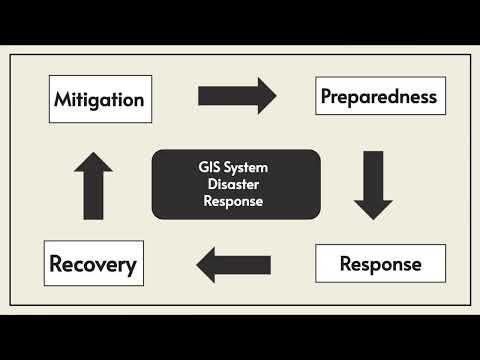
Overview of GIS Evolution and Impact - Geographic Information Systems (GIS) have evolved from transferring paper map information to computers to showcasing diverse topics like health, demographics, and climate [5][6] - Unlike historical limitations, modern GIS provides access to significantly more geographic and cultural data without extensive travel [4][7] - The development of GIS systems like ArcGIS, QGIS, and GrassGis has significantly improved problem-solving capabilities across various sectors in the past 25 years [9] Applications in Disaster Response and Public Health - GIS, particularly ArcGIS, played a vital role in disaster response during the Nepal and Haiti earthquakes by visualizing shelter locations and affected structures [11][12] - During the COVID-19 pandemic, a John Hopkins University GIS dashboard was viewed over 450% billion times within a year, informing the public about cases, deaths, and recoveries [13] - Government leaders using GIS data made 25% more accurate decisions regarding COVID-19 policies compared to those relying on random internet information [15] Cultural and Educational Impact - GIS promotes cultural teaching and global awareness by showcasing linguistic, religious, and cultural content, fostering interconnectedness [16] - Projects like "Locating a National Collection" in the UK enhanced participants' sense of national identity and appreciation for their culture through geographical visualization [17][18] - Google Arts and Cultures utilizes GIS to visualize cultural artifacts and host virtual tours, with their pages viewed over 1 billion times by people from over 190 countries [19][20] Future Trends and Growth - The geoinformatics industry is projected to grow, with an expected market size of $31.2 billion and the addition of over 56,000 GIS analysts to the global workforce [23] - GIS is expected to continue improving the understanding of the world for everyday individuals through in-depth design and research [24]
ProStar and JAVAD GNSS Announce Worldwide Distribution Deal
Globenewswire· 2025-08-14 12:00
Core Viewpoint - ProStar Holdings Inc. and JAVAD GNSS have entered into a global distribution agreement to bundle ProStar's PointMan Precision Mapping Solutions with JAVAD's high-precision GNSS receivers, enhancing the utility industry's access to integrated precision mapping solutions [1][2][5] Company Overview - ProStar is a software company specializing in cloud and mobile mapping solutions for critical infrastructure, with its flagship product, PointMan, designed to manage above- and below-ground assets [7] - JAVAD GNSS is recognized for its patented multi-constellation, multi-frequency GNSS technology, primarily serving demanding industries such as aerospace and defense [6] Strategic Partnership - The partnership aims to address the increasing demand for integrated precision mapping solutions in the utility sector, allowing users to capture and visualize underground infrastructure with centimeter accuracy [2][3] - By bundling PointMan with JAVAD's hardware, both companies are moving towards providing a comprehensive end-to-end solution, enhancing safety, compliance, and operational efficiency [3][5] Market Context - The utility industry faces challenges such as aging networks and the need to transition from outdated paper-based workflows, making the bundled solution timely and relevant [3] - The collaboration is seen as part of a broader trend where hardware manufacturers recognize the value of integrating software solutions to enhance customer offerings [5]