
Oil and Gas Extraction

Search documents
Oil Index ETF (OILT) Touches New 52-Week High
ZACKS· 2026-02-19 16:10
Group 1 - The Texas Capital Texas Oil Index ETF (OILT) has reached a 52-week high and is up 50.5% from its 52-week low price of $18.22 per share [1] - OILT provides exposure to companies involved in oil and gas extraction within Texas and charges 35 basis points in annual fees [2] - The rise in OILT's value is attributed to geopolitical tensions, particularly the risk of U.S. strikes on Iran and potential closures of the Strait of Hormuz, along with strong U.S. petroleum net exports and a shift from AI tech to undervalued energy stocks [3] Group 2 - OILT is expected to continue its strong performance in the near term, indicated by a positive weighted alpha of 20.87, suggesting potential for further gains [4]


2025年全国规上工业原煤产量48.3亿吨 同比增长1.2%
Guo Jia Tong Ji Ju· 2026-01-19 03:27
Group 1: Coal, Oil, and Natural Gas Production - In December, the production of raw coal in large-scale industries was 440 million tons, a year-on-year decrease of 1.0%, with an average daily output of 14.1 million tons [1] - For the entire year, the raw coal production reached 4.83 billion tons, an increase of 1.2% year-on-year [1] - The production of crude oil in December was 17.8 million tons, a year-on-year decrease of 0.6%, with an average daily output of 570,000 tons [3] - The total crude oil production for the year was 216.05 million tons, reflecting a year-on-year increase of 1.5% [3] - Natural gas production in December was 23 billion cubic meters, a year-on-year increase of 5.1%, with an average daily output of 740 million cubic meters [5] - The total natural gas production for the year was 261.9 billion cubic meters, marking a year-on-year increase of 6.2% [5] Group 2: Electricity Production - In December, the electricity generation in large-scale industries was 858.6 billion kilowatt-hours, a year-on-year increase of 0.1%, with an average daily generation of 27.7 billion kilowatt-hours [7] - For the entire year, the total electricity generation reached 9,715.9 billion kilowatt-hours, representing a year-on-year increase of 2.2% [7] - The production of thermal power in December decreased by 3.2%, although the decline was narrower compared to November [7] - Hydropower generation increased by 4.1%, but the growth rate slowed by 13.0 percentage points compared to November [7] - Nuclear power generation grew by 3.1%, with a slowdown of 1.6 percentage points from November [7] - Wind power generation increased by 8.9%, with a deceleration of 13.1 percentage points compared to November [7] - Solar power generation saw an increase of 18.2%, but the growth rate slowed by 5.2 percentage points from November [7]
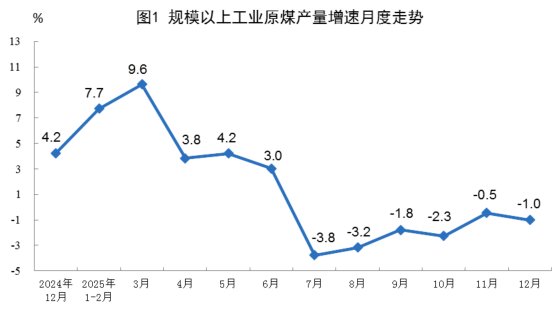
国家统计局:2025年中国原煤产量48.3亿吨,同比增长1.2%
Guo Jia Tong Ji Ju· 2026-01-19 02:10
Group 1: Production of Coal, Oil, and Natural Gas - The production of raw coal in December was 440 million tons, a year-on-year decrease of 1.0%, with an average daily output of 14.1 million tons [2] - The total raw coal production for the year was 4.83 billion tons, reflecting a year-on-year increase of 1.2% [2] - The production of crude oil in December was 17.8 million tons, a year-on-year decrease of 0.6%, with an average daily output of 570,000 tons [2] - The total crude oil production for the year was 216.05 million tons, showing a year-on-year increase of 1.5% [2] - The processing of crude oil in December reached 62.46 million tons, a year-on-year increase of 5.0%, with a daily processing average of 2.015 million tons [2] - The total crude oil processing for the year was 737.59 million tons, reflecting a year-on-year increase of 4.1% [2] - Natural gas production in December was 23 billion cubic meters, a year-on-year increase of 5.1%, with a daily output of 740 million cubic meters [2] - The total natural gas production for the year was 261.9 billion cubic meters, showing a year-on-year increase of 6.2% [3] Group 2: Electricity Production - The electricity generation in December was 858.6 billion kilowatt-hours, a year-on-year increase of 0.1%, with an average daily generation of 27.7 billion kilowatt-hours [4] - The total electricity generation for the year was 9,715.9 billion kilowatt-hours, reflecting a year-on-year increase of 2.2% [4] - In December, the decline in thermal power generation narrowed to 3.2%, while hydro, nuclear, wind, and solar power generation experienced a slowdown in growth [4] - The growth rates for different types of electricity generation in December were: hydro power at 4.1% (down 13.0 percentage points from November), nuclear power at 3.1% (down 1.6 percentage points), wind power at 8.9% (down 13.1 percentage points), and solar power at 18.2% (down 5.2 percentage points) [4]
大庆油田第一采油厂第三作业区中四采油队筑牢安全服务“防护墙”
Xin Lang Cai Jing· 2026-01-16 11:53
Group 1 - The core activity focuses on enhancing safety awareness among team members and standardizing operational procedures in the Daqing Oilfield's first oil extraction plant [1] - The "Ten Life-Saving Rules" are emphasized as essential guidelines for ensuring personal safety and improving service quality [1][2] - The training includes in-depth analysis and explanation of the rules by safety vice team leaders, integrating typical safety case studies to reinforce understanding [1] Group 2 - Following the training, a closed-book examination was conducted to assess employees' learning outcomes through written tests and quick-answer formats [2] - The team plans to leverage the tradition of party leadership in production by providing one-on-one support for employees facing learning difficulties, ensuring comprehensive understanding [2] - The goal is to transform the "Ten Life-Saving Rules" from theoretical knowledge into practical actions, maintaining a zero-risk service environment [2]

AI Becomes a Boost for Global Oil Demand, Not a Bridge to Net Zero
Yahoo Finance· 2025-12-10 22:00
Core Insights - Artificial intelligence (AI) is predicted to enable the energy industry to access an additional one trillion barrels of oil, making extraction more economical [1][6] - The International Energy Agency has revised its peak oil prediction, now expecting oil to remain a significant part of the global energy mix until 2050 [2] - AI is viewed by climate activists as a hindrance to the transition to a net-zero energy system, as it facilitates the extraction of new oil deposits [3][4] Industry Perspective - For energy companies, AI represents a positive development, allowing for prolonged extraction of energy commodities at lower costs [1] - The production costs of oil extraction are rising due to inflation and natural reservoir depletion, but AI can help optimize extraction processes to maintain supply in response to resilient demand [5] Technological Impact - Wood Mackenzie utilized its AI-powered tool, Analogues, to identify reservoirs with the potential for significant gains in production, indicating that existing technologies can unlock an additional one trillion barrels from current fields [6]
1-10月份全国规上工业原煤产量39.7亿吨 同比增长1.5%
Guo Jia Tong Ji Ju· 2025-11-14 06:25
Group 1: Coal, Oil, and Natural Gas Production - In October, the production of raw coal remained at a high level, with an output of 410 million tons, a year-on-year decrease of 2.3%, and an average daily output of 13.12 million tons. From January to October, the total output was 3.97 billion tons, reflecting a year-on-year increase of 1.5% [1] - Crude oil production continued to grow, reaching 18 million tons in October, a year-on-year increase of 1.3%, with a daily average of 581,000 tons. For the first ten months, the total crude oil output was 180.64 million tons, up 1.7% year-on-year [3] - Natural gas production saw a slowdown in growth, with October output at 22.1 billion cubic meters, a year-on-year increase of 5.9%, and a daily average of 710 million cubic meters. From January to October, the total output was 217 billion cubic meters, up 6.3% year-on-year [7] Group 2: Electricity Production - Electricity production in the industrial sector accelerated in October, with a total generation of 800.2 billion kilowatt-hours, a year-on-year increase of 7.9%, and a daily average of 25.81 billion kilowatt-hours. For the first ten months, the total electricity generation was 8,062.5 billion kilowatt-hours, reflecting a year-on-year increase of 2.3% [9] - By type, thermal power generation turned from decline to growth, with a year-on-year increase of 7.3% in October, compared to a decrease of 5.4% in September. Hydropower generation increased by 28.2%, although the growth rate slowed by 3.7 percentage points from September. Nuclear power generation grew by 4.2%, accelerating by 2.6 percentage points from September. Wind power saw a decline of 11.9%, with the decline rate expanding by 4.3 percentage points, while solar power generation increased by 5.9%, but the growth rate slowed by 15.2 percentage points from September [9]
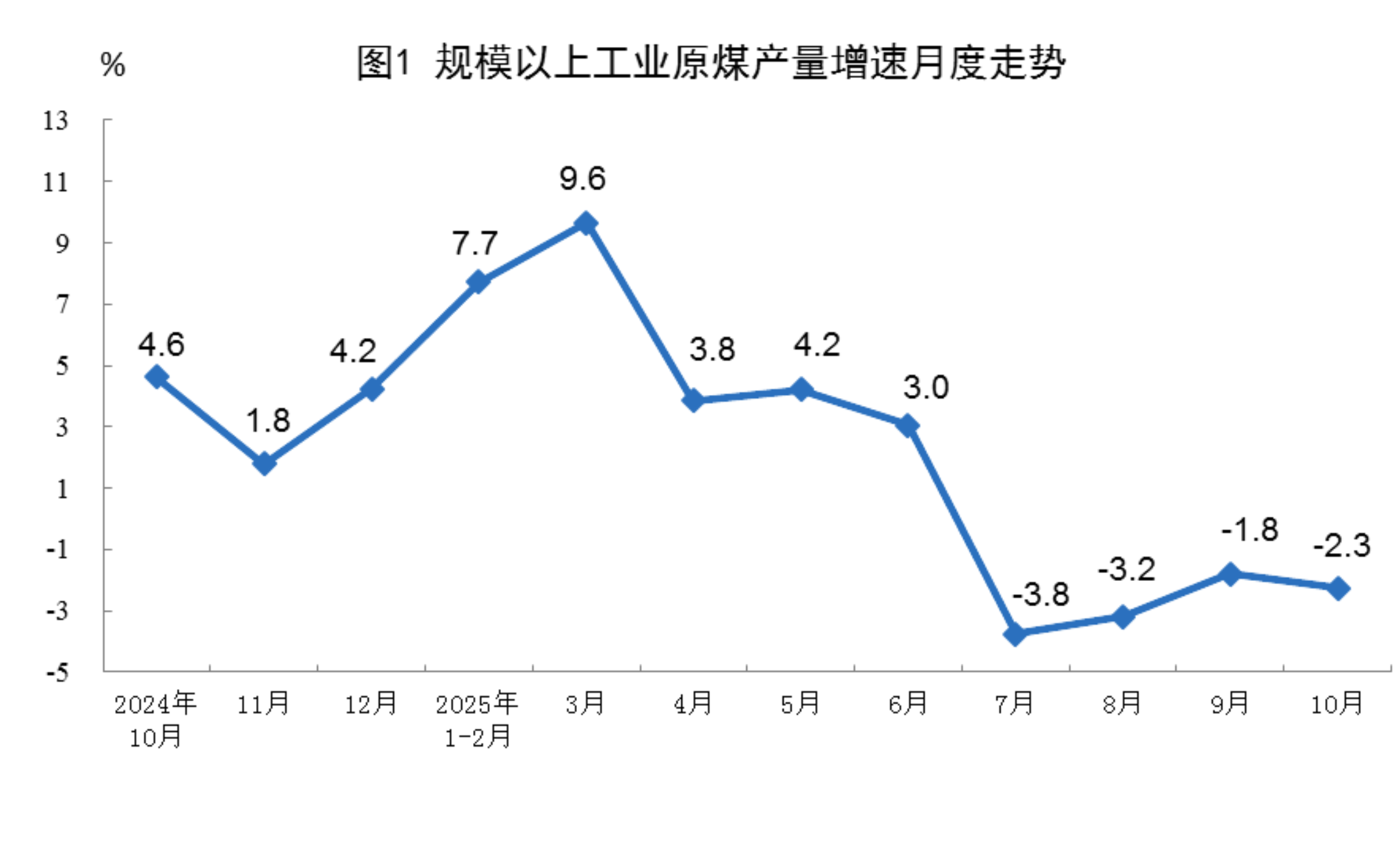
10月中国原煤产量4.1亿吨
Guo Jia Tong Ji Ju· 2025-11-14 02:20
Group 1: Coal, Oil, and Natural Gas Production - In October, the industrial raw coal production remained at a high level with an output of 410 million tons, a year-on-year decrease of 2.3%, and an average daily output of 13.12 million tons [1] - From January to October, the industrial raw coal output reached 3.97 billion tons, showing a year-on-year increase of 1.5% [2] - The industrial crude oil production in October was 18 million tons, reflecting a year-on-year growth of 1.3%, with a daily average output of 581,000 tons [2] - The industrial natural gas production in October was 22.1 billion cubic meters, with a year-on-year increase of 5.9%, although the growth rate slowed by 3.5 percentage points compared to September [3][4] Group 2: Oil Processing and Natural Gas Production - The industrial crude oil processing volume in October was 63.43 million tons, a year-on-year increase of 6.4%, with a daily average processing of 2.046 million tons [3] - From January to October, the industrial crude oil processing volume totaled 614.24 million tons, marking a year-on-year increase of 4.0% [3] - The total industrial natural gas output from January to October was 217 billion cubic meters, reflecting a year-on-year growth of 6.3% [4] Group 3: Electricity Production - The industrial electricity production in October reached 800.2 billion kilowatt-hours, a year-on-year increase of 7.9%, with a daily average generation of 25.81 billion kilowatt-hours [5] - From January to October, the total industrial electricity production was 8,062.5 billion kilowatt-hours, showing a year-on-year increase of 2.3% [5] - In October, the industrial thermal power generation turned from decline to growth with a year-on-year increase of 7.3%, while hydroelectric power grew by 28.2%, nuclear power increased by 4.2%, wind power saw a decline of 11.9%, and solar power grew by 5.9% [5]
X @Bloomberg
Bloomberg· 2025-09-05 12:45
Employment Trends - Job gains in health care were offset by job cuts in the federal government [1] - Job losses occurred in mining, quarrying, and oil and gas extraction sectors [1]
1-7月份全国规上工业原煤产量27.8亿吨 同比增长3.8%
Guo Jia Tong Ji Ju· 2025-08-15 03:20
Group 1: Coal, Oil, and Natural Gas Production - In July, the production of raw coal decreased, with an output of 380 million tons, a year-on-year decline of 3.8% [2] - The cumulative production of raw coal from January to July reached 2.78 billion tons, showing a year-on-year increase of 3.8% [2] - Raw oil production remained stable, with July output at 18.12 million tons, a year-on-year increase of 1.2% [4] - From January to July, the cumulative raw oil production was 126.6 million tons, reflecting a year-on-year growth of 1.3% [4] - The processing of raw oil accelerated, with July processing volume at 63.06 million tons, a year-on-year increase of 8.9% [5] - Cumulative raw oil processing from January to July was 424.68 million tons, up 2.6% year-on-year [5] - Natural gas production saw an accelerated growth, with July output at 21.6 billion cubic meters, a year-on-year increase of 7.4% [9] - From January to July, the cumulative natural gas production was 152.5 billion cubic meters, reflecting a year-on-year growth of 6.0% [9] Group 2: Electricity Production - Electricity production in July increased, with a total generation of 926.7 billion kilowatt-hours, a year-on-year growth of 3.1% [11] - The cumulative electricity generation from January to July was 5,470.3 billion kilowatt-hours, showing a year-on-year increase of 1.3% [11] - In July, the daily average electricity generation was 29.89 billion kilowatt-hours, with a year-on-year daily average growth of 1.8% after adjusting for the number of days [11] - By type, thermal power generation increased by 4.3% year-on-year, while hydropower saw a decline of 9.8% [11] - Nuclear power generation grew by 8.3%, although the growth rate slowed by 2.0 percentage points compared to June [11] - Wind power generation increased by 5.5%, with an acceleration in growth compared to previous months [11]
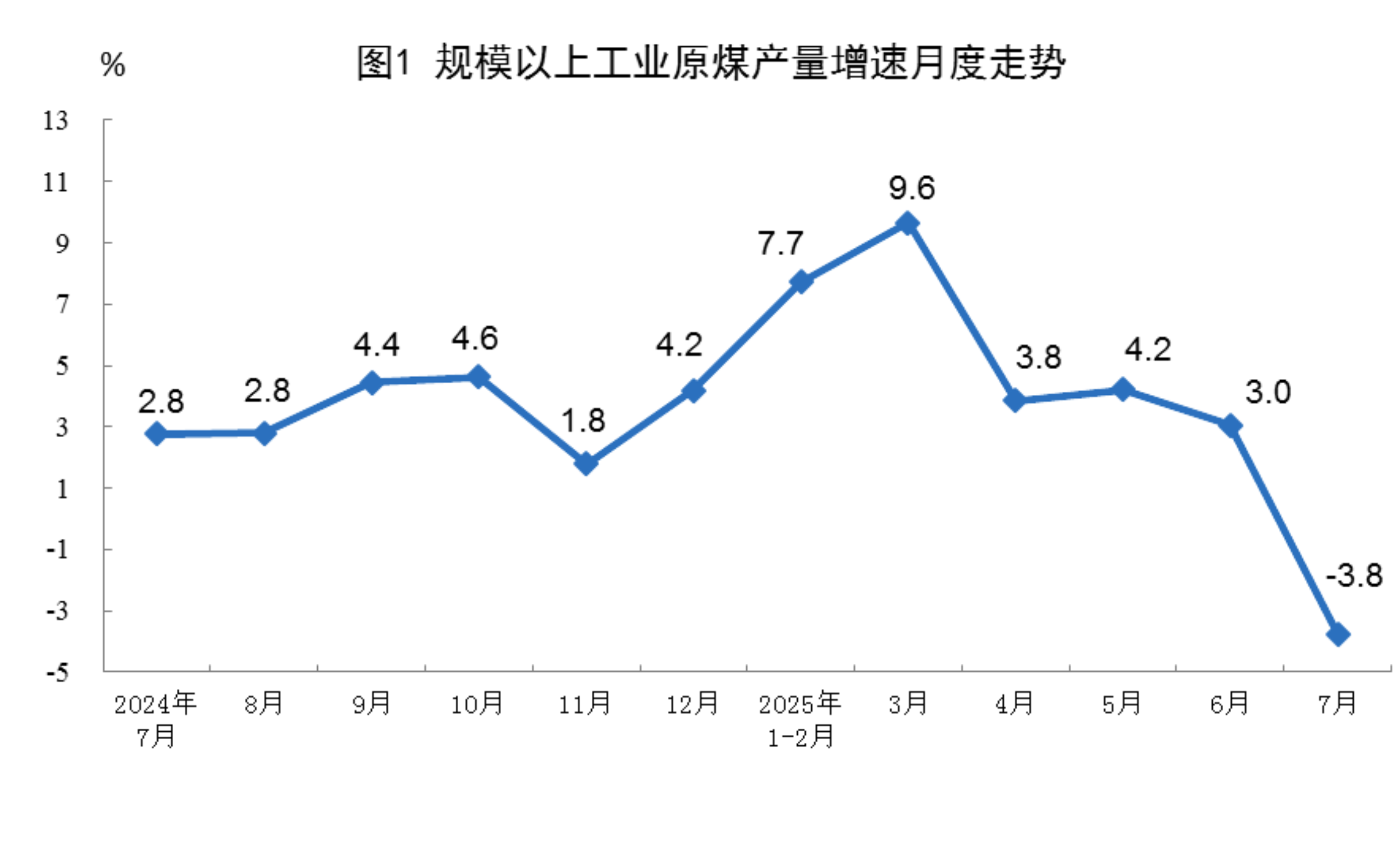
美国加州州长Newsom提议,加利福尼亚州针对当地石油开采放宽审批许可。
news flash· 2025-07-18 19:15
Core Viewpoint - California Governor Newsom proposed easing approval permits for local oil extraction in the state [1] Group 1 - The proposal aims to streamline the regulatory process for oil drilling activities [1] - This initiative is part of a broader strategy to enhance local energy production [1] - The decision may impact the state's energy landscape and economic dynamics [1]