《乐队协奏曲》

Search documents
融民间性于高艺术——巴托克的音乐成就
Xin Lang Cai Jing· 2025-12-25 14:15
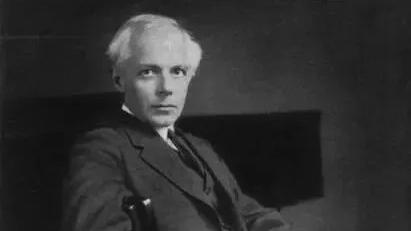
Core Viewpoint - The article discusses the significant contributions of Hungarian composer Béla Bartók to 20th-century music, emphasizing his unique blend of folk elements with classical traditions and modern music, and the ongoing relevance of his work in today's diverse musical landscape [8][20]. Group 1: Bartók's Background and Influence - Bartók, unlike his contemporaries, did not achieve significant secular success during his lifetime and primarily relied on piano teaching and performance for income [7]. - His music faced ideological division during the Cold War, with Eastern and Western interpretations highlighting different aspects of his work [7][8]. - Bartók's early exposure to folk music during his travels led him to collect over 10,000 folk songs, which became foundational to his musical language [10][14]. Group 2: Musical Style and Contributions - Bartók developed a distinctive style characterized by irregular rhythms, strong contrasts, and melodies closely related to oral traditions, diverging from the "Hungarian style" of the 19th century [14][15]. - His music evolved through various phases, reaching a peak of avant-garde expression in the late 1920s and early 1930s, before returning to folk influences in his later works [15][19]. - The concept of "night music," a unique sound world created by Bartók, showcases his innovative approach to musical expression, blending dissonance and unconventional rhythms [18]. Group 3: Educational Contributions - Bartók also contributed to music education by composing accessible yet high-quality pieces for children and beginners, such as "Mikrokosmos" and "44 Duets for Violin" [19][20]. - These works not only enhance performance skills but also familiarize learners with modern compositional language, reflecting Bartók's commitment to music education [19].

大湾区青年管弦乐团巡回音乐会再度亮相广州
Zhong Guo Xin Wen Wang· 2025-07-15 01:13
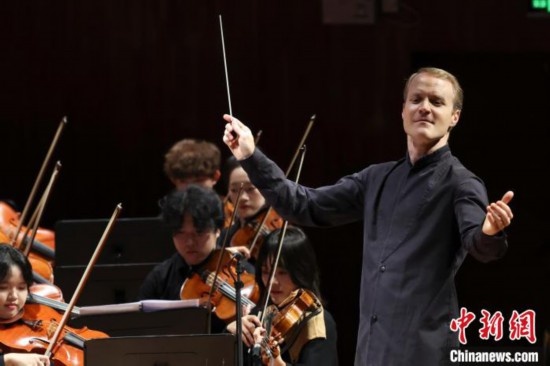
Core Viewpoint - The Greater Bay Area Youth Orchestra is continuing its tour with a concert in Guangzhou, showcasing the cultural exchange and collaboration among young musicians from the region [1][3]. Group 1: Event Details - The concert titled "Greater Bay Area Youth Orchestra Tour Concert 2025" took place on the 13th in Guangzhou, featuring 98 young musicians from the Greater Bay Area [1]. - The concert program included a diverse range of pieces, such as "Dance of the Golden Snake" by Tang Jianping, "Symphonic Miniatures" by Du Nanyi, Ravel's "Daphnis et Chloé" Suite No. 2, and Bartók's "Concerto for Orchestra" [1]. Group 2: Cultural Exchange - Austrian conductor Christoph Koncz emphasized the importance of cultural exchange through music, highlighting the collaboration between Chinese musicians and Western compositions [3]. - Koncz noted that the integration of musicians from mainland China and Hong Kong/Macau was impressive, stating that there were no barriers, only collaborative strength [3]. Group 3: Training and Development - Prior to the concert, the 98 young musicians gathered at the Hong Kong Academy for Performing Arts from July 5 to 11 for training under 12 renowned music mentors [3]. - Participants expressed that Koncz's clear guidance and respect for their creative expression significantly enhanced the overall performance level of the orchestra [4]. Group 4: Future Prospects - The Greater Bay Area Youth Orchestra, developed in collaboration with the Hong Kong Academy for Performing Arts and Swire Group, aims to provide opportunities for young musical talents from different cities in the Bay Area to collaborate and exchange ideas [4]. - There is a strong belief in the potential of the Greater Bay Area music market, with hopes for the orchestra to connect with more audiences in the region [4].