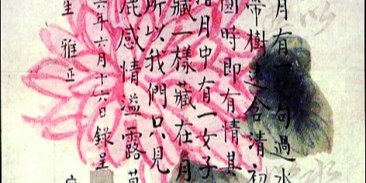
《废名诗选》

Search documents
废名的“自信”
Xin Lang Cai Jing· 2026-01-04 00:25
Core Viewpoint - The article highlights the confidence of the writer Feiming in his literary works and academic pursuits, showcasing his belief in the enduring value of his creations and his willingness to engage in self-reflection and correction when necessary [2][3][6]. Group 1: Literary Contributions - Feiming expressed a strong belief in the lasting artistic value of his long novel "Bridge," claiming it would endure for "hundreds of thousands of years" [2]. - In 1932, he defended the complexity of his novel "Mr. Mosu You," asserting that its difficulty was a reflection of the character itself and a valuable aspect of the work [2]. - During his time at Peking University, he compared his poetry to that of contemporaries, acknowledging their excellence while asserting the unique qualities of his own work, which he described as "natural" and "whole" [3]. Group 2: Academic Engagement - Feiming delivered a lecture titled "My Own Poetry" at Peking University in 1947, where he distributed a selection of his poems, claiming they were "very good poetry" with the highest artistic achievement [4]. - He expressed dissatisfaction with his past avoidance of significant historical moments and reflected on the value of his works, emphasizing the importance of not wasting language [4]. - Feiming's confidence extended to his academic research, where he demonstrated a willingness to correct his views upon discovering errors, showcasing a balance between self-assurance and humility [6]. Group 3: Philosophical Works - During his time in Huangmei, Feiming wrote a Buddhist work titled "The Theory of Alaya Consciousness," which he shared with a monk for feedback, indicating his openness to critique [5]. - He expressed frustration when a monk suggested he might be open to differing opinions on his work, emphasizing his belief in the correctness of his views [5]. - Feiming's confidence in his interpretations of poetry was evident when he noted that others did not share his understanding of a particular poem, leading him to assert his correctness [5].