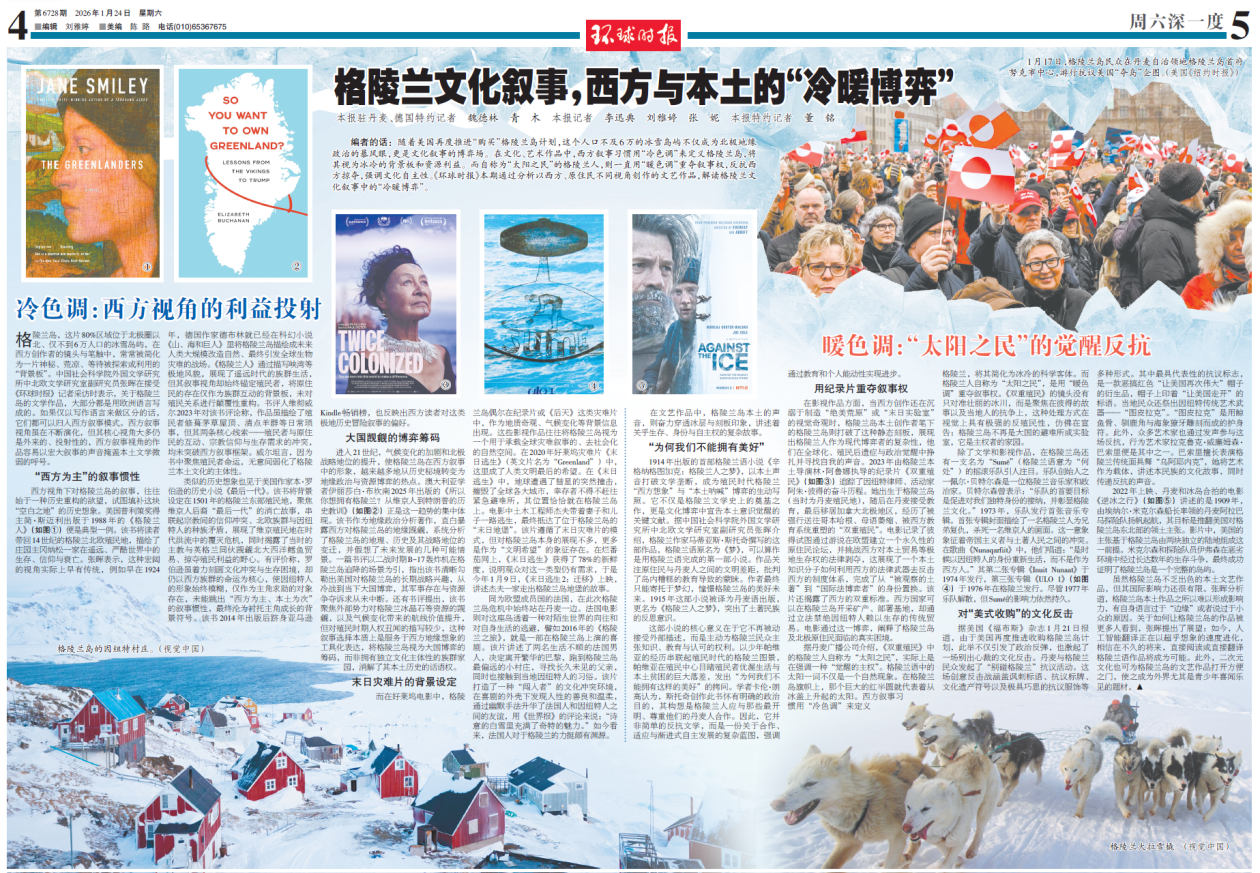
《最后一代》

Search documents
【环时深度】格陵兰文化叙事,西方与本土的“冷暖博弈”
Huan Qiu Shi Bao· 2026-01-23 22:37
Core Perspective - The article discusses the geopolitical and cultural significance of Greenland, highlighting the contrasting narratives between Western perspectives and indigenous voices, particularly in the context of recent U.S. interest in purchasing the island [3][24]. Western Perspective: Cold Tone - Greenland is often depicted in Western literature as a mysterious and desolate backdrop, primarily serving external interests rather than showcasing its indigenous culture [5][6]. - Works like Jane Smiley's "The Greenlanders" and Ben Robertson's "The Last Generation" illustrate a historical reconstruction that centers on colonial narratives, often sidelining the indigenous Inuit perspective [6][8]. - The portrayal of Greenland in Western narratives has evolved to emphasize its geopolitical importance and resource potential, particularly in the context of climate change and strategic interests [10][11]. Indigenous Perspective: Warm Tone - Indigenous narratives, such as the first Greenlandic novel "Singnagtugak: The Dream of the Greenlanders," assert the rights and identity of the Greenlandic people, challenging colonial depictions [16][18]. - Documentaries like "Double Colonization" focus on the struggles of indigenous activists, emphasizing their fight for recognition and rights against Western narratives [19][21]. - The cultural movement among Greenlanders, including music and art, seeks to reclaim their identity and assert their sovereignty, as seen in the rock band Sumé and various protest actions against U.S. acquisition plans [23][24]. Cultural Resistance - The recent U.S. push to acquire Greenland has sparked a creative cultural backlash from the Danish and Greenlandic people, utilizing satire and traditional art forms to assert their identity [24][26]. - Films like "The Journey of the Icebreaker" reflect historical tensions over territorial claims, showcasing the resilience of Greenlandic identity against external pressures [26].