乐奇AI眼镜(Rokid Glasses)

Search documents
Rokid创始人祝铭明: 智能眼镜产业需构建软硬件生态
Zhong Guo Zheng Quan Bao· 2026-02-13 22:25
春节临近,智能眼镜成为当下流行的新年货。全球智能眼镜市场迎来爆发,在这场智能穿戴的产业变革 中,扎根杭州余杭的杭州灵伴科技有限公司(Rokid)成为中国智能眼镜企业中的亮眼代表。 Rokid创始人兼首席执行官祝铭明近日在接受中国证券报记者采访时表示,2025年公司AI+AR智能眼镜 产品乐奇AI眼镜(Rokid Glasses)收获30万台订单,同时公司旗下各类智能眼镜产品在文旅、工业应用 场景不断拓展市场份额。上游供应链产能的突破是智能眼镜产业破局的关键,同时软件生态的构建将决 定智能眼镜的使用体验和未来市场空间。 智能眼镜悄然流行 春节前夕,无论在线下商场还是线上电商平台,智能眼镜成为今年流行的新年货。市场研究机构IDC预 测,2026年中国智能眼镜市场出货量将突破491.5万台,正式迈入规模化增长新阶段。 2025年,一次杭州余杭区政府内部沟通会,让智能眼镜公司Rokid走入大众视野。祝铭明戴着Rokid Glasses样机脱稿演讲的视频广为传播,为企业带来关注度与销量增长。"关注度变高,最直观的变化是 产品销量快速增长,促使生产节奏加快。"祝铭明坐在Rokid位于余杭的展厅内,回忆过去一年企业发展 历 ...
智能眼镜产业需构建软硬件生态
Zhong Guo Zheng Quan Bao· 2026-02-13 20:23
Core Insights - The smart glasses market is experiencing significant growth, with Rokid emerging as a leading player in China, particularly with its Rokid Glasses product expected to receive 300,000 orders by 2025 [1][2] Market Trends - Smart glasses have become a popular item for the upcoming Chinese New Year, with IDC predicting that the shipment volume in China will exceed 4.915 million units by 2026, marking a new phase of scaled growth [1] - The user demographic for smart glasses has expanded beyond tech professionals, now including business people, civil servants, media personnel, teachers, lawyers, and designers, with the proportion of tech workers as users dropping from 50% to about 16% [2] Application Expansion - The application scenarios for smart glasses are diversifying, with significant market share in the cultural tourism sector, where Rokid's AR glasses hold over 90% of the market [3] - Smart glasses are being utilized for various functions such as teleprompting, translation, and information retrieval, as well as in industrial, medical, and educational fields [3] Supply Chain Challenges - Rokid faced production capacity challenges due to a surge in demand, with actual orders for Rokid Glasses reaching 300,000, significantly higher than the anticipated 100,000, leading to delays in fulfilling 30-40% of orders until 2026 [3] - The company is addressing these challenges by collaborating with upstream suppliers to increase production capacity and ensure timely delivery [3] Competitive Landscape - The entry of major companies like Xiaomi, Alibaba, and Li Auto into the smart glasses market is expected to intensify competition, with players categorized into three types: simple audio glasses, non-display smart glasses, and full-featured smart glasses [4] - Rokid positions its products as full-featured smart glasses, emphasizing the importance of system integration, yield rates, production processes, supply chain management, and ecosystem development for future competitiveness [4] Software Ecosystem Development - Rokid is developing a software ecosystem to enhance the functionality of smart glasses, with over 20,000 developers and 4,000 companies already participating in its platform [4] - The company plans to upgrade its products in three phases: solidifying the tool attributes, integrating entertainment and social features, and ultimately expanding to full functionality over the next three to five years [4] Future Outlook - The company believes that smart glasses will not replace smartphones but will transform human-computer interaction, positioning itself as a core platform for interaction in the AI era [5] - With a large base of eyeglass wearers in China and a high acceptance rate for wearing glasses, the market for smart glasses is expected to grow, with Chinese manufacturers projected to account for 45% of global shipments by 2026 [5]
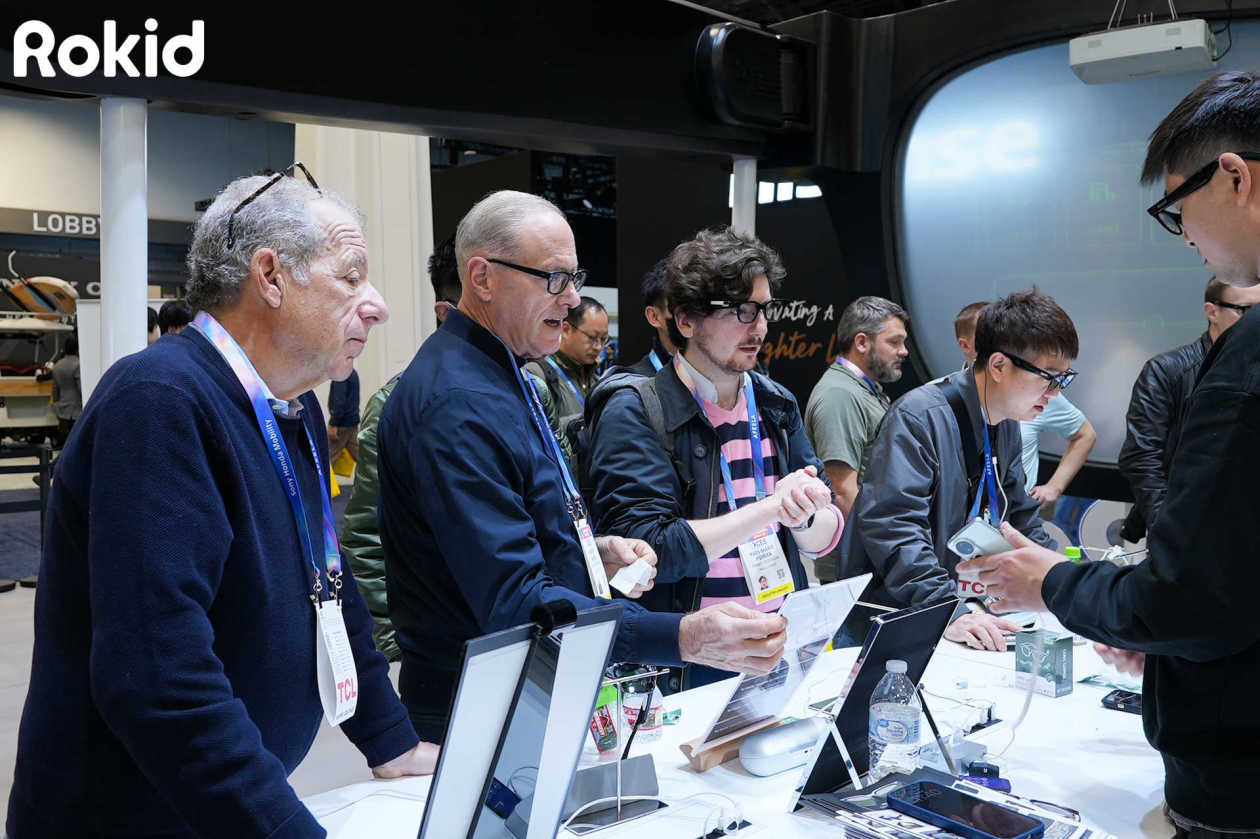
CES 2026:乐奇Rokid以AI+AR眼镜开启下一个人机交互时代
Huan Qiu Wang· 2026-01-08 07:08
Core Viewpoint - The launch of Rokid's AI+AR glasses at CES 2026 signifies a shift from niche technology to a mainstream consumer product, positioning itself as a new core interaction terminal following smartphones [1]. Group 1: Product Features - Rokid Glasses weigh only 49 grams and incorporate advanced features such as a 12-megapixel camera, directional audio, real-time multilingual translation, AR navigation, smart teleprompter, and contactless payment [3]. - The glasses have been deployed in 115 countries with over 100,000 active users, averaging 8 hours of daily wear, indicating a transition from a "concept product" to a "daily necessity" [3]. Group 2: Technological Integration - Rokid emphasizes full-stack self-research, utilizing Qualcomm's AR1 chip and integrating various domestic AI models, allowing users to switch AI engines and breaking down technical barriers [5]. - The glasses support practical features like "what you see is what you get" preview, automatic meeting minutes generation, and seamless integration of AI capabilities into daily tasks [5]. Group 3: Market Strategy and Growth - Rokid launched a new model, Rokid Ai Glasses Style, designed for overseas markets, weighing 38.5 grams and supporting various optical prescriptions and protective features [7]. - The product is the only AI glasses supporting Cantonese interaction and includes accessibility features for visually impaired users, reflecting a commitment to technology for good [10]. - The wearable device market, particularly AI glasses, is projected to grow rapidly, with IDC forecasting 2.907 million units shipped in China by 2025, a year-on-year increase of over 120% [10]. - Rokid has formed a strategic partnership with Focus Media to reach 400 million mainstream consumers through elevator media, while also accelerating its global expansion into high-end markets [10]. - The successful mass production and application of Rokid Glasses mark a shift for Chinese companies in the AI terminal sector from "catching up" to "keeping pace" and even "leading," showcasing systemic innovation capabilities in AI, optical engineering, and human-computer interaction [10].