
儿童游乐场

Search documents
调查 | 近千平方米儿童游乐场,为何开门几个月就停业?
Xin Lang Cai Jing· 2026-01-15 05:02
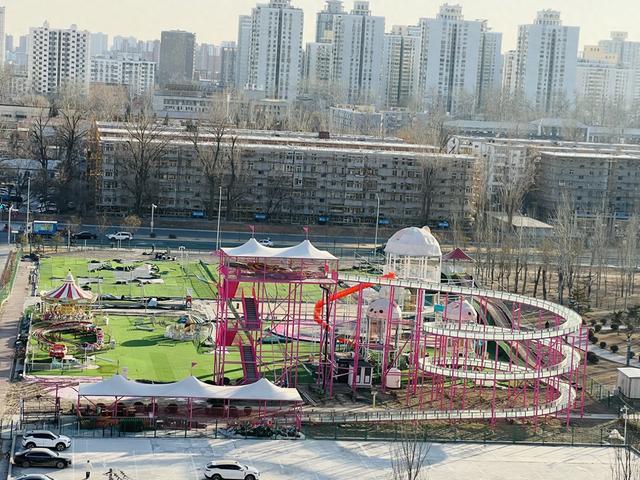
Core Viewpoint - The article discusses the closure of a children's amusement park in Beijing, which was built on land that had been previously cleared for illegal structures, raising questions about its legality and future use [1][6][11]. Group 1: Amusement Park Status - The amusement park, located near Changying Sports Park, has been closed for over a year despite having opened shortly before [3][5]. - The park features various attractions, including a carousel and a high-altitude drifting facility, but has fallen into disrepair with litter and damaged surfaces [5][11]. - Local residents express concern over the park's closure, noting it was a valuable community resource that is now unused [5][8]. Group 2: Legal and Regulatory Issues - The park was reportedly built without proper approval, leading to an administrative penalty for illegal land occupation [9][11]. - The land's status remains unclear, with conflicting information from local authorities regarding its permissible use and the need for compliance with regulations [11][12]. - Experts emphasize the importance of clarifying land use and adhering to legal procedures for any future developments on the site [15].

【环球财经】嗅到商机 韩国酒店业打造“游乐园式”儿童住宿体验
Xin Hua She· 2025-08-08 13:48
Group 1 - The core observation is that the declining birth rate in South Korea has led to a societal trend where children are considered increasingly valuable, prompting the hotel industry to adapt by creating child-friendly "playground-like" accommodations to attract families [1][2] - Many hotels are transforming their facilities to include amenities such as children's swimming pools, playgrounds, gaming areas, and even specialized courses like golf for kids, reflecting a shift in consumer spending towards leisure and entertainment for children [2][4] - A survey indicated that 46% of South Korean parents plan to spend more on travel this year, with 93% willing to invest extra in experiences related to their children, highlighting a significant market opportunity for hotels catering to families [4][5] Group 2 - The hotel industry is seeing a substantial portion of its revenue, nearly half, coming from family-oriented services, indicating a shift in consumer demographics and preferences [2][4] - Specific examples of hotel adaptations include the Hilton Garden Inn in Seoul, which converted a business lounge into a children's play area, and the Busan Paradise Hotel, which features a "Children's Village" with various entertainment options [2][3] - The South Korean children's industry market was valued at approximately 40 trillion KRW (about 207.2 billion RMB) in 2022, with projections to grow to 100 trillion KRW (about 518 billion RMB) by 2030, underscoring the potential for growth in this sector [5]